The cardinals’ statement was striking for several reasons. Atypically, it showed U.S. prelates weighing in on foreign affairs. (McElroy is an expert; he earned a Ph.D. in political science at Stanford, with a thesis on morality and U.S. foreign policy.) It came directly from the leaders of three archdioceses, not from the United States Conference of Catholic Bishops—which has about four hundred members and a complex process for the drafting of such statements—and it was released a week after that group’s new president, Archbishop Paul Coakley, of Oklahoma City, met with President Donald Trump and Vice-President J. D. Vance, at the White House. And the new Pope is close to all three of its authors: Tobin; Cupich, who served alongside Prevost in Rome in the powerful Dicastery for Bishops; and McElroy, whom Prevost, when he was the head of that office, tapped last year for the high-profile role of Archbishop in the nation’s capital. Their statement suggested that, even if Leo is not the “anti-Trump,” as his statements on peace, immigration, the climate, and the rule of law have led a number of observers to propose, his compadres in the U.S. are speaking up in a strong, clear voice.
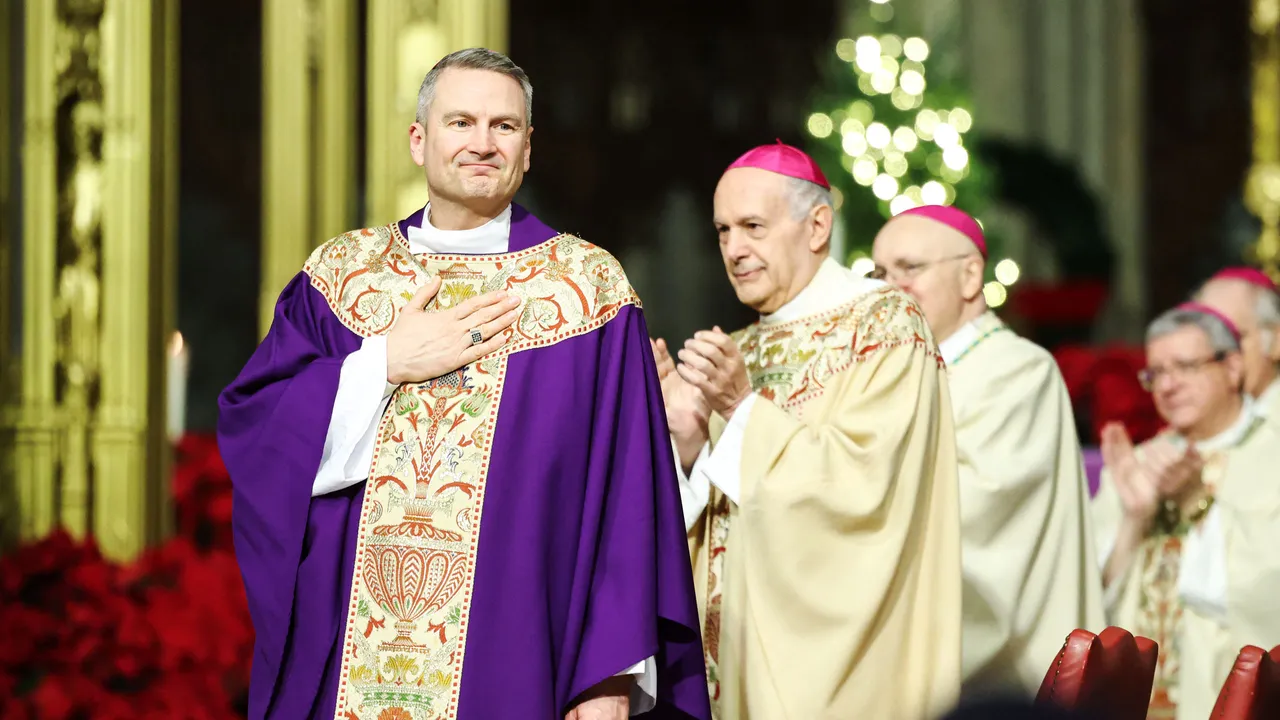
On Friday, St. Patrick’s Cathedral, in Manhattan, will host the installation of a new Archbishop of New York, who is likely to round out what might be called Leo’s Team U.S.A. Ronald Hicks, the former Bishop of Joliet, Illinois, succeeds Cardinal Timothy Dolan, who reached the nominal retirement age of seventy-five last year. Hicks was born in 1967, grew up in the placid Chicago suburb of South Holland, studied at a seminary on the Southwest Side, spent a year in Mexico, and served in the Archdiocese of Chicago’s parishes and seminaries. In 2005, at the age of thirty-seven, he went to El Salvador, where he worked as a regional director of Nuestros Pequeños Hermanos (Our Little Brothers and Sisters), a group of residences for orphans and at-risk children which was founded by an American missionary in Mexico in 1954.
Hicks spent five years in El Salvador—a long time for a cleric on the executive track. He has said that his favorite saint is Óscar Romero, the Archbishop of San Salvador, who, as Hicks put it, “walked with his people for justice and peace.” (Romero denounced the military regime in a series of Sunday homilies broadcast nationally on the radio—in effect, scrawling “no” on the church steps. He was murdered while saying Mass, in 1980; in 2018, Pope Francis canonized him.) After returning to Chicago, Hicks served as Cardinal Cupich’s vicar-general, or deputy, then as a bishop, and was known for unshowy efficiency. The initial take on him has been that he is akin to Pope Leo, a Chicagoan who spent his thirties working with the poor as a missionary in Peru and then brought that experience to a series of leadership roles. Hicks has been involved in prison ministry since the nineteen-eighties and, as bishop of Joliet, he took steps to address the climate emergency, following Pope Francis’s 2015 encyclical on the issue. He appears boyishly pious—on plane flights, he prays the Rosary and watches unobjectionable movies, such as “Harold and the Purple Crayon”—but he is likely to fit right in with the more worldly trio whose company he’ll now keep.
Hicks’s relative youth and low profile make his elevation to big-city archbishop significant. But what’s particularly notable is where he’s becoming an archbishop. Cupich is now seventy-six, so in Chicago it was assumed that Hicks would succeed him. Instead, he’ll be Archbishop of New York—historically, the most prominent post in the U.S. Church. In 1984, Pope John Paul II entrusted it to the bishop of Scranton, Pennsylvania, John J. O’Connor, who was little known to the public but shared the Pope’s culture-warrior style. “I want a man just like me in New York,” John Paul was said to have remarked. With Hicks, Leo is appointing a cleric who seems both like himself and distinctly different from the boisterous Cardinal Dolan.