
2026 is the year many C-suite technology leaders will have to finally prove that their artificial intelligence investments are paying off.
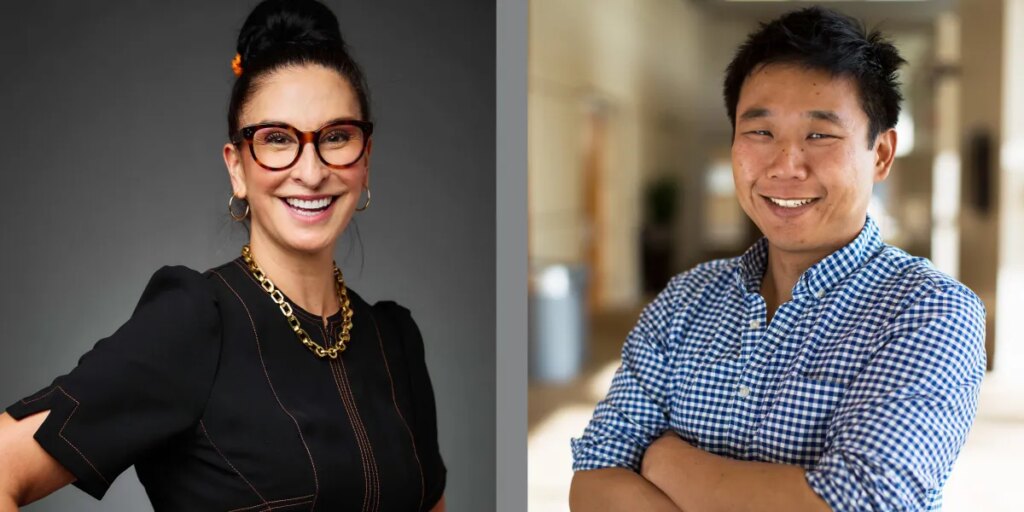
But at Everpure, a data storage and cloud services provider, tracking AI’s return on investment comes with some key caveats. “I tend to think that measuring ROI and the efficacy of AI technology really depends on the use case,” says Rob Lee, Everpure’s chief technology and growth officer. “We have some use cases where it’s very clear, and it’s very objectively measurable.”
Some of the more straightforward AI deployments are easier to monitor. An AI bot that can autonomously handle vendor invoices with internal purchase orders, ensuring the reports are accurate before payment is issued, is one such case. Everpure’s “Bestie Bot,” an internal AI tool that helps employees self-service questions that would have been fielded by the human resources team, has strong ROI indicators, but is a bit harder to measure.
And then, there are the third-party AI coding assistants, which Lee says he is taking a closer look at in 2026. While Everpure’s engineers may report that they are saving time using these tools, Lee wants to be sure that the time saved by generating code faster isn’t just being reallocated to debugging because of code quality issues. “That’s an area that we are spending a bit more time this year, trying to sharpen our pencils,” says Lee.
A sharper focus on AI’s ROI comes as Everpure caps a fairly busy first quarter of the year. Last month, the company completed a corporate rebranding that involved changing its name from Pure Storage and announced a deal to acquire the data intelligence and security company 1touch. Everpure also reported fiscal year 2026 revenue of $3.7 billion, up 16% year-over-year. And for the new fiscal year, the top line is projected to increase by between 17% and 20%.
When placing AI bets, Lee says that other than a heightened degree of focus on governance and security, the factors he considers in the buy-versus-build debate are no different than those of any other technology investment. When push comes to shove, Everpure prefers the easier route of “buy” when an off-the-shelf AI tool can be minimally customized and generate desirable business results. But Everpure is also open to creating its own AI tools from scratch, especially if the application of AI would also integrate into the company’s external product offerings.
“That’s something that we’re more likely to want to own and develop over time,” says Lee.
Lee, a 12-year company veteran who initially served as chief architect of the company’s storage platform called FlashBlade, says the AI tools that he’s internally deployed for Everpure’s workforce frequently come from a dedicated, cross-functional team that sits under the CTO’s office and works with various business functions to explore priority AI use cases.
Working closely with vendors is also an option. Everpure’s Bestie Bot was built on top of enterprise AI startup Glean’s AI-powered search software, trained on the company’s corporate policies. That tool is saving HR one hour each day, according to Niki Armstrong, Everpure’s chief administrative and legal officer. She also worked closely with tech startup Eudia to build a contract review tool for the legal department.
“When I think about how we’re using these tools, it’s less time hunting for answers and more time exercising that independent, personalized judgment,” says Armstrong.
“Time saved” is a popular way that C-suite leaders tend to boast about the efficiency savings they get from AI, but what’s not always clear is what employees can do with their extra free time. Armstrong says she has specific tasks that the HR team can tackle with Bestie Bot in action. Her team will spend more time on success planning, pathways to support lateral moves and promotions, improving interview training, and mapping out the skills needed to support the company’s future.
“We can spend more time on the complex, high-stakes cases,” says Armstrong.
Lee says Everpure’s initial approach to generative AI was fairly cautious after the launch of ChatGPT, as the company wanted to take time to set up governance protocols around data privacy and security. Similarly, he has been slower to adopt agentic AI despite all the buzz. One in four enterprises were actively using AI agents by the end of 2025, up from just 11% in the first quarter of the year, according to a survey by accounting giant KPMG.
Everpure is further along in building out agentic workflows that fold into the company’s external product portfolio. But internally, Lee is waiting to get a clearer picture on the agentic tools offered by his enterprise resource planning, payroll, customer relationship management, and other software providers.
“It doesn’t do me any good to spend a bunch of effort to develop an agent if six months later, those vendors come out with their own agents that can largely do the same tasks,” says Lee.
John Kell
Send thoughts or suggestions to CIO Intelligence here.
NEWS PACKETS
Cursor takes a swing at Anthropic, OpenAI. AI coding startup Cursor on Thursday released Composer 2, an AI model that’s intended for software development and intended to act as an AI agent that can carry out coding tasks on a user’s behalf. As Bloomberg reports, this new AI model is an effort by Cursor to keep up with Anthropic and OpenAI, who have also released AI models that can write software. Over the weekend, Fortune published a deeper magazine feature on Cursor, reporting that its annualized revenue crossed $2 billion in February and had continued to grow well past that, and looking at Cursor CEO Michael Truell’s efforts to outmaneuver larger rivals.
OpenAI is also making moves to better compete with Anthropic. Two big announcements over the past week point to OpenAI CEO Sam Altman’s efforts to fortify his business against one of his top rivals. The Wall Street Journal reported that the ChatGPT app, coding platform Codex, and browser will be combined into a desktop “superapp” and will streamline its resources to focus on a narrower product portfolio. The moves are intended to make OpenAI’s products more desirable to enterprise and coding customers, where Anthropic has had more success. OpenAI has also acquired Astral and will fold in the Python toolmaker’s developer tools into Codex, which reports to have more than two million weekly active users.
Crypto.com, HSBC the latest linked to AI-related layoffs. Kris Marszalek, the CEO of Crypto.com, last week announced his company would lay off 12% of staff and linked the staff reduction to AI. He added that the roles he was cutting “do not adapt in our new world.” Bloomberg, meanwhile, reported that HSBC CEO Georges Elhedery is mulling job cuts that could affect middle and back offices, affecting as much as 20,000 roles, because of AI’s impact on financial services. The bank also hired its first-ever chief AI officer to help increase the usage of generative AI across its businesses. But the biggest news could soon come from Meta, which is reportedly planning to cut 20% or more jobs. An analyst at Bernstein has warned that if Meta goes through with it, “others will rush to replicate it.”
Jeff Bezos reportedly seeking billions for an AI manufacturing fund. WSJ reports that Amazon’s founder is in early talks to raise $100 billion for a new project that would seek to acquire manufacturing companies and then invest in AI to accelerate their ability to automate operations. Bezos has reportedly traveled to the Middle East and Singapore to raise money for the new fund that’s also linked to the startup Project Prometheus, where Bezos was appointed as co-CEO last year. Project Prometheus is reportedly focused on building AI systems intended for manufacturing and engineering. Physical AI, which combines AI and machine learning with sensors and robotics, has increasingly been a focus area for manufacturers. Deloitte reports 58% of companies have some limited use of physical AI deployed today, a figure that is expected to rise to 80% within two years.
Anthropic has its day in court. On Tuesday, a U.S. judge heard oral arguments in a lawsuit between Anthropic and the Pentagon, with the former alleging that Defense Secretary Pete Hegseth overstepped his authority when he designated the AI startup as a supply chain risk to the nation’s national security. That March 4 decision stemmed from a squabble between the two parties after Anthropic refused to lift restrictions on its Claude AI model to be used for domestic surveillance or autonomous weapons. Anthropic’s supply chain risk designation could cost the company billions, as it would block the company from some military contracts. U.S. District Judge Rita Lin questioned the Pentagon’s actions, calling them “troubling.”
ADOPTION CURVE
The majority of tech executives prioritize AI speed over extensive vetting. As CIOs and other technologists face more pressure to deliver results on their AI investments, a new study found that 85% of technology leaders say their organization is prioritizing speed to market and iterative innovation, while only 15% prioritize exhaustive pre-launch vetting and total regulatory alignment. And while one out of every two business leaders say their AI governance team has full, unencumbered authority to halt the highest priority or revenue-generating AI projects that may fail to establish safety and ethical guardrails, 42% report such authority requires approval or intervention of the board or CEO.
“A year or two ago, we talk to clients in high tech and we’d say, ‘Are you good around responsible AI, governance, and security,’ and they would say, ‘Yeah,’” Ken Englund, one of the survey’s leaders and EY’s Americas technology sector growth leader tells Fortune. “Fast forward about a year, there’s little cracks in the discussion.”
But the need for speed doesn’t mean that organizations are completely ditching their security posture. 95% of executives say AI spending will increase this year and 79% of those leaders also say they will increase their AI investments in cybersecurity. That exceeded planned increase spending on AI-related cloud computing (67%), AI-specific talent (65%), compute and infrastructure (62%), and back-office functions such as IT, finance, and HR (56%).
Englund says that the pendulum may already be swinging back toward establishing firmer AI governance controls, especially as agentic AI usage proliferates. In the last 12 months, EY’s survey found 45% of organizations experienced a confirmed or suspected leak of sensitive data due to employees using unauthorized third-party generative AI tools. Four in ten reported confirmed or suspected proprietary IP leaks for the same reason. “It doesn’t take a lot of incidents to raise attention,” Englund adds.
Courtesy of EY
JOBS RADAR
Hiring:
– UnitedHealth Group is seeking a chief information security officer of digital, data, and consumer engineering based in Eden Prairie, Minnesota. Posted salary range: $200.4K-$343.5K/year.
– Sound Transit is seeking a deputy CIO, based in Seattle. Posted salary range: $165K-$315K/year.
– Rahr is seeking a VP of IT, based in Shakopee, Minnesota. Posted salary range: $200K-$280K/year.
– Lendistry is seeking a VP of IT, based in Tustin, California. Posted salary range: $150K-$200K/year.
Hired:
– Kering announced the appointment of Pierre Houlès as chief digital, AI, and IT officer, effective immediately, and joining the executive committee at the luxury goods company whose brands include Gucci and Saint Laurent. Houlès most recently served as a deputy CIO of French automaker Renault and also previously served as CIO at media and telecommunications conglomerate Canal+ Group.
– Diageo has named Steve McCrystal to serve as chief digital information officer. He returns to the liquor giant after previously serving as a SVP from 2010 through 2013. In McCrystal’s time away from Diageo, he served as a SVP at Vodafone, VP at AstraZeneca, and most recently, as chief enterprise and technology officer at Unilever.
– Xenocor has made several executive appointments, including the promotion of David Van Ness to the role of CTO. Van Ness will oversee engineering and product development initiatives for the medical device company. He joined Xenocor in 2023 as director of engineering and previously served as an engineer and program manager at medical devices manufacturer Biomerics.
– Capacity appointed Shatabdi Sharma to the role of CIO, where she will oversee the third-party logistics provider’s global technology strategy and engineering in the U.S. and India. She most recently was the brand technology leader for PVH Corp’s Calvin Klein brand. Sharma also held technology leadership roles at Hitachi Consulting, Canon, Wegmans, and Home Depot.
– Merlin Group named Robert (Bob) Costello as chief digital and information officer. He joins the technology investment and advisory firm to lead digital strategy, tech architecture, and AI initiatives. Previously, Costello served as CIO and head of mission engineering at the Cybersecurity and Infrastructure Security Agency (CISA). He also held senior roles at the Department of Homeland Security.
– Accenture has completed its acquisition of Faculty and announced that Marc Warner, the British AI startup’s CEO and co-founder, would expand his role and become CTO at the management consultancy. Warner will shape Accenture’s technology strategy and work with clients to help their AI adoption efforts. Prior to founding Faculty in 2014, Warner worked in academia and was a Marie Curie Fellow in physics at Harvard University.
– CreatorIQ has appointed Senthil Kumaran as CTO, where he will lead the influencer marketing software provider’s global technology organization and AI roadmap. Kumaran joins CreatorIQ after previously serving as CTO of software provider Digital Turbine. He also previously held engineering leadership roles at Meta Reality Labs, Verifone, Yahoo, and Xperi.
AI Playbook: The future of software development


Will software developers become obsolete? AI is increasingly competent at writing code, allowing non-coders to enter the software game and rendering some junior coders obsolete. But as Fortune AI Editor Jeremy Kahn explains, AI still hallucinates and makes mistakes, making experienced coders essential for quality control and reliability. Watch the playbook.