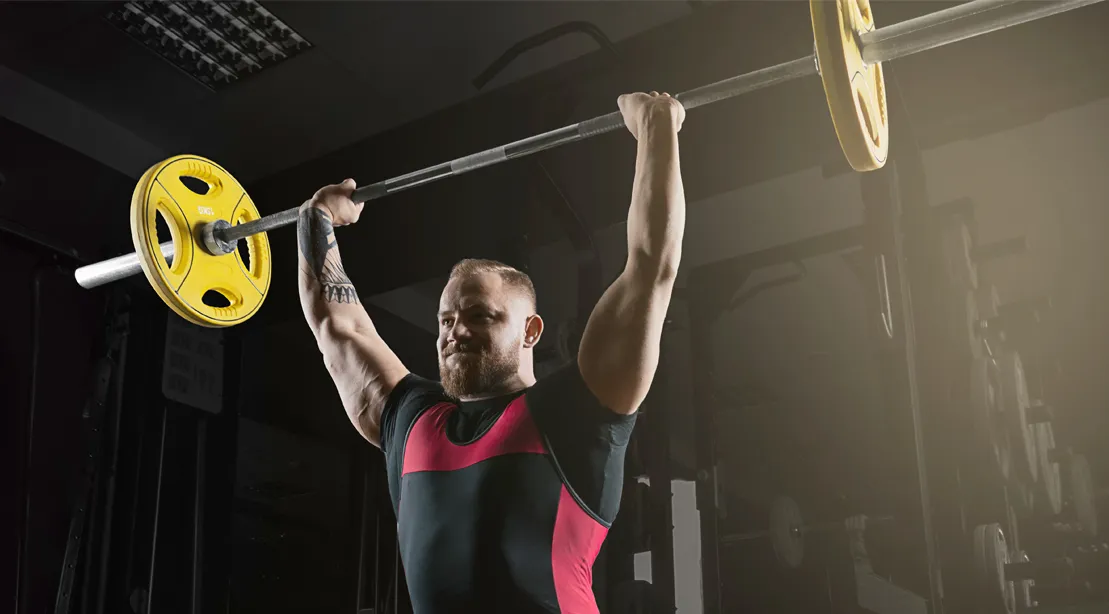
The barbell overhead press might seem like a grab-and-go exercise. Still, anyone who has overhead pressed serious weight knows this move punishes sloppy setup more than almost any other lift. Miss one detail and the bar drifts forward, your lower back over-extends, or your shoulders say no thank you.
Unlike bench pressing or deadlifting, the overhead press places your entire body under the bar. Your feet, legs, core, lats, and upper back are all on high alert.
That’s why experienced lifters don’t treat the overhead press as a “grab and go” movement because the setup creates stability. Stability creates power, and power creates bolder shoulders. While not everyone’s overhead press will look the same due to shoulder mobility, torso length, and personal style, that’s OK. What matters is mastering the setup behind every strong press. With the help of strength coach Lee Boyce, a 16-year-certified strength and conditioning specialist, we break down the OHP pre-lift checklist step by step. Let’s dive in.
The Ultimage Barbell Overhead Pre-Lift Checklist
Let’s hang on to the barbell and get ready to crush your overhead press with the ultimate overhead press pre-lift checklist.
Step 1: Foot Position and Stance
A strong overhead press begins with the feet. Your feet form the base, and if they are unsteady, everything above will falter. Before you unrack the bar, establish a stance that feels balanced and stable.
- Stand with your feet roughly hip-width apart.
- Toes straight ahead or slightly out, depending on comfort.
- Distribute your weight evenly through your heel, big toe, and pinky toe.
- Avoid rocking forward into your toes or leaning back into your heels.
Internal cue: Feel the tripod—heel, big toe, pinky toe. External cue: Grip the floor with your feet.
Lee’s Tip: The hip-width stance is easy to find by jumping as high as you can on the spot. The width you used for the jump is likely the best width for your OHP.
Step 2: Rooting and Lower-Body Tension
A solid overhead press requires tension from your feet all the way to your fingertips—and that starts with rooting into the floor. When your lower body is locked in, your torso stays stable, your bar path remains on track, and your shoulders say thank you.
- Grip the floor with your toes.
- “Screw” your feet into the ground by creating slight external rotation at the hips.
- Engage your glutes to prevent your lower back from over-arching.
- Keep your quads firm without locking the knees.
Internal cue: Glutes tight, legs firm. External cue: Spread the floor apart.
Lee’s Tip: Think about staying tight in the quads. Engaging the quads is easier to do when you simultaneously squeeze your butt tight. Keep the heels down for complete foot contact.
Step 3: Grip Width and Hand Position
Your grip controls everything above it—bar path, shoulder and elbow movement, and how effectively you transfer force into the press. If it’s too wide, your elbows flare out. If it’s too narrow, the bar tends to drift forward. The aim is a grip that aligns your wrists over your elbows with vertical forearms.
- Set your hands just outside shoulder width.
- Keep your wrists neutral.
- Let the bar sit in the heel of your palm, not in your fingers.
- Line up your forearms vertically beneath the bar to guarantee an efficient pressing path.
Internal cue: Knuckles to the ceiling. External cue: Punch the bar through your palms.
Les’s Tip: If you’re comfortable with a false grip, feel free to try it. It’ll be easier to get the bar stacked over the forearm and to avoid it rolling toward the fingers, which would result in a poor power supply.
Step 4: The Rack Position
After you set your stance and your grip, the focus turns to the rack position. If the bar starts too low, too high, or too far forward, you spend the whole lift fighting physics. The rack position sets your shoulders, elbows, and torso in the optimal position.
- Rest the bar on your upper chest or collarbone.
- Keep your elbows slightly in front of the bar.
- Engage the lats to stabilize and assist the hold.
- Keep ribs down.
Internal cue: Elbows forward, ribs down. External cue: Ensure the rack is stacked.
Lee’s Tip: The bar should start in contact with the collarbone if possible. It’s okay if the wrists break a bit to allow this to happen. If immobility or inflexibility prevents this from happening, then focus on dumbbell OHP as you work on improving your range of motion concurrently.
Step 5: Breathe and Brace
The overhead press demands full-body tension. If you lose your brace, your lower back arches, your ribs flare, and the bar drifts forward. A proper breath and brace lock your torso in, giving you a solid press foundation.
- Take a big 360-degree breath, filling your belly, sides, and lower back with air.
- Pull your ribs down and stack them directly over your hips.
- Brace your core as if you’re preparing for a punch.
Internal cue: Fill the belt and lock it down. External cue: “Glue your ribs to your hips.
Lee’s Tip: The aim here is to keep your stomach full of air through the initial press off the collarbone. Breathe in, hold your breath, and brace your stomach outward to make your waistline wider from the sides. Press the weight, and once the bar is out of your peripheral vision, exhale to enhance lockout. Take a breath in at lockout, then start your descent.
Step 6: Upper-Body Tension and Bar Path Prep
Before pressing, your upper body needs to be locked in. Your lats, traps, and upper back all play a role in keeping the bar path tight and your torso steady.
- Reengage your glutes.
- Engage your lats enough to guide the bar and stabilize the bottom position.
- Keep your chest tall but ribs down.
- Tuck your chin so the bar can clear your face.
Internal cue: “Tall spine, tight lats. External cue: “Move your face out of this place.
Lee’s Tip: Keep your posture erect and pull your shoulder blades back for a proud chest. That will create the “shelf” needed for the bar’s starting point. You shouldn’t feel “relaxed” when setting up for the exercise. Tuck your chin in, and lean in just a little bit.
Step 7: The Green Light Checklist
This yellow light pause is where great reps begin. Before you press, run through this rapid-fire mental scan to ensure everything is ready:
- Feet rooted into the ground
- Quads and glutes lightly squeezed
- Core braced, ribs over hips
- Elbows forward
- Wrists stacked over elbows
- Bar resting on upper chest
- Chin tucked
- Eyes forward
Now you’re ready.
Common Barbell Overhead Press Mistakes
Avoid these common mistakes to get better reps and bolder shoulders.
Over-extending the lower back: Letting your ribs flare, and your hips drift forward, turns the press into a backbend. Lower back hyperextension is the #1 cause of overhead press breakdowns. Instead, ensure to brace your core and engage your glutes.
Pressing with loose legs and soft feet: If your base isn’t solid, the bar will drift. The overhead press is a full-body lift; press from the ground up. Refer to step 2 to stop this from happening.
Letting the elbows flare behind the bar: This destroys leverage and forces the bar forward. Your elbows should stay slightly in front of the bar at the start. If this is an issue you cannot fix, switch to the dumbbell OHP.
Bar path drifting forward: The bar should travel up, not out. Forward bar path equals lost power and crappy, dangerous reps. Ensure your joints are stacked, and the brace is solid.