- In Manipur, as in most conflict-affected areas, political and social issues dominate the spotlight, whereas the gravity of environmental deterioration remains largely unnoticed.
- The displacement and the weakened governance contribute to the worsening of environmental damage, yet these points are neglected as the conflict narrative is so powerful.
- There should also be peacebuilding to restore the damaged ecosystems since ecological collapse silently contributes to social instability and aggravates the same, notes the author of this commentary.
- The views in this commentary are that of the author.
Across Manipur, in folktales such as Kabok ki Nong, Gakripu, and Chhinlung, traditional communities share a common message that the land sustains life and often warns before it breaks. Recognising this relationship between the people and their land helps frame Manipur’s ecological story.
The Jewel of India, Manipur, is situated 700-900 kilometres beyond the Siliguri Corridor, the ‘chicken neck‘ that connects the northeastern region of India to the rest. The state hosts ecological marvels that are severely endangered, such as Loktak Lake, along with its floating phumdis and the endangered sangai deer.
For generations, communities here shaped their lives around their relationships with nature. However, what now overshadows the state’s landscapes and culture is its consistent political and ethnic turmoil, shaped by decades of distrust, contested land rights, unequal development, and contested claims of belonging and chronic governance challenges.
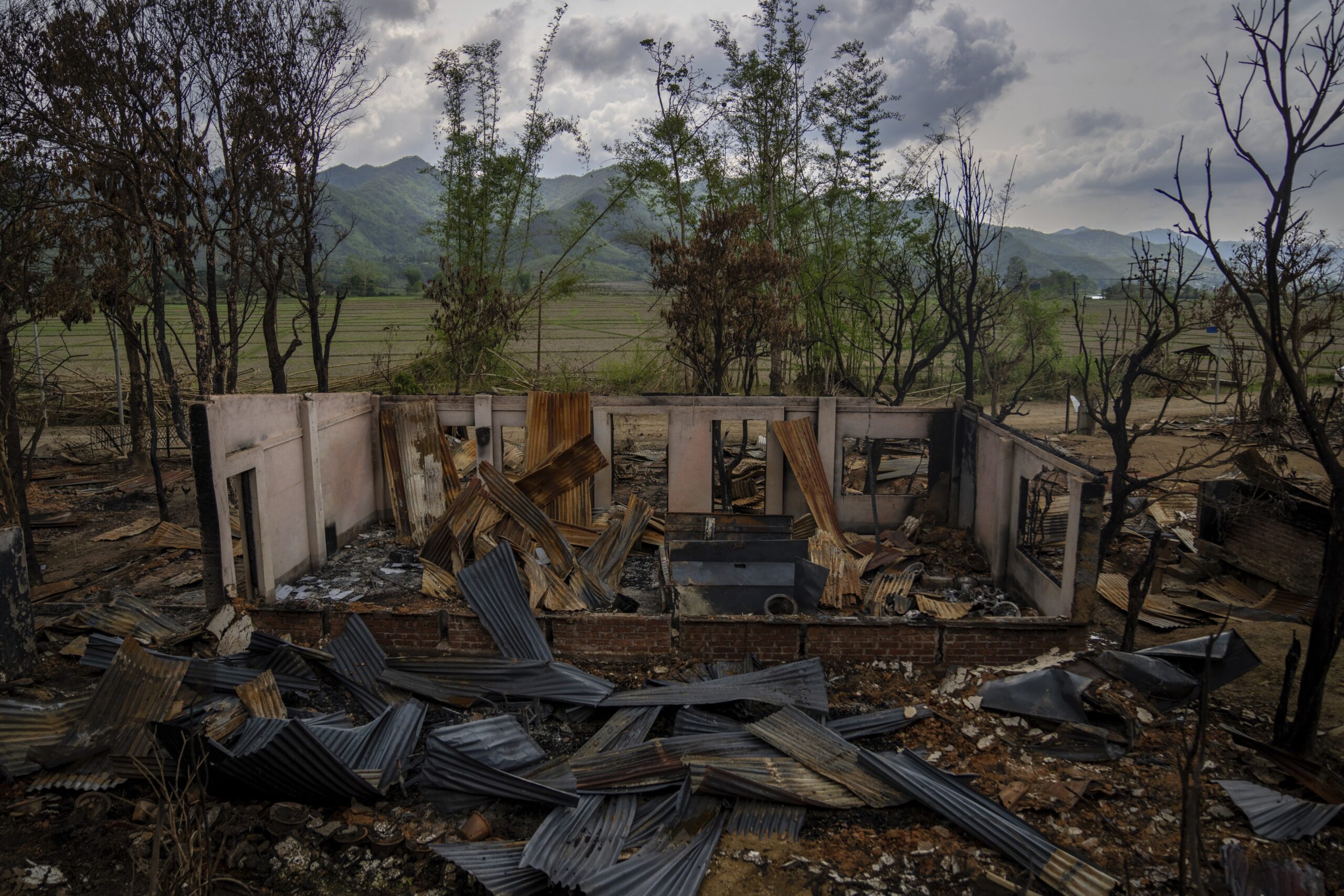
In May 2023, as tensions escalated in the state due to conflict between the Meitei and Kuki-Zo communities, more than 60,000 people were displaced, with thousands of homes destroyed. Even when the close-knit society was still intact, signs of instability were already beginning to surface.
The state’s relationship with its environment and natural resources was weakening, drifting away from the ecological sensibilities of Sanamahism or other structured naturalism practices of the natives in the state through ancient religion, with its focus on harmony with land, forests and water.
The forests degraded, springs dried, jhum periods became shorter, and degrading commons had destroyed ecological stability both in the hills and in the valleys. With communities being moved about and livelihoods disrupted, environmental care and concern became distant. The situation is not just social or political, but also ecological. Any long-term peace will have to acknowledge and address all dimensions.
Displacement intensifies pressure on fragile landscapes
Official assessments had already revealed multiple instances of ecological degradation. According to the India State of Forest Report (ISFR), 2021, a loss of approximately 375 sq km of forest was observed in ten years, with a significant reduction in bamboo-bearing areas that previously offered livelihood and a stable environmental condition. The valley was also experiencing siltation and encroachment of wetlands, whereas land-use change and changing patterns of rainfall had been drying up springs in the hills.
The new demands from the people were regarding the forests and waters, as tens of thousands of displaced people were taken to camps after 2023. More than 50,000 internally displaced people stayed in camps in the state by 2025. Such conditions put pressure on the already weak ecological resources.
In one such relief camp in the Imphal region, a single community pond serves hundreds of people every day to fulfill their washing and domestic water needs, with only drinking water supplied by the government. “The pond has turned distinctly murkier, and the surrounding area has become unhygienic, with increasing waste that accumulates and sanitation facilities falling short, a degradation residents say could not have been imagined before the onset of the overcrowding caused by a fragile system,” shared Ranbir Moirangthem, a displaced young man currently residing in the relief camp.
Studies that were conducted in the previous conflict-stricken areas across India, by the Chronic Poverty Research Centre-Indian Institute of Public Administration (CPRC-IIPA), revealed that in times of instability, the governance of commons is more likely to disintegrate. Manipur is no exception to this trend since forests and wetlands have become virtual sources of open access, with agricultural land in disputed regions left unattended.

Extreme weather events have also increased Manipur’s susceptibility to vulnerabilities. In 2024-25, heavy rains and landslides struck, causing flood and landslide damages to about 20,000 people and more than 3,000 houses. At least 47 landslides were reported across the state in four days. In 2022, Mongabay-India also reported about a massive landslide that hit the construction site of Tupul Railway station in western Manipur.
Also, the disruptions related to the conflict, such as the abandoned watershed works, hastily built bunkers over slopes, were destabilising slopes and catchments. Meanwhile, the widespread burning of houses, farms, and vehicles has added another layer to such ecological distress, even though their impacts are not well-documented.
A 2011 study on conflict and poverty in Manipur documented the breakdown of customary rights and community‑based resource governance alongside the failure of state machinery, revealing weak coordination and low trust between formal institutions and traditional systems, well before 2023. This trust was destroyed further due to the 2023 conflict. Consequently, community-based stewardship and formal enforcement simultaneously became weak, thus increasing forest loss.
Satellite-data from 2025 shows that the conflict of the years lowered the state of forest governance to a low level. At any rate, 21,100 hectares of forest had been destroyed in Manipur between 2021 and 2025. Illegal logging increased where there was a vacuum in the enforcement due to years of instability.
Farming, water access and household economies
Governance gaps have not only accelerated the loss of forests, but they have also spilled over to other sectors of the rural economy, especially agriculture and water access, which had already been strained well before the tensions grew. In early 2023, the Irabot Foundation estimated that it would be impossible to produce more than 10,000 hectares of farmland, which would affect the food supplies of thousands of people. It was subsequently verified by the state government that 5,127 hectares were inaccessible, and a forecasted shortage of more than 15,000 metric tonnes of rice was to be experienced the next year, owing to large stretches of paddy fields left desolate since 2023.

The agricultural crisis coincides with growing water insecurities. By early 2024, the Jal Jeevan Mission was at an approximate completion rate of 77% because of transport, labour, and safety interferences. Experts in the field projected that close to 62% of the springs in Manipur had dried or diminished as a result of siltation, fluctuating rainfall, and neglected watersheds.
Further stresses are observed in the household consumption data. According to the 2023-24 household survey, urban expenditure increased by almost 22%, as compared to 4% growth in rural expenditure. This rural distress is a threat as it worsens pressures on forests, springs, and common lands, which, in case of crises, are usually the fallback resources when ecosystems have already been impaired through years of degradation.
Rebuilding ecosystem and trust
There is a convergence of deep social issues and prolonged ecological neglect that has brought Manipur to the point where recovery must be environmental and communal. The events of 2023 exposed how fragile the land had already become, and how closely the well-being of communities is tied to the health of their ecosystems.
Any long-term peace is based on restoring the balance, via replenishing wetlands and springs, stabilising slopes, restoring original forests, and rebuilding trust between institutions and individuals. The conservation of ecological resources is not only about environmental repair, but it is essential for a resilient future of the communities relying on them, because peace here cannot be separated from the restoration of people and nature and their relationship.
Gojesh Konsam is a student at the Indian Institute of Forest Management, Bhopal, Madhya Pradesh. This commentary is a field‑informed analytical piece and is based mainly on secondary literature, supported by observations and informal interactions.
Banner image: A house burnt during ethnic clashes and rioting in Sugnu, Manipur in June 2023. (AP Photo/Altaf Qadri)