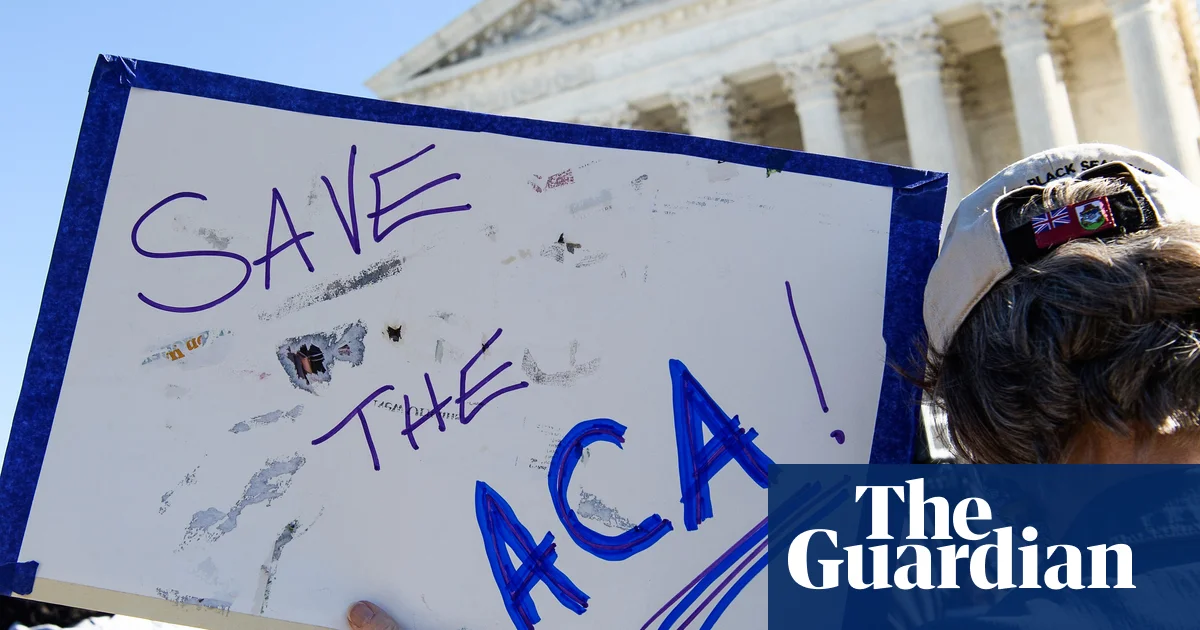
There’s a weird disconnect to the public debate about health in the United States. In January, millions of Americans may drop their health insurance as premiums skyrocket following the Trump administration’s decision to end federal subsidies that helped some 20 million people afford insurance on the Obamacare marketplaces.
Earlier this year, Republicans in Congress agreed to cut more than $850bn from the 10-year budgets of Medicaid, the health insurance program for low-income people, and the Chip health insurance program for children, in order to pay for some tax cuts. Given the US’s budgetary rules, that cut means an additional $500bn in funding for Medicare is at risk.
Meanwhile, in some corner of the US, far detached from these concerns, rich people are plowing money into startups researching how to extend life: some $12.5bn over the last 25 years, according to the Wall Street Journal.
OpenAI’s Sam Altman invested $180m in Retro Biosciences, which hopes to reprogram ageing cells. Tech billionaires from Google’s former CEO Eric Schmidt and Sun Microsystems’ Vinod Khosla have sunk hundreds of millions into NewLimit, which is trying to reverse cell ageing. Meta’s Mark Zuckerberg a few weeks ago reshaped his philanthropic foundation to focus on the intersection of biology and AI to eventually cure all disease.
A quick glance at the state of Americans’ health will tell you this mix of priorities is not ideal. American average life expectancy in 2023 was shorter than it was in 2010. It has fallen way below not just the lifespan of people in affluent nations in the European Union, Japan or Canada. Average life expectancy at birth in the US is now shorter than that of Albania and Czechia, Chile and Panama. It is four years shorter than the average life expectancy in Puerto Rico.
This is despite Americans’ enormous spending on healthcare, which is in a league of its own – inflated by a large private, profit-driven medical industry that charges patients and their insurers an arm and a leg every time they come into contact with the system, regardless of whether the intervention does any good to their health.
Like the US’s disturbingly profound poverty, its over-the-top mortality is not due to some technical shortfall or economic constraint. It is a choice. The United States is not only rich. It is better at inventing newfangled drugs and therapies than probably any other country in the world. What it is terrible at is ensuring that its people, even the poor ones, have access to the basic building blocks of a healthy life – from decent jobs and humdrum amenities like potable water, to access to health insurance.
American death and destitution are intimately connected. From the country’s fentanyl addiction to its obesity and its many suicides, often its most deadly afflictions do not call for fancy healthcare technology. It’s the social contract that must be fixed.
Americans’ short lives are not breaking news. Concerned scientists have been trying to draw attention to them for years. In 2013, the National Institutes of Health published a massive study titled “US Health in International Perspective: Shorter Lives, Poorer Health”, in which a panel of experts worked to identify the reasons that Americans were dying younger than people in other countries.
The study made recommendations, mostly about opportunities to learn from other countries. What has Washington done about it? Well, Republicans have been trying for years to revoke the Affordable Care Act. Then there were those cuts to Medicaid. And there’s that new stunted vaccine schedule, courtesy of the health secretary Robert F Kennedy Jr.
The people who are investing in futuristic life extensions are not dying young. Inequality of life expectancy is steeper in the US than in probably every other high-income country. Research some 10 years ago by scholars at Harvard, MIT, McKinsey and the US treasury found that the richest 1% of American men lived 14.6 years longer than the poorest 1%. For women, the gap was 10.1 years. What’s more, the longevity chasm between Americans in the top 5% and those in the bottom 5% widened by more than two years from 2001 to 2014.
Across the set of ailments that kill Americans at higher rates, from infant mortality to opioid overdoses, Americans’ disproportionate poverty plays a critical role in explaining its deficits. Research by economists from Brown University, Dartmouth College and the University of Southern California found that babies born to well-off American mothers died at about the same rate as babies of well-off European moms. Americans’ disproportionate infant mortality was accounted for almost entirely by the kids of poor people.
There’s a long list of reasons why Americans die younger: high infant and maternal mortality, and disproportionate suicide and homicide rates – which are unsurprising given the ubiquity of guns in American society. There are the road accidents – probably due to the fact that Americans drive more – and the lung ailments stemming from disproportionate smoking rates from the 1940s to 1980. There’s the obesity. And there’s what economists Angus Deaton and Anne Case called “deaths of despair”, which these days usually come at the hand of a fentanyl overdose.
Yet, perhaps the most significant factor explaining the US’s exceptionally short lives is that nobody really cares to prevent poor, marginalized Americans from dying. Washington is too busy providing tax cuts to rich people, so maybe they can invest in stopping cells from ageing.