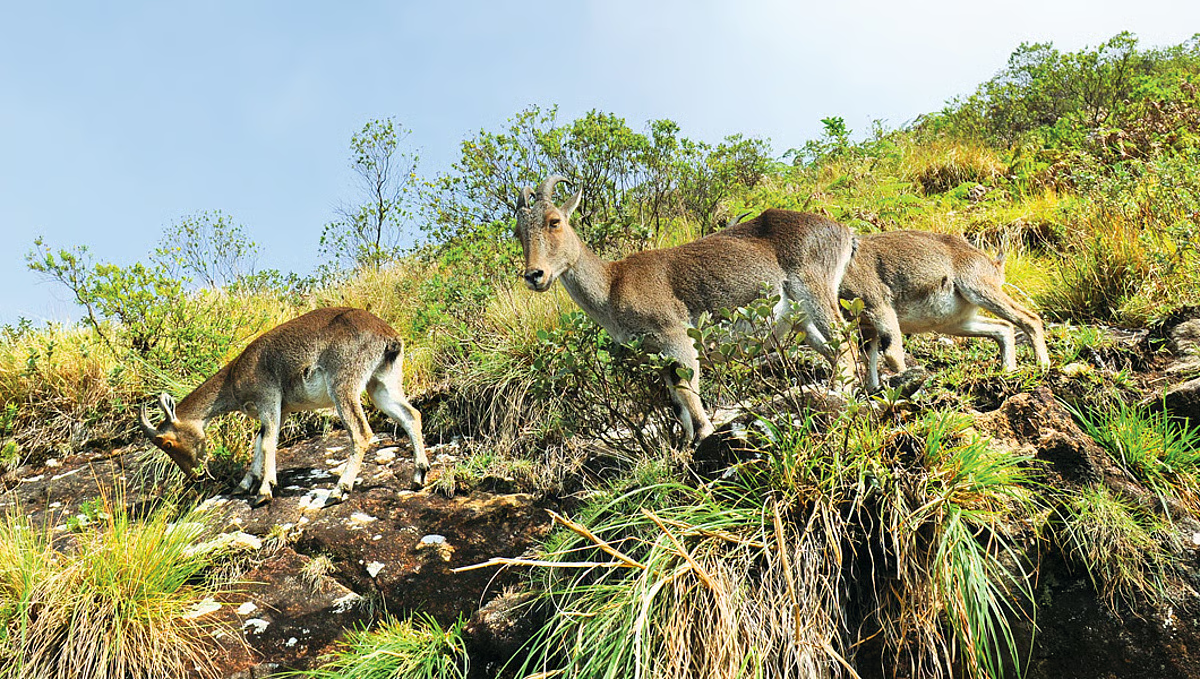
Few beings would know the Western Ghats as well as the Nilgiri tahr. For centuries, the ungulate has freely roamed the wind-swept shola forests interspersed with grassland habitats. The stocky, well-built goat, with distinctive curving horns and sure-footed gait, is perfectly adapted to steep cliffs and alpine meadows. Males, known as saddlebacks for the silvery patch along their spine, are particularly striking against the deep green backdrop: when the first light hits the slopes above Rajamala hills, one can watch them step out from behind grass tussocks.
In many ways, the Nilgiri tahr symbolises the hill tracts that form its only habitat. In ancient Tamil Sangam literature the ungulate, called varayãdu or mountain goat, is celebrated as a symbol of endurance and longing in the Kurinji landscape. Sangam poems describe wild goats leaping across stones in the blue hills, and later epics like Silappathikaram refer to spirited goats of the high country.
Folktales of the region’s Toda, Badaga and Kota tribal communities speak of shepherds who followed the tahr’s trail to escape storms. The ungulate is also important for the Muthuvan tribe that lives on the hills along the Kerala-Tamil Nadu border. The elders say following tahr tracks in fog helps locate hidden springs and safe passes.
Over the past decades, however, encroachment of the grasslands for agriculture and tourism and spread of invasive species like wattle and eucalyptus reduced vast tahr habitats to a few isolated pockets. Rising temperatures also push tahrs to higher elevations. The fragmented populations became vulnerable to genetic isolation and disease. Now, this number has risen sharply; in early 2025, a survey conducted by the forest departments of Kerala and Tamil Nadu placed the total population of the ungulates at about 2,668 individuals. Kerala hosts around 1,365 tahrs, with the largest and most secure population of 841 tahrs found inside Eravikulam National Park near Munnar. Tamil Nadu accounts for about 1,303 tahrs.