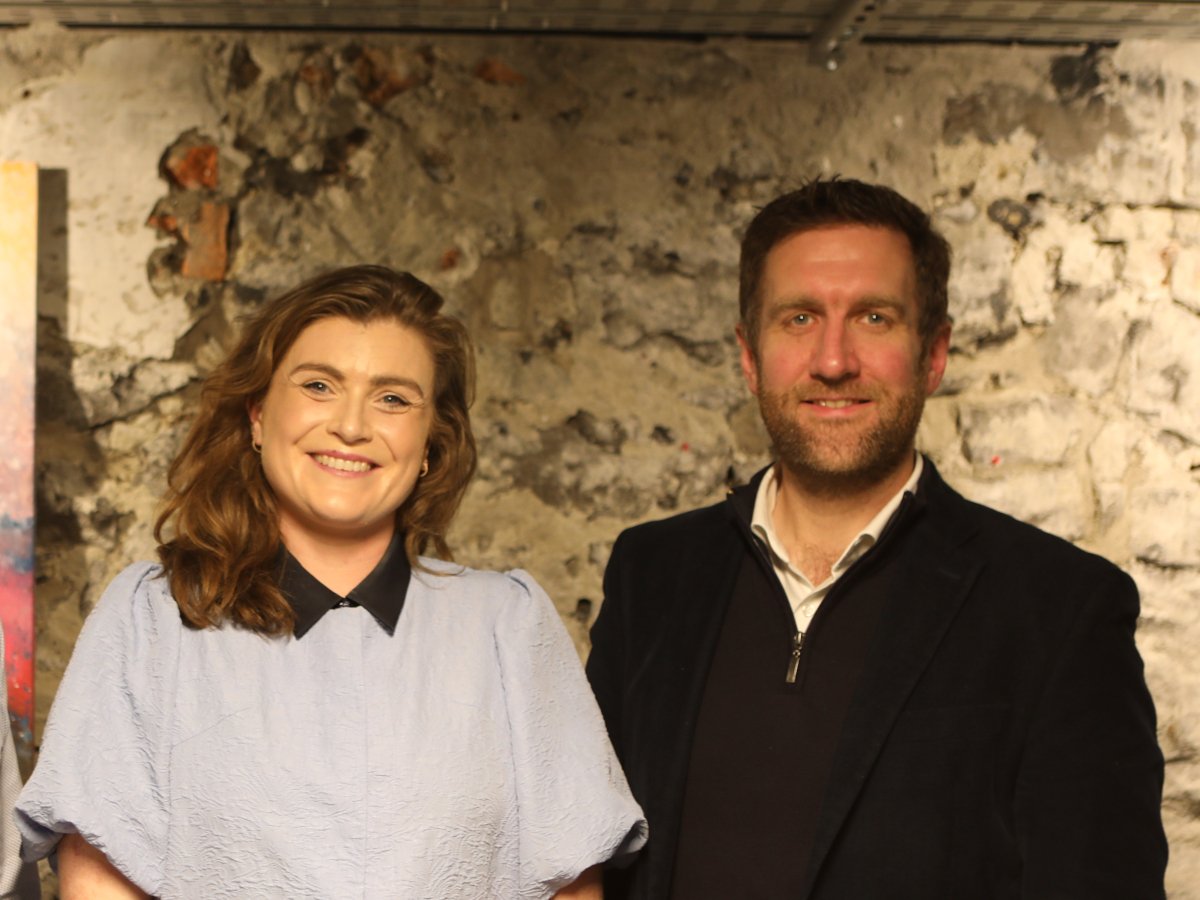
Tara Chklovski explores the widening skills gap in STEM, addressing some of the challenges impacting the sector and young people.
“There’s a widening skills gap”, explains Tara Chklovski, an expert who has spent more than 20 years building a pipeline of AI talent across more than 160 countries and who is also the CEO of global edtech platform Technovation. “But the harder problem is the mindset gap”.
The industry, she believes, is suffering from a profound irony, in that “as countries become wealthier, fewer people pursue STEM fields”, meanwhile there are consistent and sturdy barriers for those in less fortunate circumstances, despite growing interest in careers in this space.
Citing previous research she explains less students and graduates in regions such as Canada and the US are coming from STEM disciplines, compared to regions such as India, China, Malaysia and Tunisia, where the demand, she said, is considered to be much higher.
“Wealthy countries became prosperous because of STEM progress, yet as prosperity grows, these disciplines become less attractive. Meanwhile, lower-income countries face infrastructure barriers limiting STEM access.”
And the stakes could be “enormous”, as research suggests that the global skills gap has the potential to result in $8.5trn in unrealised annual revenue by 2030, hinting at a future in which the landscape could be challenging for those looking to begin their professional lives.
While you can’t accurately assess just how many young people globally are feeling anxious about how their entry into the workforce may be impacted, she finds “the world they’re facing is fundamentally different from what it was even 50 years ago.
“Our education systems haven’t really evolved to help young people tackle these hard problems. The current education model was largely designed for the industrial era, focused on taking instruction and memorising information”, adding, in an age where the jobs market is being dramatically transformed by automation, “this approach is inadequate.
Education is key
“What gives me hope is that it’s getting easier to learn these skills through the internet, free courses and AI-powered tools”, says Chklovski, but she also finds that educational systems are now being pushed to do what they were never designed to do, that is serve as continuous, global training engines for an AI-driven economy.
“Schools actually serve three purposes and only one of them is educating the future workforce”, firstly they serve as childcare institutions, then as vehicles for “civic and cultural transmission” and lastly as “workforce preparation”. “So yes, education needs to be adapted for the AI-driven economy, but there’s enormous institutional inertia keeping these systems in their current form.
“One practical way forward is to encourage students to tackle real-world problems using AI as a tool, supported by mentors from industry. This combination can make the connection between education and the working world more authentic without sacrificing the protective, exploratory nature of school that we should preserve,” she says.
The future is now
As adolescents look to build their sense of purpose, grow their skills and carve out a future plan, they can find empowerment in identifying and addressing challenges within their own communities and teams, working towards the development of AI start-ups that address genuine concerns in a very real way.
“Then comes the process of figuring out how to set up and build a company to tackle it. Entrepreneurship and the idea of innovation are some of the most powerful skills or mindsets that you can have today. Why? Because with AI as a real team member, there’s so much you can do.
“Research has suddenly become very cheap, and you can quickly learn and access the world’s knowledge on a particular topic as your stepping-off point. You bring your personal perspective and unique insight to the problem, but the tools available to you are incredibly powerful. So the only thing holding you back is the size of your ambition”, or a mindset telling you “that’s not for me”.
Therein, “the most important skill is really a mindset of courage”, she says, as people need to have the ability to look at a big problem and not find themselves intimidated by it.
Don’t miss out on the knowledge you need to succeed. Sign up for the Daily Brief, Silicon Republic’s digest of need-to-know sci-tech news.