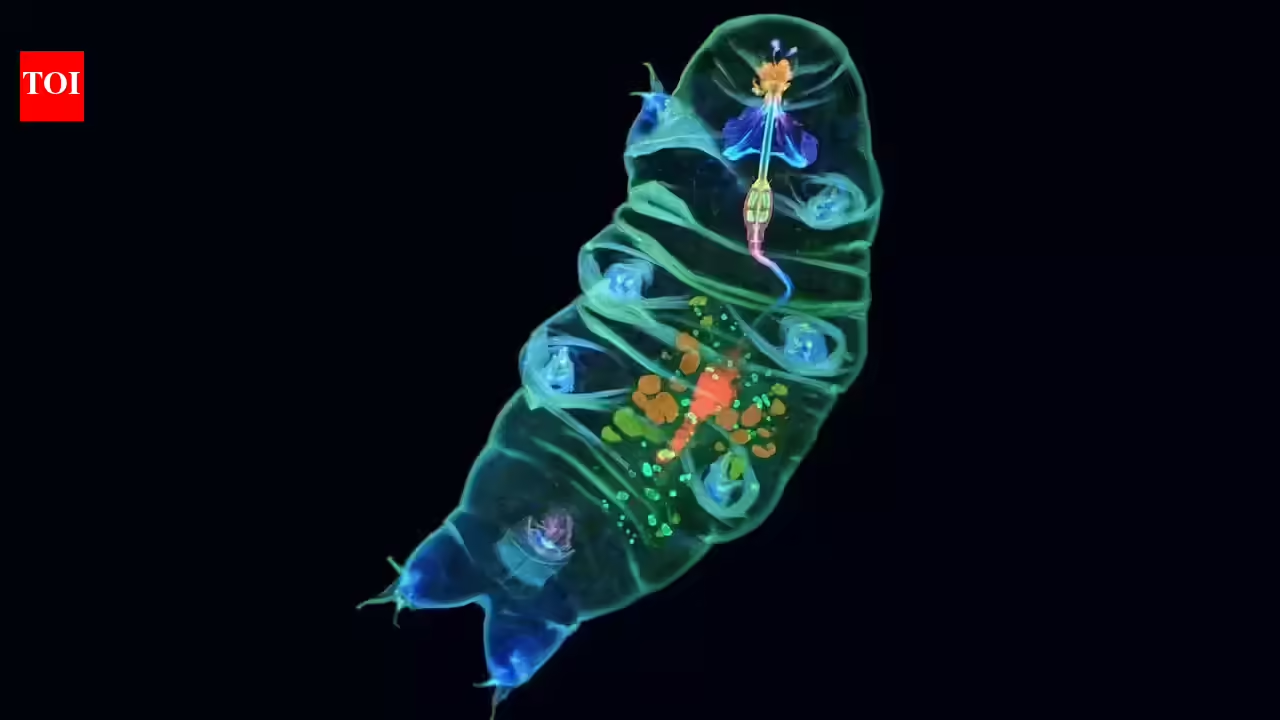
If there were ever an animal that seemed built for space, it might be the water bear. Also known as tardigrades, these microscopic creatures already sound like science fiction. They survive being frozen, boiled, dried out, blasted with radiation, and even exposed to the vacuum of space. So sending them to the International Space Station almost feels like a formality. Scientists aren’t doing this just because it’s cool (though it is). They want to understand how water bears adapt to microgravity and radiation, and what that might teach us about life under extreme conditions. It’s strange to think that something smaller than a grain of sand could help answer big questions about space travel, human health, and survival beyond Earth.
What exactly is a Water Bear
Water bears or tardigrades are tiny animals you need a microscope to see, but once you do, they’re oddly memorable. They look like chubby gummy bears with eight stubby legs. Cute, but don’t let that fool you. These creatures are incredibly tough. They live almost everywhere on Earth, from mountain tops to deep-sea mud, and even in your backyard moss if you look closely enough. One little-known fact is that water bears can shut down almost all life processes and enter a state where they’re basically on pause. No eating. No moving. Barely any metabolism. Then, when conditions improve, they wake up as if nothing happened. That ability is a big reason scientists are so fascinated by them.
How do Tardigrades survive space
As mentioned in an article by NASA, when water bears face extreme conditions, they curl up into a tiny ball called a “tun.” In this state, they dry out and protect their cells using special proteins that no other animals seem to have. These proteins turn the inside of their cells into something like glass, locking important molecules in place so they don’t break. It’s a bit like packing fragile items in bubble wrap before moving house. In space, where radiation and microgravity can damage cells, this trick might be especially useful. What’s wild is that when water returns, the glassy protection dissolves, and the water bear just carries on with life.
Why scientists are sending Water Bears to space
Researchers are now sending water bears to space to study how they respond to microgravity over time, even across generations. Some will be preserved after a short stay, while others will live, eat, and reproduce in space for weeks. By studying changes in gene activity, scientists hope to see how these animals adjust at a molecular level. This isn’t just about curiosity. Space is hard on the human body, weakening bones, muscles, and immune systems. If water bears have biological tricks that reduce damage from radiation or stress, those insights might one day help protect astronauts on long missions to the Moon or Mars.
Have Tardigrades been to space before
One surprising detail is that water bears have already survived direct exposure to space before. In earlier missions, they were placed outside spacecraft, fully exposed to vacuum and cosmic radiation, and many survived. That makes them the only known animals to do so. It seems almost unfair how resilient they are. Studying them might also help on Earth, from improving how we preserve medicines to making crops more resistant to drought. There’s something comforting about the idea that answers to massive problems might come from something so small and unassuming.Water bears drifting around the space station feel both absurd and perfect. A microscopic creature quietly teaching us how to survive the universe.