
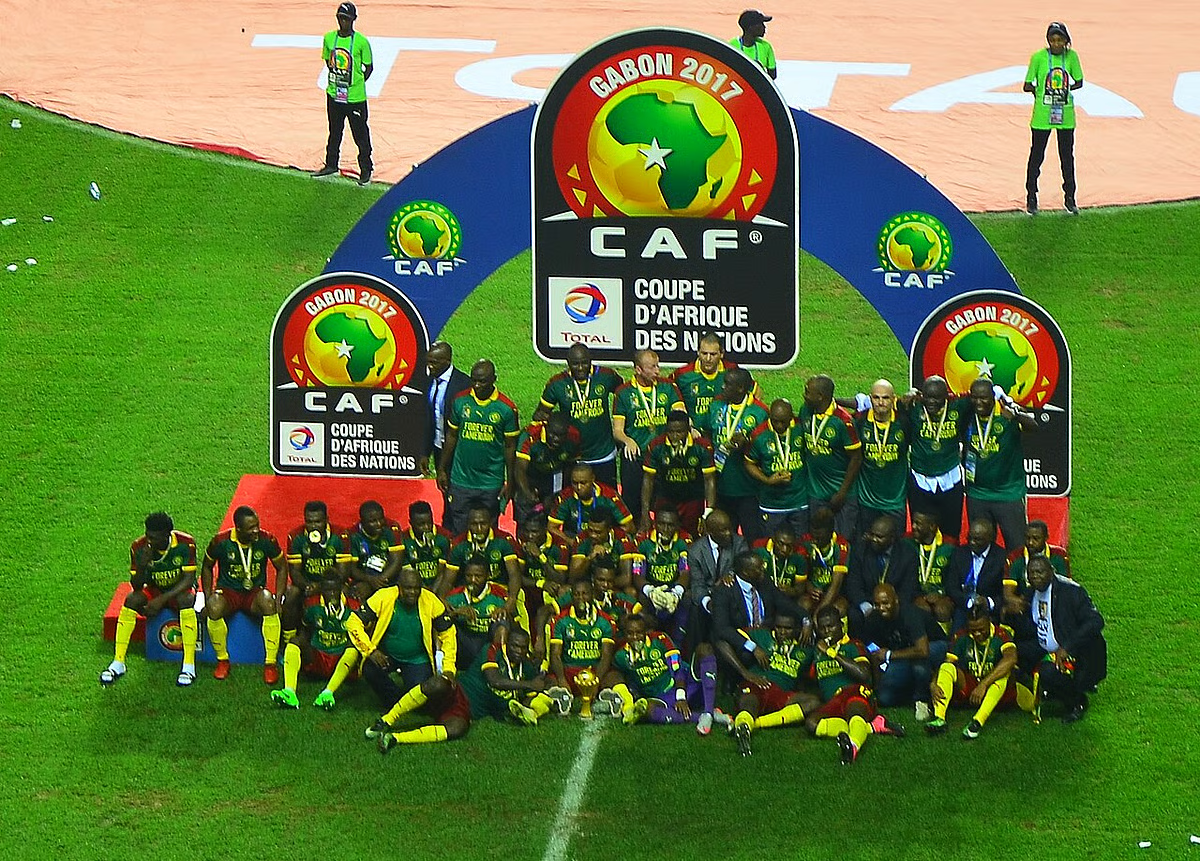
African civil society organisations are questioning fossil fuel major TotalEnergies’ sponsorship of the finals, the continent’s biggest football tournament, describing it as a deliberate attempt to “greenwash pollution” linked to the company’s oil and gas operations across Africa.
Groups led by Greenpeace Africa say the French multinational’s sponsorship sits uneasily alongside its environmental and human rights record, particularly its involvement in project and the controversial — the world’s longest heated crude oil pipeline. They argue these projects clash with the values of African pride and culture associated with the tournament, which runs from December 21, 2025 to January 15, 2026 in Morocco.
Satirical campaign targets ‘greenwashing’
Greenpeace Africa, working with the — an African activist digital media organisation — and partners in the Network, has released a satirical video challenging TotalEnergies’ sponsorship of AFCON. The campaign portrays the sponsorship as an attempt to obscure what it describes as the company’s “destructive environmental and human rights record” across the continent.
A second satirical video, produced over Christmas by a Senegalese hip-hop media group, together with the KPO Network, has extended the campaign into Francophone Africa. Campaigners say the videos aim to reinforce calls to end what they describe as the “greenwashing” of African football.
The campaign’s challenges the company’s association with “African pride, culture and football” while, activists say, it continues to expand fossil fuel projects that drive climate change, displace communities and undermine human rights from Mozambique to Tanzania, including through EACOP.
Campaigners argue that TotalEnergies’ continued sponsorship comes at a time of growing scrutiny over fossil fuel expansion, land acquisition and legal challenges linked to alleged misleading climate claims and environmental harm. They say these projects have, in some cases, resulted in mass displacement, making the company’s association with the three-week tournament an act of “deceptive greenwashing”.
Sponsorship as a distraction
They also contend that the branding strategy is designed to distract the public from mounting evidence of harm linked to the company’s operations.
“TotalEnergies isn’t sponsoring AFCON to support African football; they’re using the beauty of the game to hide the ugliness of their pollution,” the KPO Network said in a statement. “They only care about their image and profits. Greenwashing is their favourite tactic, and this pretend shift into renewables is just another PR stunt. AFCON is simply another chance for them to distract Africa from the destruction they cause across our continent.”
Campaigners argue that football — one of Africa’s most powerful cultural forces — should not be used to legitimise companies whose core business accelerates climate change and deepens inequality. They are urging the Confederation of African Football (CAF) to adopt fossil-free sponsorship policies, similar to those that removed tobacco sponsorship from sport in previous decades.
The video launch forms part of a wider continental mobilisation calling on sports institutions, governments and sponsors to prioritise people and the planet over polluters’ profits.
“As Africa faces worsening floods, droughts and heatwaves due to the climate crisis, allowing polluters to wrap themselves in symbols of unity and joy is unacceptable,” said Sherelee Odayar, oil and gas campaigner at Greenpeace Africa. “AFCON should inspire hope, resilience and solidarity — not serve as a billboard for climate destruction.”
Banks warned of legal and human rights risks
As the tournament begins, campaigners are also calling on financial institutions to withdraw support from TotalEnergies’ Mozambique LNG project, following the recent exits of and the Dutch export credit agency , both of which cited human rights concerns.
Civil society organisations have sent a formal to a range of public and private financial institutions linked to the project, warning of alleged human rights violations, worsening security conditions and economic risks for Mozambique. The letter highlights growing legal and environmental risks for institutions involved and urges them to respond formally by January 15, 2026.
The call follows the withdrawal of UKEF and Atradius DSB in early December, after both agencies pointed to heightened and human rights risks. Investigations into alleged human rights violations and assessments of security conditions surrounding the project, commissioned by the Dutch government, were also made public earlier this month.
“Given the risks and difficulties in Mozambique to address human rights violations or even to get acknowledgement from the authorities that they occur, it becomes important that these crimes are investigated in other spaces and jurisdictions, such as in France,” said Daniel Ribeiro of Justiça Ambiental. “There must be justice for the victims and their families, and there must be full accountability from all parties involved.”
Juliette Renaud, coordinator at Friends of the Earth France, said reports documenting alleged abuses linked to the Mozambique LNG project were “piling up”. “While TotalEnergies is already facing twos before French courts, financial actors should now realise that they are also increasingly exposed to legal risks if they don’t withdraw from this disastrous gas project,” she stated.
The letter also urges banks to reassess their involvement in light of climate commitments. “Banks cannot turn a blind eye to the reports published by the Dutch government that describe serious human rights violations,” said Antoine Bouhey, coordinator of the Defund TotalEnergies campaign. “It is time for Crédit Agricole and Société Générale to wake up to the reality of this project and walk away – in the interests of the local communities, and the global climate.”
Government urges project restart amid concerns
In December, Mozambique’s government urged TotalEnergies to , while auditing a revised budget submitted by the company in November. Critics warn the proposed deal — which includes additional costs of $4.5 billion and an extended concession period — could delay and reduce benefits for the country.
Operations at the site have been stalled for several years following a deadly Islamist insurgency in Cabo Delgado that killed dozens of people.
“Export credit agencies exist to shield banks and companies from risk,” said Rieke Butijn, a climate campaigner with BankTrack. “When they refuse to back the Mozambique LNG project because it is too risky, financial institutions — especially those that were covered by UKEF or Atradius, like Standard Chartered — need to come to the same conclusion and withdraw support for the project. This is not only about financial exposure, but about basic responsibility: no bank should associate itself with a company accused of complicity in war crimes.”