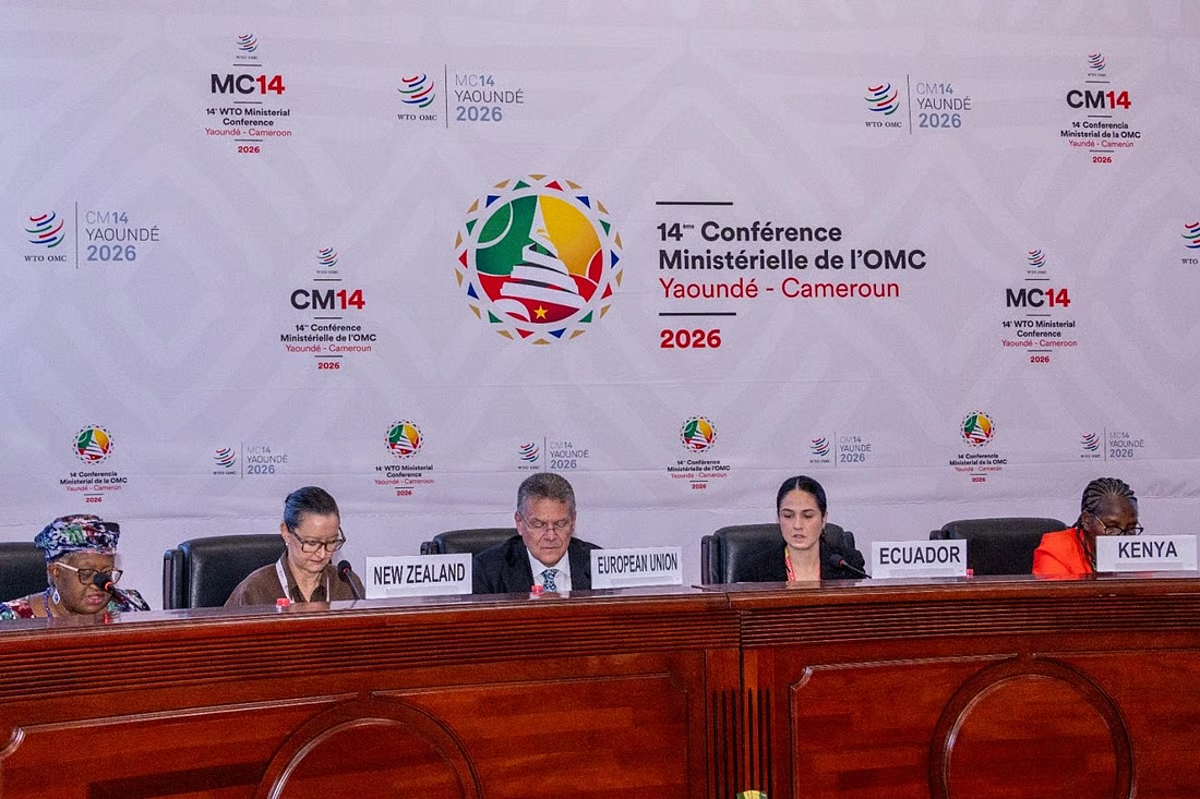
The coalition adopted a ministerial communique that leans on a “menu of voluntary actions” to guide future work at the trade-climate interface. This set of actions covers:
-
Ministerial-level dialogue: Continued dialogue between trade, climate, and finance ministers.
-
Multilateral engagement: Taking forward trade-climate discussions at forums such as WTO ministerials and UN climate change conferences.
-
WTO processes: Engage within WTO bodies and mechanisms, including committees and Trade Policy Reviews, covering domestic climate measures affecting trade, sustainable production, climate technology dissemination, and the role of trade agreements in supporting climate action.
-
Support for developing countries: Technical assistance and capacity-building, particularly for least developed countries (LDCs) and small island developing states (SIDS).
-
Sectoral cooperation: Work across areas such as renewable energy, green hydrogen, biotrade, sustainable agriculture, fisheries, and climate resilience.
-
Standards and measurement: Efforts related to carbon accounting, including embodied emissions in traded goods.
-
Private sector engagement: Involvement of MSMEs, supply chains, and women’s participation in trade.
-
Trade agreements: Exploring synergies across multilateral, plurilateral, regional or bilateral trade agreements to support dissemination and uptake of climate-related goods and technologies.
Coalition’s role in the trade-climate space
The Coalition of Trade Ministers on Climate, formed in 2023 and co-led by the Trade Ministers of Ecuador, the European Union, Kenya, and New Zealand, serves as a platform for 63 member countries’ ministerial-level engagement on the intersection of trade and climate policy. Its work focuses on dialogue, coordination, and the identification of areas for cooperation, rather than negotiated outcomes.
Developments on fossil fuel subsidy reform
In another development, 48 WTO members co-sponsoring the Fossil Fuel Subsidy Reform initiative issued a joint ministerial statement on the opening day of conference. The statement took stock of work undertaken since MC13 and outlined areas of continued engagement under the initiative.
It made a note of efforts by members to improve transparency around fossil fuel subsidies, through information sharing and work on their scale, structure, and impacts on trade and the environment.
The statement also referred to advancing work towards the ‘rationalisation’ and ‘phase-out or elimination’ of fossil fuel subsidies. As part of this, members highlighted two areas of output under the initiative: first, transparency-related work through an updated list of questions on fossil fuel subsidies and subsidy reform, intended for use in WTO trade policy reviews; and second, work on “temporary crisis measures”, focusing on how to address time-bound subsidies introduced during periods of energy crisis.
The four-day meeting will end on March 29.