- Jharkhand’s tribal farmers are returning to Indigenous rice for its superior taste, nutrition, income potential and resilience to climate extremes.
- Families save and share seeds across generations, keeping food traditions alive while earning better by selling these grains in local markets.
- Protecting and cultivating traditional rice varieties strengthens local food security and safeguards invaluable crop genes for the future.
Jhalo Devi and her husband, Basu Oraon, tried cultivating hybrid paddy for five years. The result? Higher costs, more pesticides, and less nutrition. The couple are third-generation Oraon tribal farmers from Jahupkokotoli village in Gumla district of Jharkhand. Like many farmers in the state, they eventually made a choice — to abandon modern hybrids and return to the Indigenous rice their ancestors cultivated for generations.
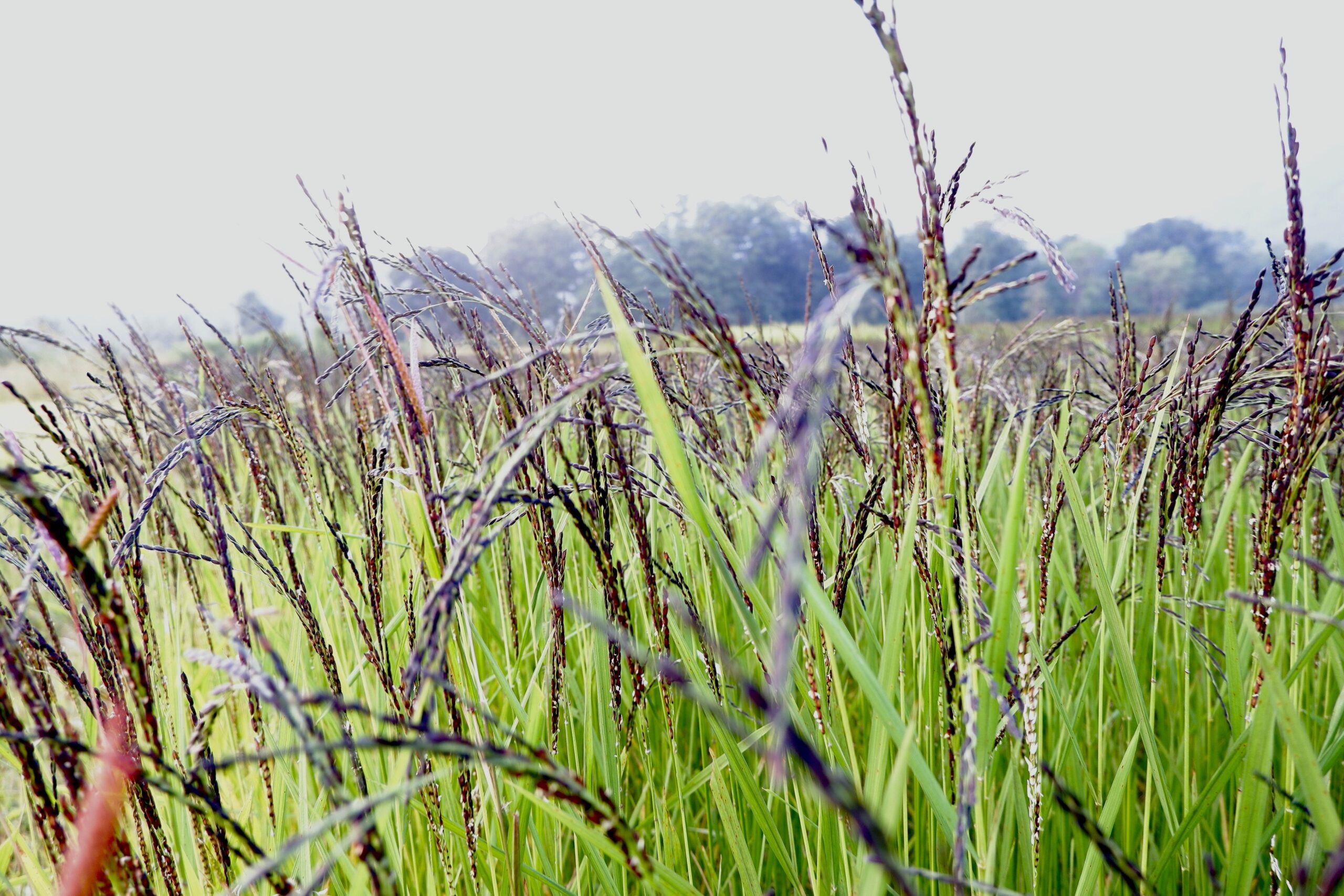
“Look how healthy these grains are,” says 64-year-old Jhalo Devi, standing in a field that defies the usual image of a lush green paddy crop. Under the winter sun, the grains glow like black diamonds. “This is our dehati dhan (native paddy), Kala Jeera.”
The reasons are both practical and profound. “Hybrids get a lot of diseases; they don’t grow without pesticides,” says Basu, 60. In contrast, their Kala Jeera yields well, fetches a premium price, and needs no fertilisers.
This shift is not merely about tradition; it is a strategic response to climate change and rising costs. Native varieties have evolved to withstand local adversities. “They have built-in resistance and possess diverse genes. In case of drought, flood, or pest attack, they perform better than hybrids,” explains Brijesh Pandey, scientist at Krishi Vigyan Kendra, Gumla. Agroecologist Debal Deb notes that these folk varieties have an “amazing capacity for adaptation,” honed over generations to suit local soil, climate, and pests.

Indigenous paddy lasts longer
The couple recall the days when they grew several varieties of red and black rice. “We once grew a variety called Namri, which was red, then Kalamdani, also red, and Karhani, a black rice rich in vitamins (nutrition),” says Jhalo.
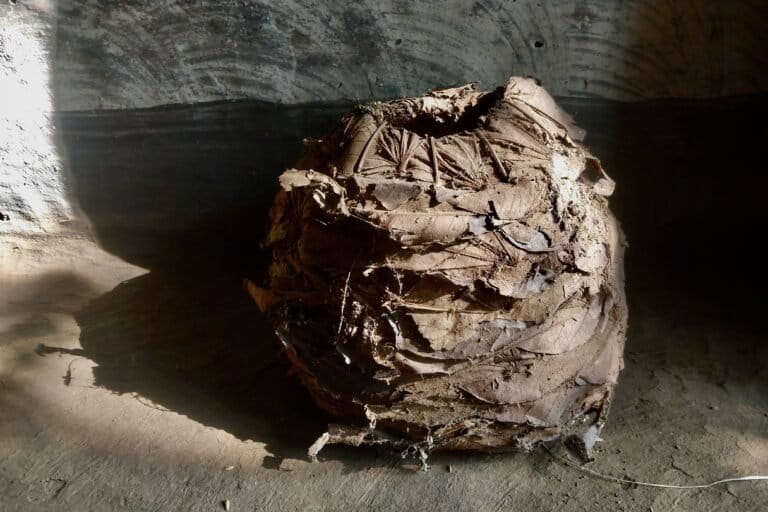
They also cultivated Mehia, a small, white-grained variety; a red grain, Ramdi; and a sweet, black-grained rice, Gopal Bhog. “Earlier, our harvest was so good that three chatka (traditional bamboo grain storage) would fill up with grain,” she recalls. But over time, the younger generation distanced itself from farming. Today, the couple cultivate seven acres — six acres with native varieties, Kala Jeera and Mehia, and one acre with hybrid paddy, a compromise Jhalo jokingly attributes to her husband.
“The black rice tasted so good. There’s a world of difference between today’s hybrid rice and the old varieties. Even when eaten as leftover or as fermented water rice, it was delicious,” she says. Hybrids, she explains, spoil quickly. “If you cook hybrid rice in the morning, it will spoil by evening. But if you cook black rice and keep it in water, it won’t spoil even after three days.” Jhalo has even preserved seeds of Karhani, a black variety she says has medicinal value. “We eat it only when someone falls sick. It’s beneficial for people with diabetes and even for ailments like jaundice,” she adds.

What Jhalo knows from her experience is supported by scientific data. Rice and wheat — which meet over 50% of India’s daily energy requirements — have lost up to 45% of their nutritional value in the past 50 years. Zinc content in rice has fallen by 33%, iron by 27%, and most troublingly, arsenic levels have surged by 1,493%. At this rate, researchers estimate that grains could become nutritionally impoverished for human consumption by 2040.
“The Indigenous paddy tastes better than hybrid varieties,” says Lambodar Behera, Principal Scientist at the ICAR–National Rice Research Institute, Cuttack. “Black and red rice often have antioxidant and medicinal properties. They can be useful for people with diabetes, have anti-inflammatory compounds and may help with joint pain. The deeper the red or black colour, the richer the nutrition; some have a good aroma, even better than Basmati.”
A 2021 study found that traditional black rice is nutritionally richer, with more vitamins, minerals, antioxidants and medicinal properties than commonly consumed white rice varieties. “I tell him to plant only Indigenous varieties, but this old man doesn’t listen,” says Jhalo, teasing Basu. “But when I serve him hybrid rice, he won’t eat it. He says it has no taste.”
It is not just about taste and health; Kala Dhan also fetches a fair price. “This rice sells easily for ₹80-120 a kilo in the market,” says Basu. The couple sell their produce in the local markets of Lohardagga and Banari. “Everyone loves our rice and often asks for it during festivals and special occasions.”


Greater resilience to climate extremes
This year, Jharkhand received almost 1,200 mm of monsoon rainfall (June-September) — 17% above normal and the third-highest since 2001, causing damage to Kharif crops, especially paddy and maize, across the state.
Dinbharan Nageshiya, 32, a farmer from Chorkakhar village in Latehar district who cultivates Indigenous paddy on his 5.5 acres, explains that traditional varieties such as the red rice Sanpiya and black rice varieties Karhani, Baghpanjara, Jeera Phool, and Rani Kajra were once common in their diet. Over the past decade, many villagers switched to hybrids. But Dinbharan and a few neighbours who held on to Indigenous varieties were proved right during this year’s rain. “All farmers who grew hybrid paddy lost their crops, while those with Indigenous varieties had good harvests,” he says.
“We bought hybrid seed and planted it on three acres. They failed this year,” says Dasi Kisan, 42, from the same village, who spent over ₹30,000 on this season’s paddy. Standing between two fields, Dinbharan points out, “This traditional paddy is thriving without fertiliser. That hybrid field? Dead.”
For Jharkhand, the resilience of Indigenous varieties matters. The state is prone to climate extremes and has suffered 10 droughts in the last 25 years. As climate variabilities intensify, farmers like Dinbharan are showing that older seeds may offer better survival odds than newer ones. Yet many Indigenous varieties have already been lost. R.H. Richharia, one of India’s leading rice experts, documented and collected around 19,000 varieties during his career, estimating that India was once home to 200,000 rice varieties.

A rice variety that’s a lifeline in mining areas
Indigenous varieties not only have greater climate resistance but also remarkable adaptability. One such black rice variety is Gauda Dhan of the Pat region. Gauda Dhan thrives in southern Gumla district, part of the Chhotanagpur plateau scarred by open-cast bauxite mines. “We have grown Gauda Dhan for at least five generations,” says Sukhani Asur, 56, of Kujam village. She belongs to the Asur tribe, classified as a Particularly Vulnerable Tribal Group (PVTG).
Villagers grow only kharif crops; rabi cultivation is impossible. “There is no water source here,” she says. For locals, Gauda Dhan means survival.
“We must conserve Gauda genotypes,” says Somnath Roy, Scientist at ICAR–National Rice Research Institute, Hazaribag. “They tolerate drought and phosphorus starvation, which are common in acidic mining soils. Their longer roots extract phosphorus from deeper layers.”
A study of the Sundarban’s traditional rice varieties found that farmers grow many local types suited to salty soil. But these yield less than modern high-yielding varieties, so most farmers switched to newer types for bigger harvests.
Yet older varieties persist. They resist salt well, protecting crops during floods and storms. Farmers also value their taste, reminiscent of childhood. Seeds cost nothing — farmers save them after harvest. These varieties need little fertiliser or pesticide, keeping costs low.
About 50 km from the Pat region, in Latehar district, lies Vijaipur. The village grows only Indigenous dehati dhan. As in the Pat region, no crops are grown in the Rabi season due to lack of water. But the village has its own way to endure the dry spell. Some grow Sathi (a 60-day, drought-escaping rice) and Fakthi (a 70–90 day, late-sown option). “Even in upland fields or dry years, Sathi yields if planted,” says farmer Joseph Kujur, 37.
“Sathi completes its life cycle before water stress hits,” explains Somnath Roy. “If rain doesn’t come until mid-August, farmers sow Sathi or Fakthi later. It still survives.” Some varieties thrive under excessive rain. “Karhani grows well in low-lying fields with heavy rainfall,” says Joseph. “It matures quickly and yields well.”
Indigenous paddy is hardier and less disease-prone. “Even after storms, grains don’t fall,” Joseph says. “You can delay harvest a week and still get a full crop. Hybrids lack that toughness. Their seeds sprout if they fall.”
Read more: Farmers demand separate minimum support price for natural farming products
Banner image: A field of Jeera Phool, a variety of black rice. Image by Ashwini Kumar Shukla.