US announces $11bn arms sales to Taiwan
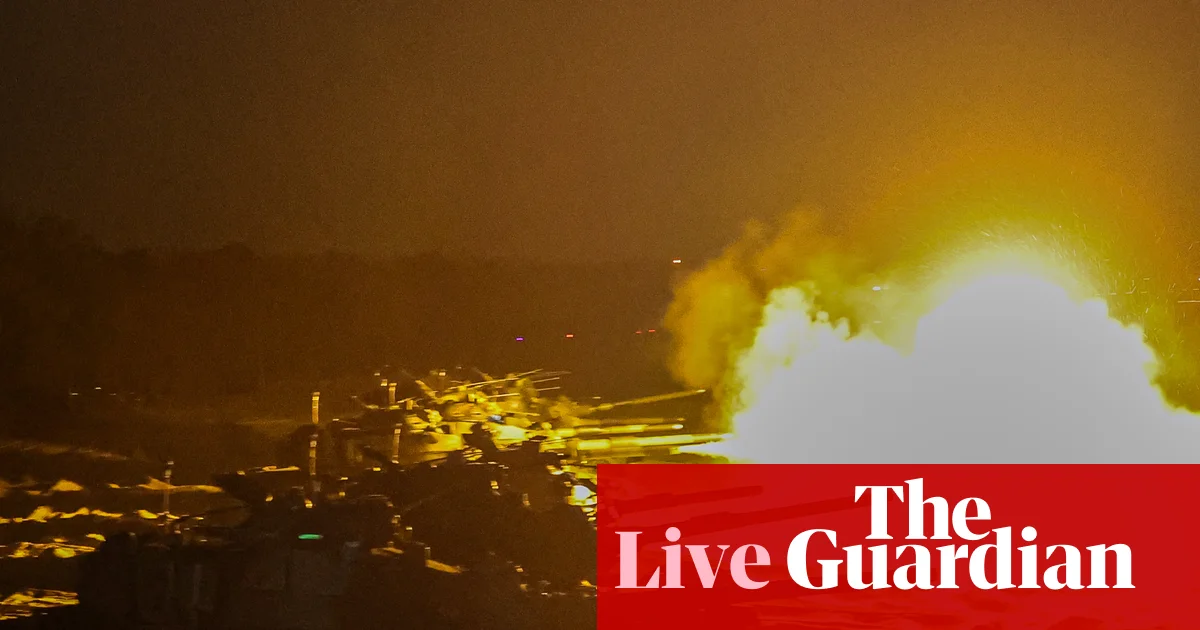
In other news, the Trump administration has announced a huge arms sale worth about $11bn to Taiwan.
If approved by Congress, it would be the largest-ever American weapons package to Taiwan, exceeding the total amount of $8.4bn in US arms sales to Taiwan during the Biden administration.
The state department, which announced the package on Wednesday, said the sales served “US national, economic, and security interests by supporting the recipient’s continuing efforts to modernize its armed forces and to maintain a credible defensive capability”.
As per reporting from the Associated Press, the eight arms sales agreements announced cover 82 high-mobility artillery rocket systems, or Himars, and 420 Army Tactical Missile Systems, or Atacms – similar to what the US had been providing Ukraine during the Biden administration to defend itself from Russia – worth more than $4bn. They also include 60 self-propelled howitzer systems and related equipment worth more than $4bn and drones valued at more than $1bn.
Other sales in the package include military software valued at more than $1bn, helicopter spare parts worth $96m and refurbishment kits for Harpoon missiles worth $91m.
Key events
Beijing condemns weapons package, saying US ‘using Taiwan to contain China will not succeed’
China’s foreign ministry has strongly condemned the move, saying it would violate diplomatic agreements between Beijing and Washington, seriously harm China’s sovereignty, security and territorial integrity; and undermine regional stability.
Foreign ministry spokesperson Guo Jiakun was quoted as having said:
The ‘Taiwan independence’ forces on the island seek independence through force and resist reunification through force, squandering the hard-earned money of the people to purchase weapons at the cost of turning Taiwan into a powder keg …
This cannot save the doomed fate of ‘Taiwan independence’ but will only accelerate the push of the Taiwan Strait toward a dangerous situation of military confrontation and war.
The US support for ‘Taiwan Independence’ through arms will only end up backfiring. Using Taiwan to contain China will not succeed.
Taiwan’s defence ministry thanked the Trump administration for the package, saying it would help the island in “rapidly building robust deterrence capabilities”.
The announcement of the huge arms sale comes as Taiwan is facing an increasing amount of pressure to prepare itself against the threat from China, which views the self-governed country as part of its territory and has not ruled out using force to “reunite” with it.
The US recognizes only Beijing and not Taiwan, where the Chinese mainland’s defeated nationalists fled in 1949 after losing the civil war to the communists and which has since turned into a flourishing democracy and technology hub.
Under US law, the US is required to provide Taiwan weapons for its self-defense but Washington has been deliberately ambiguous on whether it would use force to defend Taiwan.
Trump’s predecessor Joe Biden repeatedly suggested he would order the US military to intervene if China moved on Taiwan.
US announces $11bn arms sales to Taiwan
In other news, the Trump administration has announced a huge arms sale worth about $11bn to Taiwan.
If approved by Congress, it would be the largest-ever American weapons package to Taiwan, exceeding the total amount of $8.4bn in US arms sales to Taiwan during the Biden administration.
The state department, which announced the package on Wednesday, said the sales served “US national, economic, and security interests by supporting the recipient’s continuing efforts to modernize its armed forces and to maintain a credible defensive capability”.
As per reporting from the Associated Press, the eight arms sales agreements announced cover 82 high-mobility artillery rocket systems, or Himars, and 420 Army Tactical Missile Systems, or Atacms – similar to what the US had been providing Ukraine during the Biden administration to defend itself from Russia – worth more than $4bn. They also include 60 self-propelled howitzer systems and related equipment worth more than $4bn and drones valued at more than $1bn.
Other sales in the package include military software valued at more than $1bn, helicopter spare parts worth $96m and refurbishment kits for Harpoon missiles worth $91m.
FBI deputy director Dan Bongino to step down in January
Jenna Amatulli
Jenna Amatulli is the deputy head of news for Guardian US
The FBI deputy director, Dan Bongino, has confirmed that he is stepping down in January.
In a statement posted on social media, Bongino thanked Donald Trump, Kash Patel, the FBI director, and Pam Bondi, the attorney general he reportedly clashed with over her decision not to release files from the federal investigation into Jeffrey Epstein, the late sex offender who socialized with Trump for more than a decade.
“Dan did a great job,” Trump told reporters earlier, when asked about reports that Bongino, a former Secret Service agent turned podcaster, planned to resign.
“I think he wants to go back to his show,” the president said …
In May, Bongino cried during an appearance on Fox News where he complained about the sacrifices he made to take up his role as FBI deputy director.
“I gave up everything for this. I mean, you know, my wife is struggling … I stare at these four walls all day in DC, you know, by myself, divorced from my wife. Not divorced, but I mean, separated. And it’s hard,” he said.
You can read the full story here:
Trump announces ‘warrior dividend’ for troops
Trump announced on Wednesday he would be issuing checks to US service members for $1,776 (£1,329), calling the payment, which he said would be paid for, in part, by his tariffs, the “warrior dividend”.
In a televised address to the nation, the president said the cheques for 1.45 million US service members should arrive before Christmas.
“1,450,000 military service members will receive a special, we call, warrior dividend before Christmas. A warrior dividend. In honor of our nation’s founding in 1776, we are sending every soldier $1,776,” Trump said.
“And the checks are already on the way,” he added.
Trump credited his sweeping tariffs for bringing in money to the US, but did not set out details about how the initiative would be funded in full.
The defense secretary, Pete Hegseth, who has regularly outlined his visions for a cultural shift at the Pentagon and a so-called greater “warrior ethos”, directed the Pentagon to pay out $2.6bn as a “one-time basic allowance for housing supplement to all eligible service members in pay grades O-6 and below,” a senior official told CNN.
The Trump administration is not only conducting deadly strikes on alleged Venezuelan drug-smuggling boats, the president has also targeted the country’s main source of income: the oil industry.
Venezuela has the world’s largest proven oil reserves and produces about 1m barrels a day. The country’s economy depends on the industry, with more than 80% of output exported.
Trump said earlier this week that he had instituted a blockade of all sanctioned oil tankers entering and leaving Venezuela, as he accused Caracas of using oil to fund drug trafficking and other crimes and vowed to escalate the US’s military buildup.
Here is an extract from a useful explainer by the Guardian’s energy correspondent, Jillian Ambrose, on the reaction to Trump saying on Tuesday he was ordering a “total and complete blockade” of all oil tankers that are under sanctions entering and leaving Venezuela, which came only a week after the US seized an oil tanker off the country’s coast:
Market analysts at Goldman Sachs said the loss of Venezuelan crude exports owing to Trump’s blockade could cause the market to tighten slightly in the short-term, which would lead to higher prices.
But in the longer-term, a political upheaval that would allow for an influx of western oil companies into the country could mean an increase in oil exports and greater supplies in the market.
The blockade prompted a sharp rise in the international oil price as traders factored in the growing possibility of disruption to global supplies.
Russia says it hopes Trump will not make ‘a fatal mistake’ on Venezuela after latest deadly vessel strike
Good morning, and welcome to our live coverage of US politics. Russia’s foreign ministry said this morning that it hopes the Trump administration will not make a “fatal” mistake over Venezuela after the US military carried out its latest lethal strike on a vessel in the eastern Pacific on Wednesday, killing four men.
“We hope that the D. Trump administration, which is characterized by a rational and pragmatic approach, will not make a fatal mistake,” the Russian foreign ministry said.
The ministry said that Moscow was concerned about the potential impact of US military action on international navigation, and said it hoped the US would not wade into a situation that would have “unpredictable consequences for the entire western Hemisphere”.
On Wednesday, the defense secretary, Pete Hegseth, said the “lethal kinetic strike” on the vessel allegedly engaged in “narco-trafficking operations” had killed four people.
The US has over 20 vessels in the Pacific and the Caribbean near Venezuela as part of Donald Trump’s escalating campaign in the region, which he says is targeting drug trafficking without publishing evidence to justify his claims.
Since September, the US military has killed about 100 people with its strikes on boats that were allegedly transporting illegal drugs to the US. Legal experts have accused the US of conducting an unchecked campaign of extrajudicial killings in international waters.
Venezuelan President Nicolás Maduro, in power since 2013, has said that Trump wants to remove him from office and warned that Venezuelan citizens and the military will resist any such attempt.
We will have more on this story, and other political developments in the US, shortly.