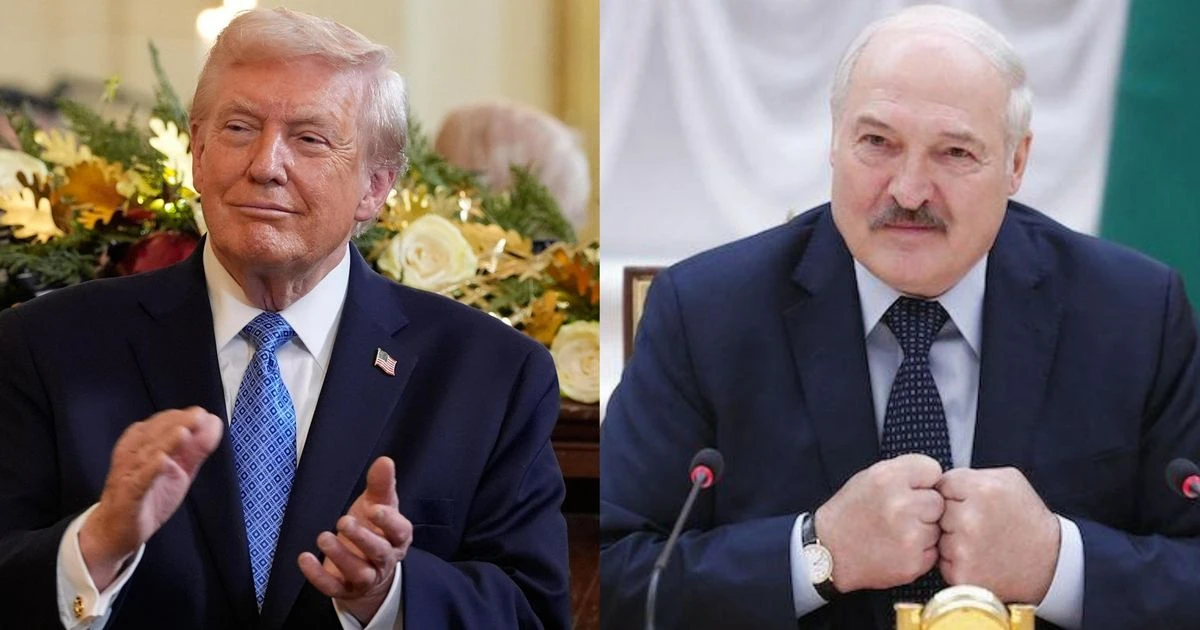
Belarusian President Alexander Lukashenko, in an unusual diplomatic moment over vodka and dinner in Minsk, asked special US envoy John P Coale a personal question: whether he had lost weight and what his secret was. The response — a reference to the weight-loss drug Zepbound — soon became part of an unconventional diplomatic channel, according to a report by The Wall Street Journal.
The exchange emerged as one of the more unconventional diplomatic efforts since US President Donald Trump returned to office earlier this year. Lukashenko was seeking relief from a raft of US sanctions on some of Belarus’s most profitable companies, along with help fixing his presidential jet. In return, Minsk was offering political prisoners to the United States.
What’s the latest in US–Belarus talks?
Since returning to the Oval Office in January 2025, Trump has secured the release of more than 250 prisoners from Belarusian jails by easing sanctions against Minsk. The detainees, from over 10 countries, included five American citizens, making it one of the largest political prisoner releases since the collapse of Communism.
Last month, Lukashenko, who has described himself as “the last and only dictator in Europe”, ordered the release of 123 prisoners, including Nobel laureate Ales Bialiatski and opposition figure Maria Kalesnikava.
The negotiations have yielded tangible outcomes. The US has lifted sanctions on potash, a key fertiliser ingredient and major source of foreign currency for Belarus, the world’s third-largest producer after Canada and Russia. The Trump administration has also arranged for Boeing to supply software and spare parts to Belavia, the state airline, and has facilitated repairs to the presidential jet.
Why does this matter for US–Russia relations?
According to the report, the Trump administration sees Belarus as a potential example of the rewards available to Russian President Vladimir Putin. Warming ties with Minsk, a long-time ally of Moscow, could provide Washington with a diplomatic channel to Russia as it seeks to influence talks around the Ukraine war.
A US official, cited by the Wall Street Journal, said, “Eventually, Putin is going to be in a situation where he has to make a very difficult decision. Having the person that he knows the best and trusts the most… to have him say positive things about the deal is important.”
Who is John P Coale?
The negotiations are not being led through the traditional State Department route but via a special envoy, John P Coale, a private lawyer and former legal ally of Trump.
Coale is a veteran litigator who has represented Trump in lawsuits against Meta and other social media platforms that banned him after the January 6 riots. His effort to build a personal relationship with Lukashenko reflects Trump’s preference for engaging leaders whom Western governments have often shunned.
“The hell with who you’re talking to, if this person can deliver what you want, that’s all that counts,” Coale said.
How does the exchange work?
Under the arrangement, Belarus releases political prisoners in exchange for sanctions relief and limited economic concessions from Washington. Behind the scenes, Lukashenko had been laying the groundwork for closer ties with the US, using prisoner releases as leverage.
Soon after Trump’s second inauguration, Belarus’s foreign ministry contacted the US State Department through a military deconfliction line to signal interest in resetting ties. US officials responded that Minsk would need to act first.
According to The Good Authority, the trade-off is both a humanitarian and diplomatic win for Washington and could open space for broader negotiations linked to Ukraine.
Why is Lukashenko playing along?
Lukashenko has been largely isolated by Europe and the US following the disputed 2020 presidential election and the violent crackdown that followed. This left him heavily dependent on Moscow for political survival.
For Minsk, prisoner releases have become a way to open channels to Trump-era officials seen as more receptive. On February 12, Belarus freed an American designated by the State Department as unjustly detained. Subsequent talks led to the release of three more prisoners, including a US citizen and a journalist with Radio Free Europe/Radio Liberty.
In June, Lukashenko invited Coale back to Minsk, offering to free 14 additional detainees in exchange for relief on sanctions targeting the state airline. The group reportedly included Sergei Tikhanovsky, a prominent dissident and husband of exiled opposition leader Sviatlana Tsikhanouskaya.
How does Lukashenko position himself with Russia?
According to TIME, Lukashenko has pursued discreet communication with the Trump administration this year, portraying himself as a potential link to Putin. He advised US officials on managing engagement with the Kremlin and claimed Russia was prepared to negotiate in good faith, even as attacks on Ukraine continued.
Appealing directly to Trump, Lukashenko reportedly told US interlocutors, “If we reach an agreement, they will hand you the Nobel Peace Prize on a platter.”
Despite this outreach, Belarus remains deeply tied to Russia. Lukashenko continues to host Russian troops on Belarusian soil, including tens of thousands near the Ukrainian border. Last week, he announced that Russia’s newly developed Oreshnik nuclear missile has been stationed in Belarus and placed on active combat readiness, The Wall Street Journal reported.