
Crypto brokers charge lower fees than banks or Western Union. But speed matters even more than cost. In Nigeria’s economy, prices can shift overnight. A delayed payment might mean your supplier raises prices or your goods arrive after competitors have restocked. Crypto eliminates that risk.
These brokers didn’t emerge from fintech accelerators or venture capital. Many were young tech-savvy relatives of traders who saw a problem and built a solution. They positioned themselves as indispensable – the only way to get past Nigeria’s restricted financial system and and do global trade.
Brokers guarantee payments personally. If something goes wrong, they cover losses from their own pockets to maintain reputation. One broker told us he absorbed a ₦2 million loss (about US$2,500) when a Chinese intermediary disappeared with funds. Retailers recommend brokers to fellow traders in the tight-knit market community. Chinese crypto traders work only with verified contacts, often through elaborate referral systems.
Cryptocurrency here doesn’t replace human relationships. It’s technology that enables and extends existing trust networks, letting them operate at global scale.
Infrastructure of resilience
The system relies on more than just brokers and goodwill. Stablecoins like USDT solve volatility. Mobile wallets work on basic smartphones. QR codes enable transactions even when internet is patchy. Peer-to-peer exchanges bypass bank restrictions legally. Nigeria’s central bank had banned banks from crypto transactions since 2021 but its decision in 2023, citing global regulatory trends.
When suppliers in China initially refused to accept cryptocurrency, brokers enrolled Chinese crypto traders as intermediaries. These traders buy USDT from Nigerian brokers (often at slight discounts, giving them profit), convert it to yuan, and pay suppliers through conventional Chinese banking. The supplier never touches crypto. They just receive payment.
Read more:
This is innovation through adaptation. It is not building a perfect system from scratch, but cobbling together solutions from available pieces until something works.
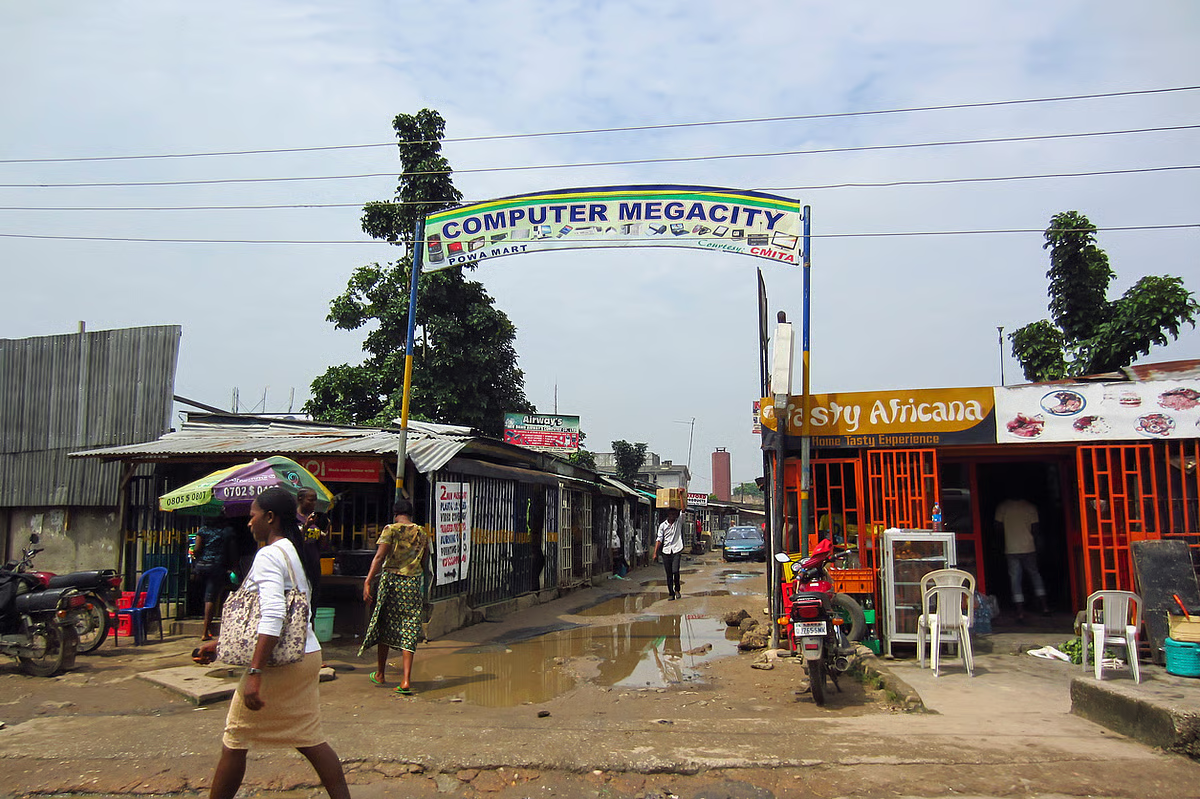
Computer Village itself plays a role. Concentrated markets create information flow. Success stories spread fast. A trader mentions his broker completed a payment in 20 minutes, and suddenly five more retailers want introductions. Physical proximity accelerates network growth in ways digital advertising never could.
When state pushes back
In 2021, Nigeria’s central bank commercial banks to close accounts dealing with cryptocurrency. The government about speculation, money laundering and capital flight. This sounded the death knell for crypto in Nigeria.
Read more:
Instead, the network adapted. Brokers shifted to peer-to-peer platforms. Over-the-counter exchangers (informal traders who swap crypto for cash) expanded operations. Transaction volumes .
What this means for Africa and beyond
Nigeria isn’t alone. Similar patterns appear across developing economies – Kenya, Ghana, Vietnam, India. Wherever formal financial systems strain under inflation, currency controls or institutional weakness, cryptocurrency fills gaps.
Read more:
This isn’t speculation. Traders are using stablecoins as dollar-equivalent tokens that move faster and cheaper than wire transfers.
It’s also not “banking the unbanked” in the usual sense. Many of these traders have bank accounts. Banks just can’t provide what they need: rapid, affordable, reliable cross-border payments.
For policymakers, the lesson should be humbling. You can’t ban away an innovation that solves real problems. When formal institutions fail to serve economic needs, informal systems emerge. The question is whether governments will learn from these systems or simply fight them.
Mayowa Joy David contributed to the research on which this article is based.