
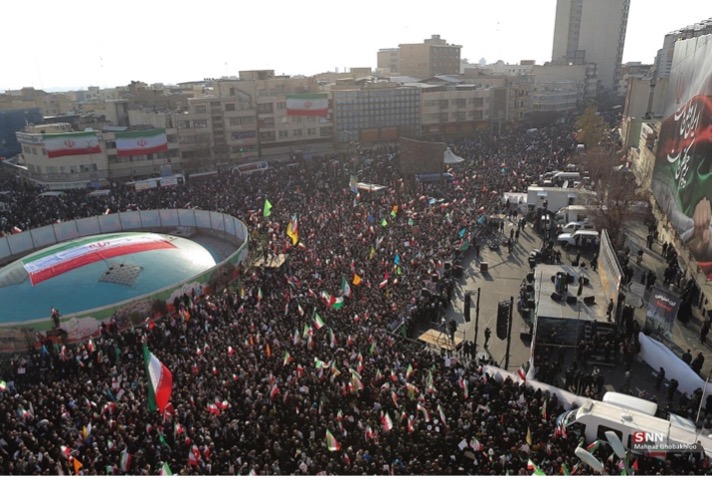
Source: https://commons.wikimedia.org/wiki/File:12_January_demonstrations_in_Tehran_(107).jpg
By Joseph Mazur
In the vacuum left by the U.S. President’s failure to provide a coherent rationale behind America and Israel’s military assault on Iran, many are concerned about the geopolitical and economic consequences for the Middle East and, indeed, the whole world, Moreover, what further military plans might an emboldened Trump contemplate?
The idea in Washington and Tel Aviv that bombing Iran will somehow trigger a popular uprising is not strategy—it’s wishful thinking. Bombs can degrade infrastructure. They can weaken capabilities, but they do not manufacture organized political alternatives.
– Ali Vaez, Iran Senior Advisor
at the International Crisis Group
Decisions guided by whims are naive prospects of success. When a commander-in-chief of the strongest military decides to go to war based on whims, Earth’s orbit is perturbed. Its people suffer. Playing with the whims of should-I-or-should-I-not in the question of war with Iran is insane. Only a psychopath would do that. First, decisions on that order should have a clear reason for citizens.
With no indication of a benefit to any side, the best than can happen now, aside from many innocent people being killed, is a ceasefire with minuscule gains, if any
What is Donald Trump’s reason for this incomprehensible war? Is it about regime change, support for protesters, ending weapons-grade nuclear material, oil, bribe-rentals of the U.S. military from Middle East countries, or distractions from the Epstein files? My understanding of war is complex, but I confess that this new war of the year is disturbing, problematic, and risky, but could have succeeded with unhasty, intelligent planning. Yet with no indication of a benefit to any side, the best that can happen now, aside from many innocent people being killed, is a ceasefire with minuscule gains, if any. Surely, the U.S. Pentagon has calculated the odds of victory, the cost of casualties, and infrastructure destruction. Morals of killing and wounding are at issue, but in war games, they are not considered to be a bother. In every war, there are expectations and uncontrolled mistakes. Without an intelligent plan for ending a war, planners should clearly advise their leaders whether it is a strong benefit to start a war.
The nuclear issue
Is it about nuclear weapons? If so, why not negotiate with more patience?
Who is telling the truth in those quotes? It is difficult to know why this war started with such a brief diplomatic attempt. It could have been for many reasons that are not grounds for war. Was it started from the whims of glory at taking down the Ayatollah, Ali Khamenei, from plots to acquire beach fronts in Sang-e Siyah for Trump hotels, or a hopeful distraction from the Epstein files? Distractions are part of the art of Trump deals. His prospects might succeed, but mostly at the expense of the American, Iranian, and Middle Eastern people.
The rationale of war
My readers generally know that I write about understanding war, not about the specific cases of wars. My angle is to understand the consequences of wars in general terms, but sometimes, rarely, I use specific examples of war as models of what could go right or wrong. In this case, I have no choice but to express my opinion. The news of this war in the Middle East has been front and center every day and every hour since February 28, 2026. It would be superfluous for me to bring in news that has already been posted so repeatedly that we know enough to judge the implications of this war. However, I raise a few issues that have not been meaningfully addressed, and pose this question to my readers: In news about wars, do we have an impression of how wars work, regarding an imagined battlefield? We see photos of bombings and destruction, plumes of smoke rising in the distance, rubble in the streets, explosions through satellite tracking and imagery, damage to buildings, and grieving families. Tehran is a metropolis of over 9 million inhabitants living in 22 municipal districts covering well over 2,000 streets, squares, and avenues. It is an immense and beautiful city that is impossible to destroy without a WWII-type fire-bombing, though conventional bombing can create an infrastructure mess that is not justified by any truthful reasoning.


Credit: Ninara from Helsinki Finland
Source: https://commons.wikimedia.org/wiki/File:North_of_Tehran_Skyline_view.jpg
This war’s objective
Think about the war this way: The U.S. surely knows that Iran is a country with a population of 92 million with an elite military force of almost 190,000 active Islamic Revolutionary Guard Corps (IRGC) members, besides a regular conventional force of approximately 400,000 active-duty personnel. In addition, there is the Quds Force, a non-state proxy group that commands proxy militias, including Hezbollah, Hamas, Islamic Jihad, Houthis, and Shia, working in Iraq, Syria, and Afghanistan.
Is the U.S. equipped to handle that country, with hundreds of thousands of guns and new, angry, multiple leaderships scattered throughout the country? What could be the objective for settlement, and with whom? Is there a U.S. misunderstanding of Iran’s forces that are almost everywhere in the Middle East? On February 28th, soon after the U.S. began its war with Iran, Trump posted an 8-minute video on Truth Social calling for the IRGC members, the armed forces, and police to disarm. “Lay down your weapons,” he said, “and have complete immunity, or in the alternative face certain death.” [1]
The power of comprehension?
Has he misunderstood Iran? Now, Trump is saying that there would be no deal other than “unconditional surrender.” Seriously?! Iran is not Venezuela. A comment like that shows that Trump does not understand the country. Some IRGC members and a few conventional forces might agree to lay down their weapons and join the resistance, but hardly enough to make a difference. Immediately after that message, Iran retaliated with drone and missile attacks on Israel and multiple Arab states that host U.S. assets in the region.
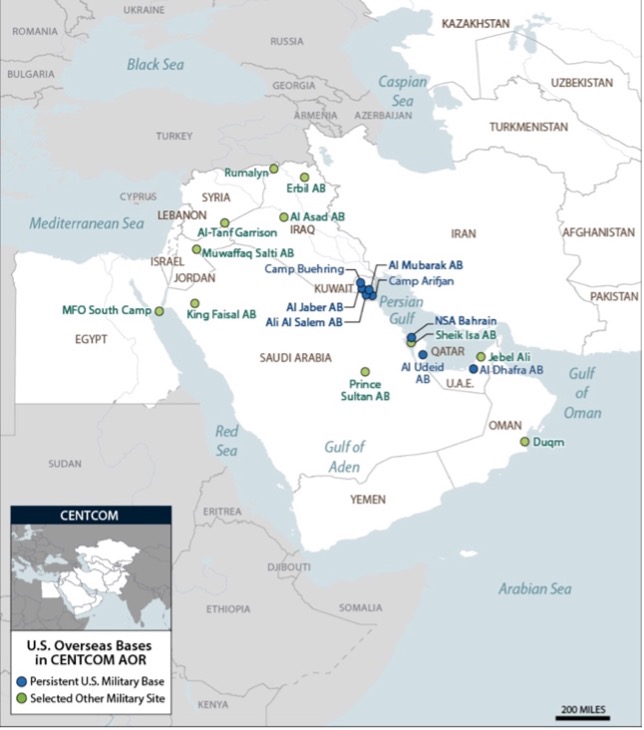
Did Trump not see the likely possibility that Iran might launch hundreds of ballistic missiles and drones across the Gulf? Did he not see the possible consequences of a widened scope of civilian casualties, airport closings, threatening oil transports, and container shipping through the Strait of Hormuz, creating what the International Energy Agency called “the biggest disruption to the oil market in history”? Did he consider the likely repercussions that could come from the cost of shipping insurance, the disruption of crucial fertilizer shipments that keep farms all over the world in operation, and raw materials to make parts for cars? Did he not know that killing a religious leader of a country would only cause an escalated response in ways we cannot yet know? Did he consider how the price of gas would inflate? Did he know that Russia would help Iran hit the CIA facility in the Saudi Capital, and destabilize U.S. Patriot PAC-3 anti-ballistic missile batteries protecting a U.S. Navy base in Bahrain? Did he know that Russia would provide Iran with intelligence to target U.S. forces throughout the Middle East? Did he not see that the U.S. economy might face a recession due to soaring oil prices?
Trump must understand that he cannot control the economic fallout from this war, because once supply changes hit, it takes months to fix them, if they can be fixed.
Timeline objectives according to Trump
- Feb 28. “for these reasons, the United States military has undertaken a massive and ongoing operation to prevent this very wicked, radical dictatorship from threatening America and our core national security interests.”
- March 1. “an Iranian regime armed with long-range missiles and nuclear weapons would be a dire threat to every American. We cannot allow a nation that raises terrorist armies to possess such weapons, that would allow them to extort the world to their evil will.”
- March 2. “An Iranian regime armed with long-range missiles and nuclear weapons would be an intolerable threat to the Middle East, but also to the American people. Our country itself would be under threat, and it was very nearly under threat.”
- March 3. “They were going to attack. If we didn’t do it, they were going to attack first … So, if anything, I might have forced Israel’s hand, but Israel was ready, and we were ready. The bottom line is this: The president determined we were not going to get hit first. It’s that simple, guys.”
- March 6. “The assistance, which has not been previously reported, signals that the rapidly expanding conflict now features one of the America’s chief nuclear-armed competitors with exquisite intelligence capabilities.” [2]
- March 6. “There will be no deal with Iran except UNCONDITIONAL SURRENDER! After that, and the selection of a GREAT & ACCEPTABLE Leader(s), we, and many of our wonderful and very brave allies and partners, will work tirelessly to bring Iran back from the brink of destruction, making it economically bigger, better, and stronger than ever before.”
- March 9. In a phone interview with White House correspondent Weijia Jiang, Trump said, “I think the war is very complete, pretty much. … not ruling out troops or a draft.”
- March 10. The military objectives are “pretty well complete.”
- March 11. Asked by a White House reporter to clarify, he answered, “No, no, no. It’s not pretty much over. Where did you hear that? Who told you that fake news?”
Trump’s confusing statements revolve around the possibility of threat to America. However, on March 17th, we learned from Joe Kent, the Director of the National Counterintelligence Center, through his resignation letter to the President, “After much reflection, I have decided to resign from my position as Director of the National Counterterrorism Center, effective today. I cannot in good conscience support the ongoing war in Iran. Iran posed not an imminent threat to our nation.” [3] In Trump’s daily intelligence briefing, he must have learned that there was no imminent threat to the U.S. We do not know what he knows but every day we see him contradict himself in his lies.
Acting on impulse
His problem is that he thinks by considering the next step without bothering to bring in the consequences from that first step to the next move and its consequences. Surely, the President’s Daily Brief (PDB) led by the CIA and the Director of National Intelligence, which gives Trump classified top-secret reports, gives him assessments on the potential of the war and tells him that the military operations will not unseat the regime. He doesn’t take PDB advice seriously because he doggedly believes that his whims are his foretokens, so he picks a next-step countermove without considering the deeper domino consequences. [4] Surely, the PDB has given him difficult options with enough advice for carrying out an operation that understands Iran’s reactions. But each of his moves comes from impulses driven by the problem of his impostor syndrome. Somewhere deep down in his ego is a query of whether he is fit to be a president. So, he chose an operation that had not been thought out. “It’s going to work very easily,” he said, “It’s going to work like in Venezuela.” Ha! And so, he is now grappling with a message that could shine some light on the rationale and objectives. What will it be tomorrow for strategic allusions? What will happen when the U.S. leaves the Middle East? With over 14 countries in that area fighting each other, they will all be exposed to attacks that could either come from governments or proxy militias.
What happened in the first five weeks of the Iraq war, when President George W. Bush stood on the USS Abraham Lincoln declaring “Mission accomplished.” That war lasted almost nine years. On March 9, in an interview with CBS News, Trump, who never admits his mistakes, said, “I think it’s very complete pretty much … not ruling out troops or a draft.” Watch: he will declare victory. But accomplishment of what? Of toppling a regime, destroying enriched uranium, supporting protests, protection of U.S. national security, UNCONDITIONAL SURRENDER? Which is it? None will be accomplished. His impostor syndrome is weighing his declining economic future, and a likely political rupture of his confused MAGA base.
I learned early on that it is never a good idea for a nation to strip an enemy so naked of its dignity that it feels that it has nothing left to lose. It usually comes back to haunt you.
— Thomas L. Friedman
So, what was all this war for?
We must question: What was all this for? Without a clear objective, public support, what exactly has been driving this war? The consequences are devastating. Trump can always declare victory, but of what? With no regime change, no change in nuclear commitment, no help for the protesters, and no ex-U.S. allies extending help, WAIT AND SEE, he will be gaspingly denying the truth behind what he wished to accomplish, why this war is happening, and looking for ways to get out of his wreckage.
By trumpeting unachievable objectives—unconditional surrender, regime change—as his war aims, Trump has given his enemies the opportunity to claim survival as victory. He’s left himself with no evident end point to what he recently called a ‘short-term excursion.
—Franklin Foer, Staff Writer for The Atlantic [5]
Two people are behind this war—Trump and Netanyahu. When someone creates an event, for example, starts a war, and cannot give a rational reason, one might suspect the intention is hidden somewhere under a pile of hidden variables that foretell risky consequences. In other words, secrets that should not be revealed because of risky consequences or foolish reasons. Secrets, though, most always have clues.
The world as real estate
When someone acquires power, character changes, partly because power requires significance. In the cases of those who have inferior cognitive abilities, impostor syndrome is a magnet reaching for power in ways that diminish smart reasoning. Those who hang on don’t have the cognitive capacities that require views beyond two, three, or four moves ahead. Those are the leaders to worry about. Almost two years ago, just when he was reelected to be president, I wrote a piece portending that Trump would end up doing something foolish enough to start a war that he cannot win. My prophecy is now evident.
We see Trump’s moves are without much depth of war knowledge; he lacks an alertness of second, third and fourth moves that he cannot, or does not want to see.

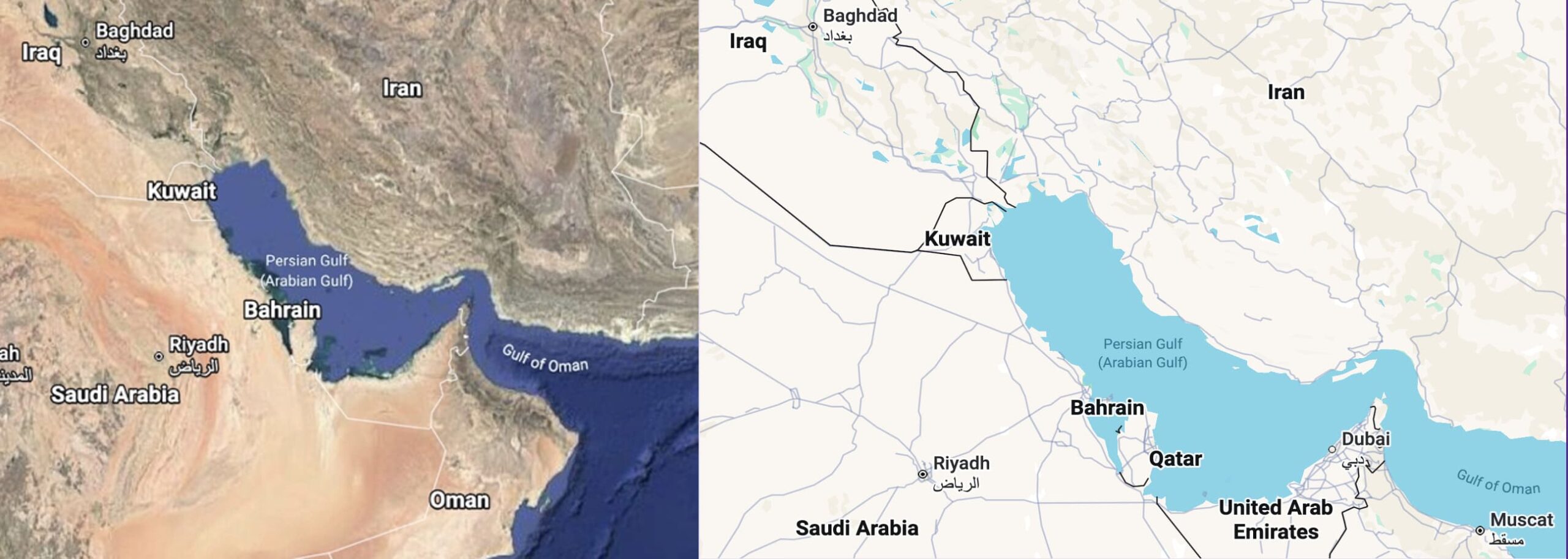
20% of the world’s oil crosses the Strait.
Didn’t he think about that before attacking Iran?
As I wrote in my previous article, the current commander-in-chief of the U.S. military works by his own wishful whims that do not match the evidential facts coming from the Office of National Intelligence. His intellect suits forceful real-estate deal making. In that kind of brutal cleverness, his deals have risks that could wobble a profit margin graph, though a country the size of the United States with a population of 343 million banking on government values, safety, and a balanced economy for all, risks more than a wobbling deal that could bankrupt the entire country and send humans into battles that they may or may not contain.

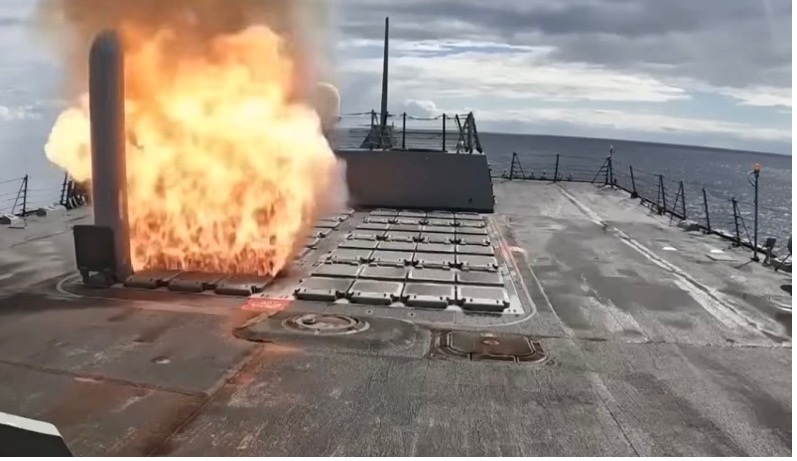
Image from CENTCOM
The consequences of not understanding
In any conflict, there must be planning for the worst. When 20 percent of the world’s fossil fuel energy flows through the Strait of Hormuz, threats of blowing up oil tankers should not be a surprise. Shipping companies are unwilling to take the risks of moving ships through the Strait, especially after they know that the Persian Gulf is filled with mines. Also, energy companies are likely to turn off refining operations because storage of refined oil is limited.
We can see the domino effect of geopolitics that seems to be missed by the Trump administration, though the PDBs must have given Trump a briefing about all of this before he decided to go to war with an extremely belligerent country. Trump may have known the possibilities of these upsets, thinking that if the war were to end quickly, there would not be much of a disruption of oil production and shipment. Even if the war were to end today, it would still take weeks or months to restart production and replenish the deliveries to other countries far from the Gulf. In either case—whether the war ends quickly or not—a global economic impact will be the result of poor planning by the commander-in-chief who makes up his mind on matters that miss clear negotiation opportunities and face the risks of so many unknown conflict possibilities that bring geopolitical chaos, not just to the Middle East but far beyond. By not thinking this through, war starts with intentions of a quick end but continues far beyond what was ever expected.
We have seen this so many times before, and yet we always think we know better. Remember that very long war between Iraq and Iran that started with expectations of a quick surrender, yet ended almost eight years later. Did the wars in Vietnam and Afghanistan teach us to be aware of the false startup ambitions? Wars under diplomatic hopelessness, like, especially, this one, start with misguided impatience that locks up compromises that could benefit both sides, reduce the cost in economies and lives, and bring peace to citizens who care far more about their day-to-day struggles than who wins the trophies of military history. No side fully wins in any war, except those arms dealers who always want wars to continue.
The real objective
With no clear motives – regime change, support for protesters, ending weapons-grade nuclear material, oil, or bribe-rentals of the U.S. military from Middle East countries – and no apparent possible outcome, even after the killing of supreme leader Ayatollah Ali Khamenei along with approximately 48 of Iran’s senior leaders and officials, the gambit is just wishful thinking, for nobody knows how well this war will go. So why? If the object is a negotiated regime change, why create more difficulty by targeting all those officials for killing? That questions the reason for regime change, for who, in a high government position, will be left to deal with it in the end?
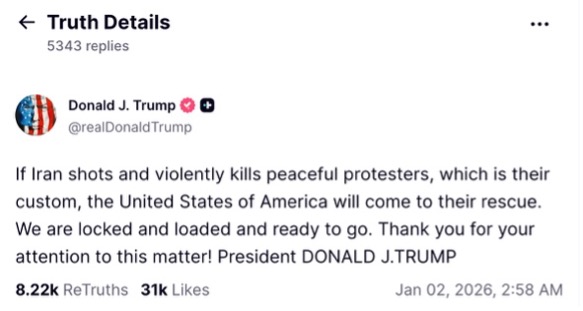

With no clear motives and no apparent possible outcome, the gambit is just wishful thinking, for nobody knows how well this war will go.
Could this war’s initiating objective be the nuclear threat? On March 1st, Trump claimed that Iran was two weeks away from having a nuclear bomb. It was just one of several confounding justifications for starting the war. That one is simply not true. The House Intelligence Committee said there is no evidence to back up that claim. The International Atomic Energy Agency (IAEA) knows that Iran has 60 percent enriched uranium, which it could use to make a bomb. It is possible that Iran could have enough material for a bomb, but that is just the first step, not one that makes a bomb. According to Joseph Cirincione, Vice Chair of The Center for International Policy Board, in an interview with Alex Witt of MS NOW, said, “You have to turn that enriched uranium, 90 percent enriched uranium into a metal; you have to shape it into the components of the bomb; you have to assemble the bomb; you have to have a bomb design. … And then you have to test that weapon.” If they succeed with all that, they might have a crude bomb. But then there is the phase of putting that bomb on a warhead.
The Central Intelligence Agency (CIA) employs thousands of nonpolitical analysts who scour hints of threats to American national security under its mission to analyze intelligence for U.S. leaders and for the PDB. In a Senate Intelligence Committee hearing on March 19th, Tulsi Gabbard, the director of national intelligence, in her opening statement, said that Iran’s nuclear enrichment program was “obliterated” with no efforts since then to try to rebuild its enrichment capacity. During that hearing Senator Jon Ossoff asked about an “imminent nuclear threat posed by the Iranian regime.” She answered, with too much inconsistency in trying to cover for the president, “It is not a responsibility of the intelligence community to determine what is or is not an imminent threat.” [6]
Representative Joaquin Castro questioning Gabbard in a March 2026 House Intelligence Committee hearing [7]
Joaquin Castro: What does their Intelligence Committee assess Israel’s goals in this war, in this war to be? And are those qoals aligned with the goals of the United States?
Tulsi Gabbard: In thinking carefully about what can be said in this open setting versus a closed setting…
Castro: Are the goals aligned
Gabbard: The objectives that have been laid out by the President are different from the objectives that have been laid out by Israeli government.
Castro: And how do they differ?
Gabbard: We can see through the operations that the Israeli government has been focused on, uh, destabilizing the Iranian leadership and taking out several members, obviously beginning with the Ayatollah, the supreme leader and they continue to focus on that effort.
Castro: How does that differ from our goals?
Gabbard: The President has stated that his objectives are to, uh, destroy Iran’s ballistic missile launching capabilities, then ballistic missile production capacity, and then Navy, their IRGC Navy.
War: politics by other means?
Trump missed a great opportunity by walking away from diplomatic negotiations. Diplomacy is never easy; it requires an immense amount of time along with a great number of concessions. In the case of ending negotiations before the war began, his team was locked in his usual negotiation tactics, schemes that might work to win real estate deals that are far simpler than the prevention of war. Negotiations in preventing war must involve understanding the interconnectedness of economics and geopolitics, extending to countries beyond the hostilities. With that understanding, negotiations have a purpose – not winning a war, but rather the settlement that brings peace and prosperity to both sides. Without that consideration, negotiations are ineffective. Diplomacy can be tough, but war is not about toughness. It is about the strength and skills of negotiators.
So, there we have it: the president of the U.S. has no understanding of the point of military negotiations, and too few advisors to forward legitimate reasons. He is frightened, so he will say, “Okay, we have killed the Ayatollah’s father, family, significant intelligence officials, and commanders of the Islamic Revolutionary Guard Corps. So, let’s leave with the victory of accomplished goals.” But the Iranians are not going to desist from carrying out their attacks, partly because the U.S. did kill Ali Khamenei. How will he claim victory after Iran continues to attack, which they will?
A military campaign with no coherent endgame
The nuclear bomb program was one reason before Trump changed his reason to Iran close to having missiles that could reach the U.S., then changed it again to say Iran was “going to attack first,” against the advice from his PDBs. None of those reasons is close to being true. Besides, he is making things up as he goes. Reasons must link to serious objectives. If we do not know the reason for this war, we also do not know the clear objectives. The president started this war, and so he must have a clear reason and a clear objective; however, we keep getting different stories about objectives. For example, tweaks of messaging can change opinions; is the objective regime change or regime exhaustion, protecting protesters, or using them? Could this entangled mystery web of reasoning and purpose be a deliberate scheme to keep the story flexible enough to spin a declaration of victory after the war ends? He will come up with a “mission accomplished” slogan in a cunning way of presenting some unseen objective. On the one hand, it gives him a way to tell the public that the U.S. succeeded, and on the other, by waiting to explain reasons and objectives until after the war. He could put the administration in a tough position where expectations will be unmet by the final explanation, raising doubts. However, in a military reality, this war is going to go on for a long, long time.
Ambiguity in policy descriptions always raises doubts. So, those kinds of public message tactics risk unanticipated problems that can clash with the true objectives. Remember Secretary of State Colin Powell’s speech to the UN Security Council about Iraq’s weapons of mass destruction. It was a lie that continues to disturb most Americans. [8] When the public is told lies, it generates the natural tendency for people to construct a nebulous imagination, segueing into assumptions that bounce through social networks eager for new conspiracy theories. Remember when President George W. Bush declared, “Mission accomplished” in a televised speech aboard the USS Abraham Lincoln aircraft carrier, six weeks after the start of the U.S.–Iraq war that lasted nearly nine years? That same aircraft carrier is back again, now conducting strikes and operations in the Middle East. Wait and watch for another “Mission accomplished” speech likely to be within the next six weeks. It is the game that is played with the public.
We have never known a war that started without a known reason
It is difficult to understand how a war like this happens, but there are a few clues that could give some indication of what exactly precipitated it. We will never know how much influence Prime Minister Benjamin Netanyahu had before the war started. Could it be that he was the one, another strong man of unleashed power on Trump’s admiration list, who brought us into that war? Trump craves recognition in the club of strongmen. But there is another reason, one more forceful.
If you are looking for a more solid reason, look no further than the money and who benefits; read my article “Why Are There So Many Wars, Especially Now? An Obscure Brilliance of Arms Dealing Keeps Wars Coming” [9] Where there are wars, there are arms providers. When there are arms providers, there will be wars. And with more wars, there will be more dealers earning excessive profits eager to heat arms markets to inflate prices and keep those wars going. That is the obscure brilliance of arms dealing. To pick one example, from the time of Russia’s invasion of Ukraine till now, weapon suppliers to that war have quadrupled their prices.[10]
Operation Epic Fury, the code name for the military campaign, is estimated to cost approximately $891.4 million each day. So, we must wonder who is paying whom. If that war continues for another three months, the bill will be over $1.2 trillion. According to the U.S. Office of Management and Budget, the estimate adds 10 percent to include the costs “for higher aircraft sortie rates, more ship steaming hours, heightened alert levels, extended deployments, and additional personnel compensation, such as family separation allowances and hazard pay.” [11] And now, just one month into the war, the Pentagon is asking for $200 billion to keep funding the war, close to one quarter of the Pentagon’s annual budget, money that could reverse Trump’s cuts in Medicaid’s health insurance and food stamp programs that tens of millions of Americans rely on. So, I ask again: Where is all that money going to?
Arms dealers, of course! If we follow the money, it comes from the U.S. Treasury, which pays suppliers for replenished supplies. Those are mostly large companies that manufacture bombs, planes, ammunition, and enormous amounts of fuel. Much of that money goes indirectly to stock market holders.

Source: https://mail.google.com/mail/u/0/#sent/QgrcJHsTgFkQwkmsppzjPQXVqdCsLtQQwtV?projector=1&messagePartId=0.1
The price of victory
Now, let’s take a deep breath to ask: What could happen if this war ends in a Trump victory? I’m not alone in this quandary over victory; many foreign affairs analysts have said this before me. With a real victory, say, unconditional surrender, the danger to the entire world will worsen. Iran, a terrorist-supported country, could turn to a peace-loving existence. That could happen. The bravado would spin new whims and instincts to reinforce his belief that his success is inevitable, with no expense to himself. Imagine how wildly Trump will behave, then. His partial success with Venezuela pumped blood to his head, thirsting for another war. He found another. What, then, will happen if Iran does surrender unconditionally? We needn’t speculate. [12] Watch out, Cuba, Colombia, Greenland, even Canada. Mexico? It would take a psychopath to have such a whim.
Truth: the first casualty of war?
I am grateful to The World Financial Review (TWFR) for accepting the articles in my column. It brings a trust of truth as an independent magazine immune from the threats of the current Trump regime attempting to revoke American media licenses over Iran War coverage. Brendan Carr, Chairman of the U.S. Federal Communications Commission, accused broadcasters of “running hoaxes and news distortions” with warnings to “correct course before their license renewals come up.” [13] Though I worry about how Mr. Carr’s threats will play out, I will not be timid about telling what I believe to be true, free speech, thanks to TWFR.
Here we are in a mess of geopolitical dynamics, without a coalition of allies willing to open the Strait of Hormuz. With half the world struggling with the price of oil, and perhaps the price of everything, we have no choice but to wait this dooming war out. I know that not everyone would agree with me on the issues of this war. I can also realize how few who study war can support this war. However, we must recognize that venturing into a war—any war—is a risk that any country must carefully assess and not just rely on the power of weapons.
Let’s not worry too much; this will end, and so will he, though we don’t know when.
About the Author


Notes
[1] https://www.npr.org/transcripts/nx-s1-5731573#:~:text=PRESIDENT%20DONALD%20TRUMP:%20I%20once,across%20the%20Middle%20Eastern%20country.
[2] https://www.washingtonpost.com/national-security/2026/03/06/russia-iran-intelligence-us-targets/
[3] https://www.nytimes.com/interactive/2026/03/17/us/joe-kent-resignation-letter-iran.html
[4] https://www.intelligence.gov/publics-daily-brief/presidents-daily-brief#:~:text=The%20PDB%20contains%20some%20of,Johnson%20%2C%20Nixon%2C%20and%20Ford%20.
[5] https://www.theatlantic.com/international/2026/03/iran-war-trump/686314/
[6] https://www.nytimes.com/2026/03/18/us/politics/tulsi-gabbard-iran-trump.html?nl=today%27s-headlines&segment_id=216883
[7] https://www.youtube.com/watch?v=PFh9byeKSNk
[8] https://nsarchive2.gwu.edu/NSAEBB/NSAEBB80/
[9] https://worldfinancialreview.com/why-are-there-so-many-wars-especially-now-an-obscure-brilliance-of-arms-dealing-keeps-wars-coming/
[10] https://www.reuters.com/world/europe/inside-europes-drive-get-ammunition-ukraine-russia-advances-2024-03-06/?utm_source=Sailthru&utm_medium=Newsletter&utm_campaign=Daily-Briefing&utm_term=030624&user_email=bb759ff36f2ff61999abd346c905873915c01036c5a2b4978fb83f6b22e77fde
[11] https://www.csis.org/analysis/37-billion-estimated-cost-epic-furys-first-100-hours#:~:text=The%20baseline%20costs%20from%20the,CSIS%20estimated%20order%20of%20battle.&text=Admiral%20Cooper’s%20update%20on%20March,complete%2C%20according%20to%20General%20Caine.
[12] https://foreignpolicy.com/2026/03/20/us-trump-victory-iran-war-dangers/?tpcc=fp_this_week&utm_source=Sailthru&utm_medium=email&utm_campaign=FP%20This%20Week%20-%20032326&utm_term=fp_this_week
[13] https://www.nytimes.com/2026/03/14/world/middleeast/fcc-broadcasters-iran-war.html?nl=breaking-news&segment_id=216743