A new report by the Organisation for Economic Co-operation and Development says intermediary cities in Kenya and Mozambique have a narrowing window of opportunity to build low-carbon, climate-resilient urban systems before high-emission development patterns become entrenched.
The report argued that by integrating land use and transport planning, avoiding car-dependent growth and strengthening existing assets such as cycling cultures, these cities could chart a more sustainable urban future while improving residents’ quality of life.
Intermediary cities are defined as small and mid-sized urban centres that play an “intermediation” role, managing flows of people, goods, capital, information and knowledge between rural areas and larger metropolitan regions.
The findings are detailed in , which responds to growing demand for practical methodologies to help cities reduce emissions while supporting inclusive development.
Cities at a crossroads
The analysis focuses on four cities — Nakuru and Kiambu in Kenya, and Beira and Quelimane in Mozambique — where the approach was tested through a participatory process involving urban planners, transport operators, civil society organisations and local government officials.
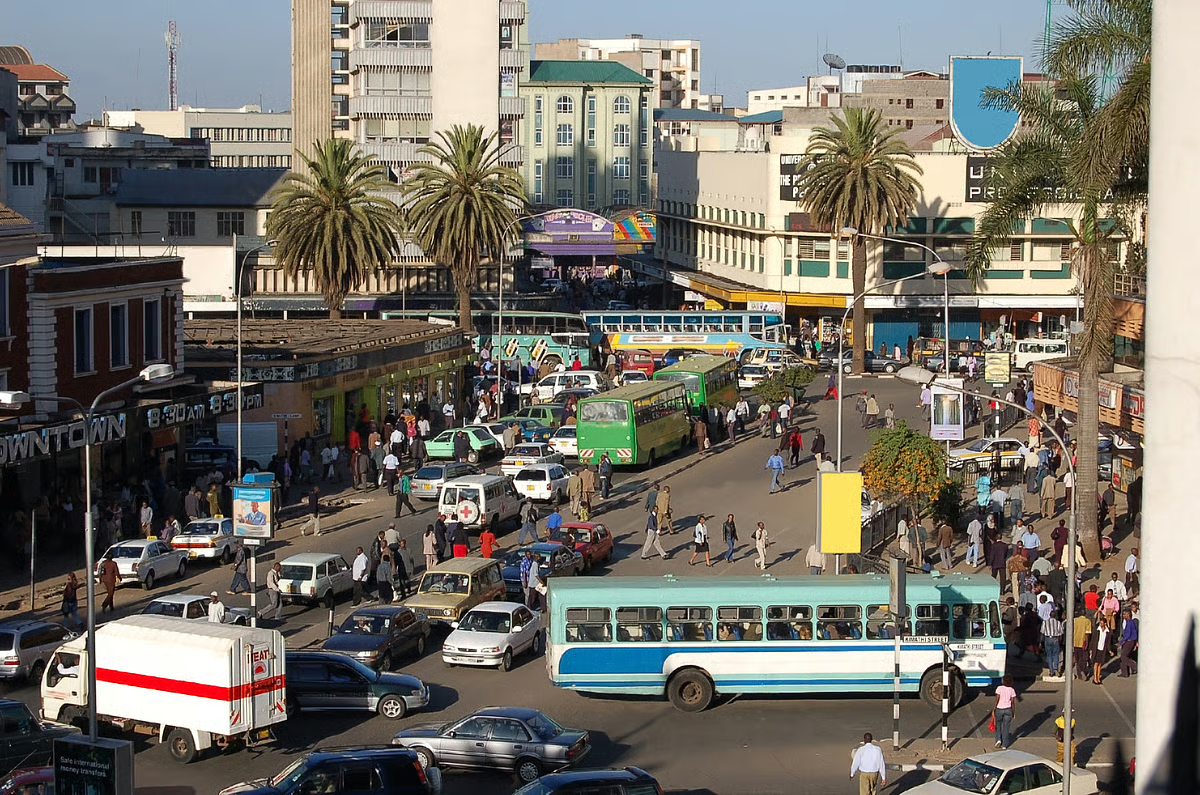
According to the report, intermediary cities are emerging as key drivers of Africa’s urban future. Unlike large metropolitan centres, many have not yet become locked into high-emission, car-dependent and fragmented urban forms.
However, the study also identifies early warning signs. These include weakening cycling systems in Quelimane and congestion-inducing land-use decisions in Beira. At the same time, it highlights opportunities, such as rethinking road space allocation in Kiambu and Nakuru and fostering a local bicycle economy in Quelimane.
The report stresses that climate mitigation in these cities will require changes across infrastructure, spatial development, governance structures and mobility culture.
A systems-based approach
The OECD adapted its systems innovation methodology for net-zero transitions to the context of intermediary cities, drawing on work by UN-Habitat on challenge-driven urban innovation.
The approach maps how transport, land use, governance and investment decisions interact over time. Through participatory workshops, visioning exercises and systemic analysis tools, the study identifies how structural patterns emerge, persist and could be altered.
As urbanisation accelerates in both Kenya and Mozambique, the report warns that uncoordinated growth risks reinforcing car dependency, congestion, rising greenhouse gas emissions and social inequality.
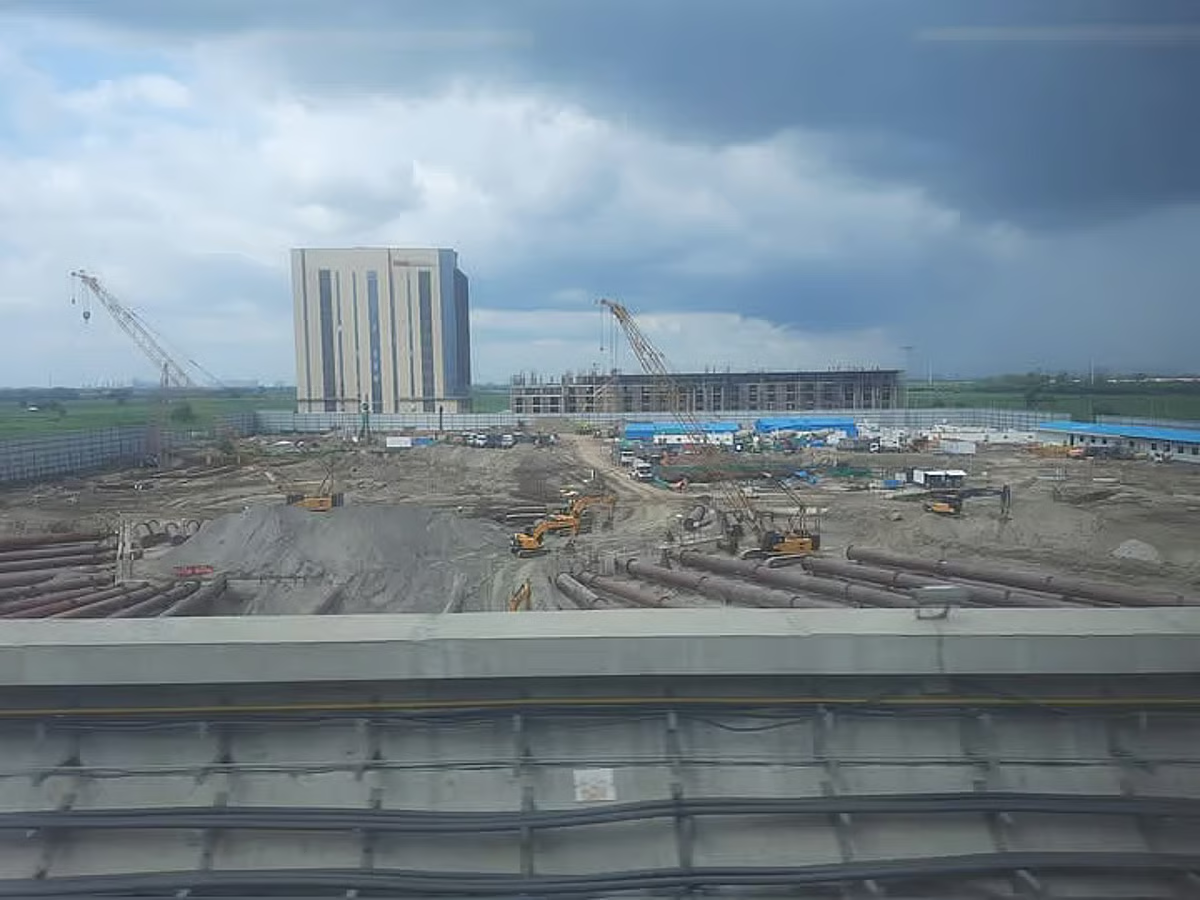
By 2050, Kenya’s urban built-up area is expected to almost double, while Mozambique’s could more than triple, placing increasing pressure on infrastructure, services and local governance. Without strategic urban and transport planning, the report says, these trends could undermine national climate goals and deepen social and environmental challenges.
From analysis to action
The study outlines how applied systems thinking can help cities better understand the feedback loops driving unsustainable outcomes and identify high-leverage points for intervention.
It proposes a four-step methodology: developing a long-term vision, analysing the current system, identifying leverage points, and co-designing strategic interventions. The report says outputs from each stage can be integrated into formal planning and policy processes.
In Kenya, stakeholders worked together to imagine what sustainable futures for Nakuru and Kiambu might look like by 2050. These shared visions were then used to identify concrete steps to steer urban systems in that direction.
In Mozambique, the methodology was adapted to local conditions. Beira faces the challenge of maintaining legacy infrastructure that is increasingly vulnerable to climate shocks, while Quelimane is notable for its strong cycling culture.
The systems approach helped local actors explore how to protect existing strengths while addressing challenges such as informal urban growth, weak governance and exposure to flooding. It also supported decision-making in contexts where financial and technical resources are limited.
The report concludes that acting early in intermediary cities could deliver long-term climate, social and economic benefits — but warns that delays risk locking in high-carbon pathways that will be costly and difficult to reverse.