A new study says Pune could face a serious water crisis by the middle of this century if current policies continue. The study shows that during a future multi-year drought, low-income residents may be hit the hardest. Water costs would increase while supply would reduce.
The peer-reviewed research article, published in Earth’s Future, looks at how climate change and rapid urban growth influence unequal access to water in Pune’s future. Pune urban region, which now has about 7 million people, is projected to grow to 11 million by 2050.
The study was led by Ankun Wang of Stanford University, along with researchers from the Helmholtz Centre for Environmental Research, the International Institute for Applied Systems Analysis, King Abdullah University of Science and Technology, and Stanford University.
The researchers used a model to study how Pune may respond to a two to three-year drought in the future. They looked at water supply, groundwater, agriculture, infrastructure and household water use.
The study says Pune’s ageing water system is not prepared for such droughts, especially for people living in informal settlements. Under a business-as-usual scenario, the city’s main reservoirs could run dry during a mid-century drought. Groundwater levels could also fall sharply.
The study found that low-income residents could get less than 40 litres of water per person per day, which the researchers use as a basic minimum. Water costs for poor households could rise to 10% to 18% of their income. Shortages could continue for more than six months at a time.
“Across drought and urbanization scenarios, in the absence of new policies, the model indicates low-income residents would see water costs surge and supply decline to almost half the minimum needed per person per day for basic human needs,” Wang said in a statement.
The researchers tested different steps to reduce the crisis. These included fixing leaks, stopping water theft, charging heavy users more, limiting groundwater extraction and shifting some water to city use. They found that no single step could solve the problem. A mix of measures worked best.
The study says that if these policies are adopted together, all Pune residents could get at least 40 litres of water a day with only about a 1% rise in total water supply.
“It is just as important to identify which solutions will not work as those that will work, before any are implemented,” senior author Steven Gorelick, a Stanford professor of Earth system science, said in a statement.
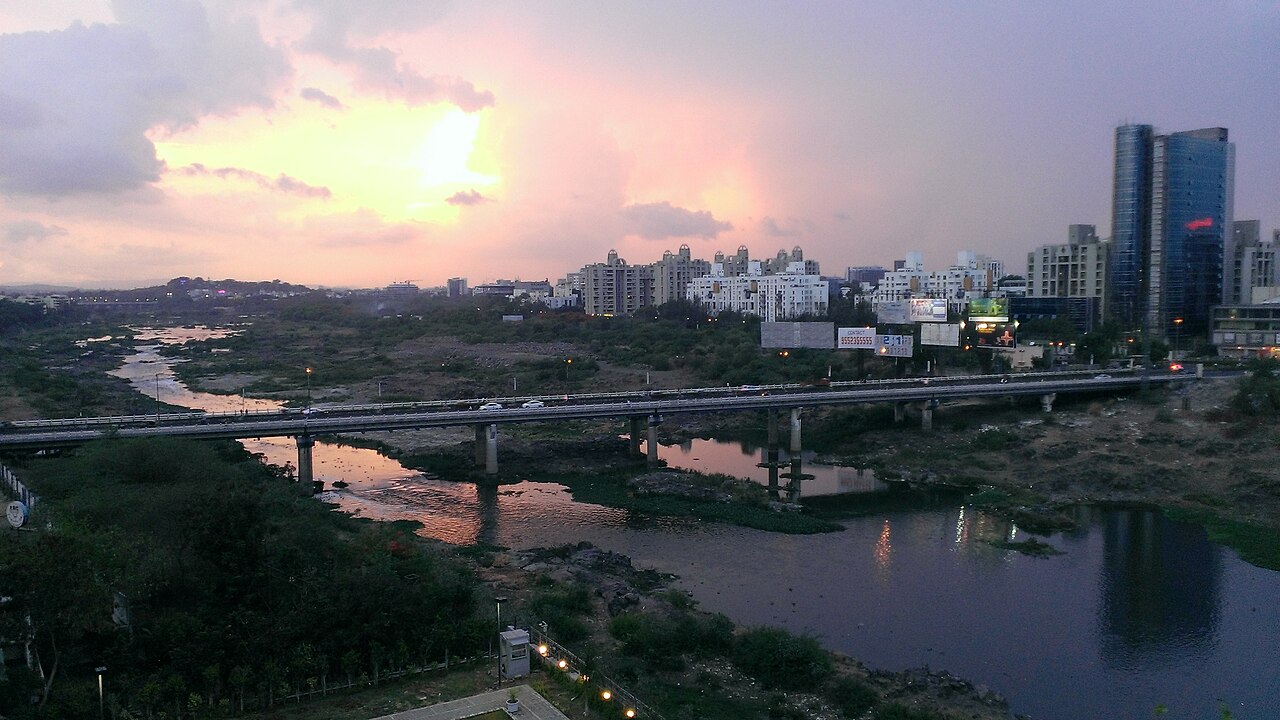
Banner image: The Aga Khan Bridge in Pune over the Mula-Mutha River, a key water source, highlights the growing need for better water management amid increasing demand and pollution. Image by Mack Male from Edmonton, AB, Canada, via Wikimedia Commons (CC BY-SA 2.0).