
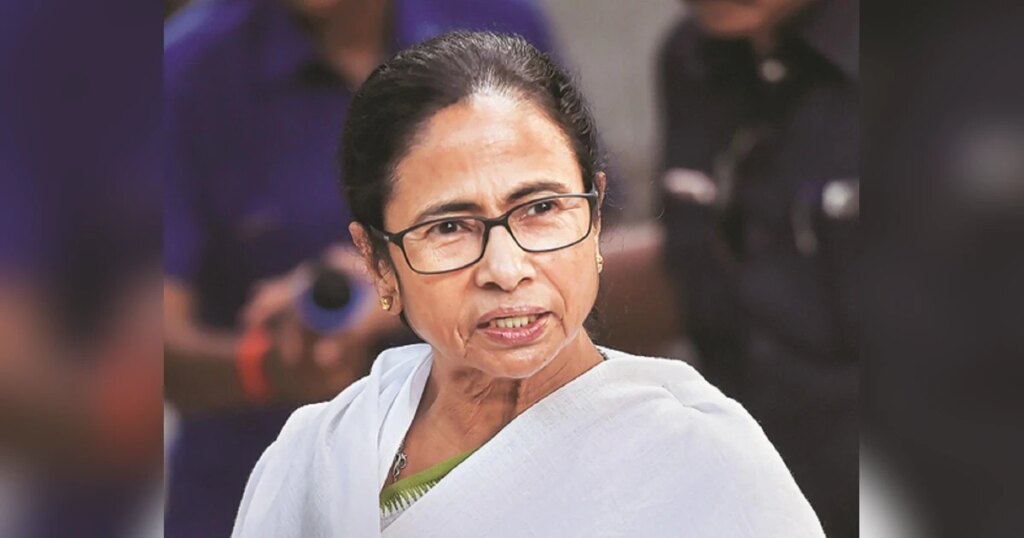
Addressing a press conference after the Budget, Chief Minister Mamata Banerjee said: “We earlier had about 94 social welfare schemes. Today, we have scored a century by adding around five to six more.”
While presenting the vote-on-account for the first four months of 2026–27, Chandrima Bhattacharya, minister of state for finance, said the Lakshmir Bhandar scheme, a brainchild of the Chief Minister, is immensely popular.
About 2.21 crore women have benefitted under the scheme and 20.62 lakh applications have been received. To “strengthen the hands” of 2.42 crore women, Bhattacharya proposed an additional amount of Rs 500 per month from February 2026 onwards.
For this, an additional annual allocation of Rs 15,000 crore has been proposed for the next financial year, 2026–27. The cumulative expenditure on Lakshmir Bhandar announced in 2021 stands at more than Rs 74,000 crore.
The government is also seeking to expand the ambit of its welfare schemes to include additional segments. For instance, landless agricultural labourers will get an annual support of Rs 4,000 — in two instalments of Rs 2,000 each during the rabi and kharif crop seasons.
For educated unemployed youth, a new scheme was announced, “Banglar Yuba Sathi”. Under this, youth aged 21 years to 40 years would be entitled to a monthly assistance of Rs 1,500 till they get employment or up to five years.
Bhattacharya said a large number of gig workers are engaged in the state. The government is proposing to extend the benefits of its existing social security schemes (such as the universal health scheme Swasthya Sathi) to these workers.
For ASHA workers, anganwadi workers, and anganwadi sahayaks, the monthly honorarium will be increased by Rs 1,000 from April 2026 onwards. Similarly, the increase will apply to civic volunteers, village police, and green police workers.
In sync with this focus, the outlay for the social services sector (under state development schemes) is projected to increase to Rs 120,973.34 crore. The Budget estimate for 2025–26 was Rs 99,016.28 crore.
For government employees, the state has decided to release another instalment of dearness allowance of 4 per cent with effect from April 1, 2026. It also announced the constitution of the Seventh Pay Commission, which will look into all aspects of the pay and allowances of state government employees.
On the development front, the government has decided to undertake development of a number of cities in the state to make them business-friendly, environment-friendly, and employment-friendly modern cities, without adversely affecting existing inhabitants.
In a bid to boost employment, five new MSME industrial parks will be set up in the state.
Bhattacharya highlighted that sustained growth and development had helped the state ensure significant job creation, eradicate poverty, and increase per capita income of its citizens.
Keeping the Chief Minister’s vision as a guiding light, West Bengal’s gross state domestic product (GSDP) had risen by about five times to Rs 21.48 trillion in 2026–27, compared with 2010–11.
The state expects its own tax revenue to grow to Rs 118,668.78 crore. The revised estimate for state tax revenue was Rs 111,737.13 crore.
The state is planning market borrowing of Rs 80,444.55 crore in 2026–27, projecting total outstanding debt to rise to Rs 815,891.35 crore.
During the press conference after the Budget, Amit Mitra, principal chief adviser to the Chief Minister of West Bengal, said the government was committed to fiscal prudence.
Highlighting the achievements of the Mamata Banerjee government, Mitra pointed out that debt as a percentage of GSDP is projected to reduce from 40.65 per cent in 2010–11 to 37.98 per cent in 2026–27.
He also said the revenue deficit as a percentage of GSDP was 3.75 per cent in 2010–11 and is projected to come down to 1.01 per cent in 2026–27. The fiscal deficit as a percentage of GSDP is projected to decline to 2.91 per cent in 2026–27, compared with 4.24 per cent in 2010–11.