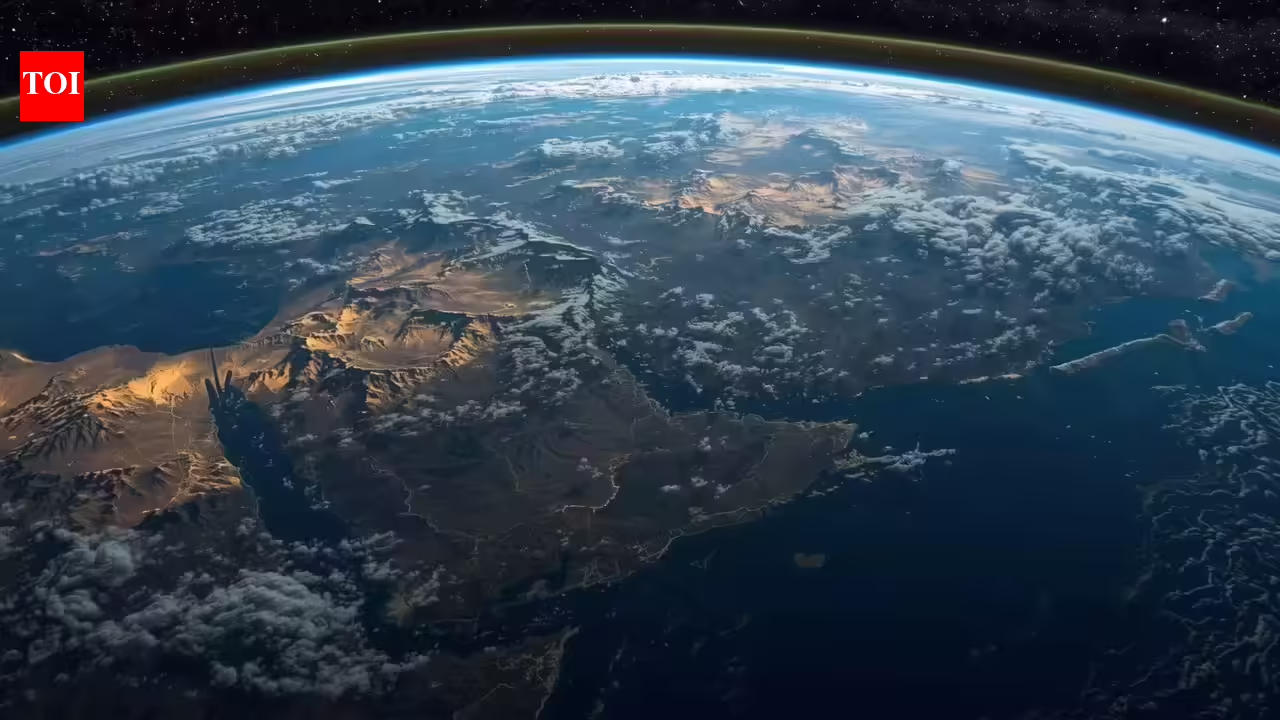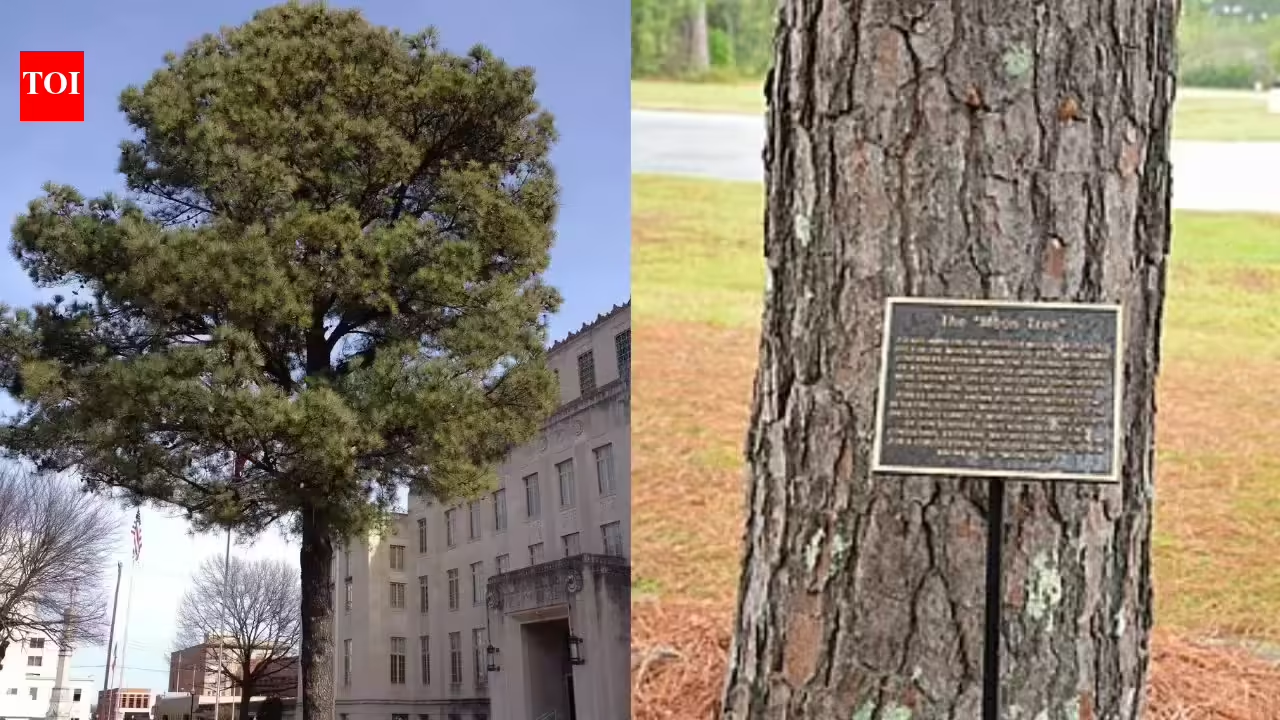
What NASA accomplished in the early 1970s is a little-known but truly impressive feat. Instead of putting rockets or robots in space, they put seeds there. Seeds of different trees accompanied astronauts on the Apollo 14 mission in 1971, headed by astronaut Stuart Roosa, a former U.S. Forest Service smokejumper, to learn if the ‘harsh reality’ of space would affect the growth of trees when planted on Earth, as listed in the NASA archives.What followed surprised scientists and inspired communities worldwide. A significant number of seeds germinated and developed into healthy trees that were later widely planted across the United States and elsewhere in the world. Even to date, the Moon Trees are a testament to space exploration that tells a story of space exploration and life on Earth through a scientific experiment that only a handful of projects have been able to achieve.
What happened to the moon trees while they were in space
During the Apollo 14 mission, a few seeds from trees went on board in astronaut Stuart Roosa’s personal equipment bag. As the craft orbited the Moon about 34 times, these seeds went along for the ride without ever actually being in touch with the surface of the Moon. During the post-flight process for cleaning the equipment, due to a sudden change in pressure, some seed pods opened. At first, it was thought that the seeds would be forever damaged. Notably, however, after being planted, many of them developed into full seeds.
A bicentennial forest on Earth
In 1975-76, nearly 400 Moon Tree seedlings were ready for planting in the US Bicentennial celebration. The Moon Trees were distributed by NASA and the US Forest Service to the states and other countries. A Loblolly Pine Moon Tree found its way into the White House, and several others found their place in schools, parks, and arboretums in dozens of US states and countries such as Brazil and Japan. This act of giving the Moon Trees away included an honorary plaque and even a telegram from NASA. The telegram for one of the trees declared it “a living symbol of our spectacular human and scientific achievements.”
Moon trees are living symbols today
Years have turned into decades, and many of the Apollo 14 Moon Trees stand proud across the landscape. The plaques are weathered and faded, but the tale lives. NASA tracks the live Moon Trees today as much for their peculiarity as for their representation of a period of scientific exploration that was anything but tame. It’s a reminder that the power of exploration can take root and grow.