Previous protests were not as big there?
No, not at all. And this is a huge blow to the regime because in Mashhad you see security forces in all corners of the city. Khamenei often gives speeches there laying out his plans for the next year. This is the last place that they would have imagined such a large-scale protest.
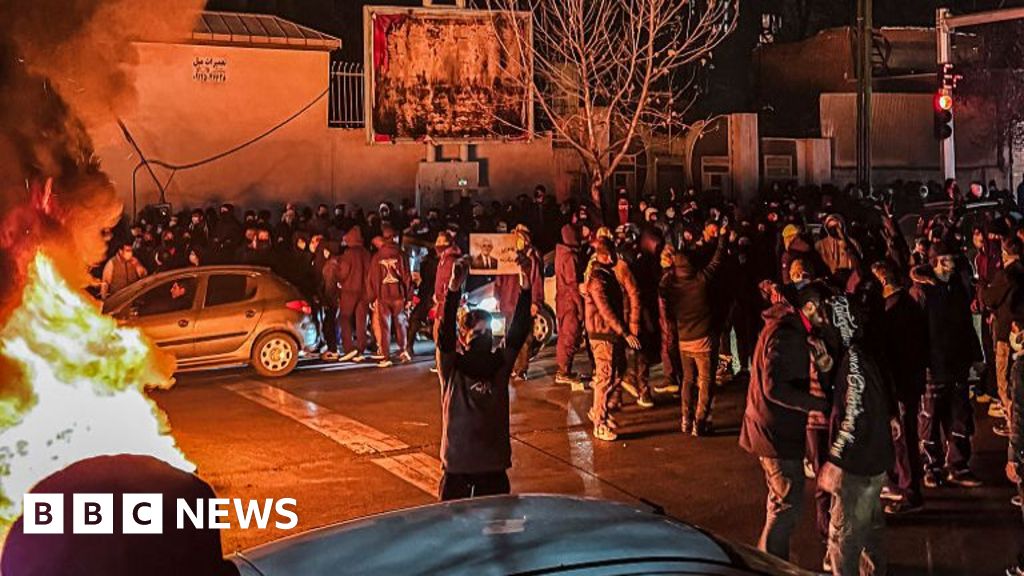
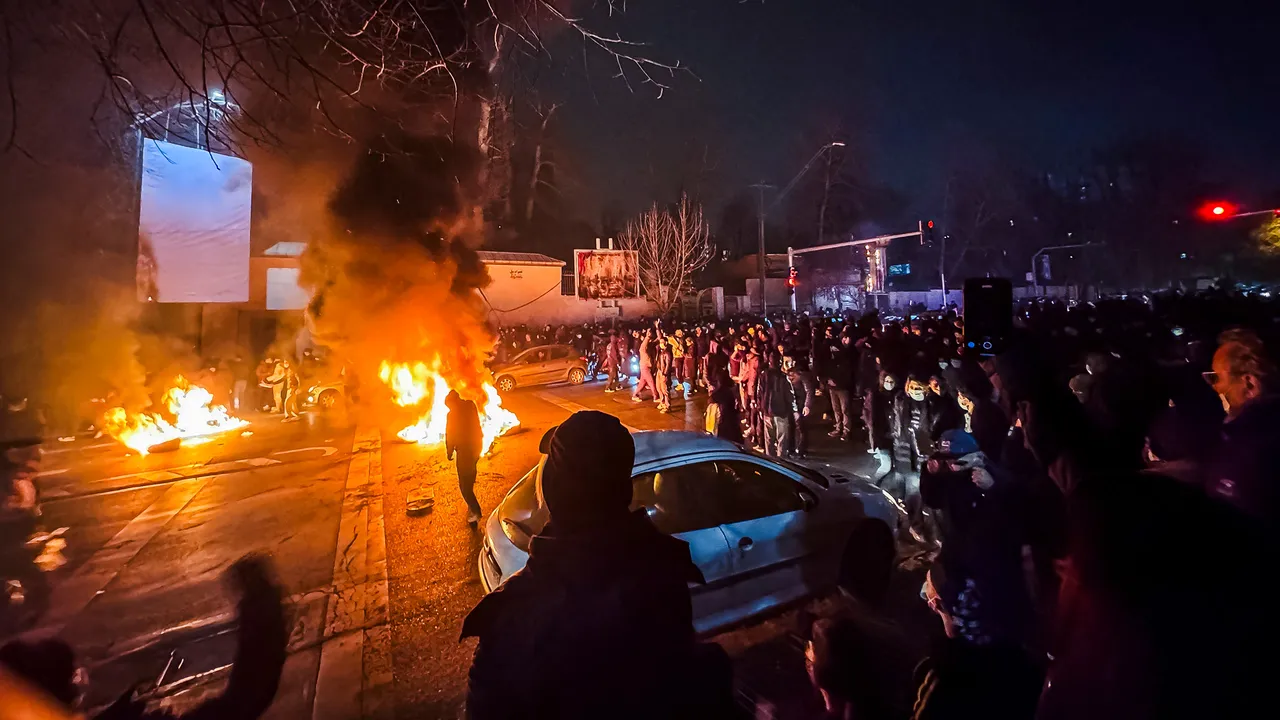
The slogans are really important. In the last round of protests, in the previous round, the main slogan was “Woman, Life, Freedom.” It was coming from grassroots collectives of Kurdish women. Now we are hearing slogans about “death to the dictator,” which target the core of the regime. We have also never had such large-scale strikes. Strikes are something that had an important role in toppling the Pahlavi regime in 1979. And, in the previous round of protests, we saw that the Kurdish areas were very active in the strikes. Some activists were shouting that the rest of the country, including Tehran, should join their strikes, but it didn’t happen.
This time, though, the unrest started in Ala’addin Bazaar—a well-known shopping center in Tehran, which primarily sells mobile phones and digital equipment—and it quickly spread to Tehran’s Grand Bazaar. The merchants in Ala’addin Bazaar are considered conservative, religiously speaking. They’ve never protested in the past. And this is a place for electronic equipment, mobile phones, computers—this is something about trading and being able to import and so forth. So it started in the heart of the capital, then it spread to other areas of Iran, and then seven major Kurdish parties basically came together and announced that they were joining the strike.
You mentioned the Twelve-Day War with Israel. It was significant the degree to which Iran was humiliated by first Israel and then the United States, and the degree of military power that Israel seems to have displayed over Iran. I would imagine that just from a sheer nationalist perspective, anyone watching their own country get embarrassed like that would be outraged at the regime, too.
I think we have to be very careful in addressing this question because I think there was a lot of misinterpretation in terms of how Iranians responded to the war. Iranians were obviously against the Israeli actions. The majority were enraged about this, but at the same time we have to be careful—when they’re enraged about an assault on Iranian soil, it’s not about defending the regime. This is about the population that is stuck between a murderous criminal mafia that has taken over the country and, on the other hand, Israel and the United States, who follow their own interests. So they’re not defending the regime by condemning Israel.
Humiliation is something that we have to take into account. Many military commanders were killed. I think one of the things that people realized is that this regime is not even able to protect its own high-ranking officials. If they cannot protect their own officials and military bases, how are they going to protect the nation? How are they going to protect their own people? The leader of the country was hiding for twelve days. People were essentially left on their own to figure out how to defend themselves. People could not leave certain cities. They were blocked inside their cities without having any shelter to run into.
So I think the war led to this complete lack of trust in the ability of the government to protect the nation, in the case of an invasion, under a regime that has been basically attacking Israel, attacking America, and isolating the whole nation in the name of national integrity. I’ve been hearing repeatedly, especially after the U.S. strikes and during the war, that people believe the nuclear program has caused more economic devastation and minor international isolation than any success it might have brought. The immense costs associated with the program have only worsened the economic situation, leading to a more stifling environment. Unlike the regime, the people do not view this as a national interest and are instead in favor of negotiating a deal with the U.S. to lift the sanctions. There have been negotiations and discussions within the government regarding this issue, but Khamenei does not seem willing to back down.
What about Iran’s regional standing, which has weakened in the past couple of years after the Syrian regime of Bashar al-Assad fell and was replaced by a Sunni government, and after Hezbollah, the Iranian ally in Lebanon, was weakened by Israel? Is there some sense among the population that Iran’s regional position is weaker? Have you seen that fact manifesting itself in the way people within Iran are talking about politics and protest?
I think it is part of that humiliation that we’ve been discussing, and I think a major aspect of it was all these empty gestures and speeches by Khamenei. He was always talking about the “axis of resistance” and the defenders of Haram, which is how he referred to the soldiers that he was sending to Syria to help the Assad regime. All of this is gone and all of it was gone in such a short period of time. And I think Khamenei did not really expect this level of assault and this level of loss on a regional level. On the other hand, I think what’s really important is to take into account the Iranian people’s grievances over this matter.
One of the things that I hear a lot from people who are not even political, like just ordinary citizens, is that we are starving to death, so why is our money being sent to Hezbollah or to Hamas, for example. This financial support has been, by the way, openly announced. It’s not a secret. They’re sending money and they’re very open about it. They’re bluntly talking about financing the “axis of resistance” and not only financing it but also creating it—they were the ones who created it. And there has been mass dissatisfaction among the people who consider it a form of betrayal, putting them in a very precarious and fragile situation security-wise by exposing them to war and to invasion and to starvation and to sanctions.
I also think something that we need to think about and to take into account is that Iran has been the sole major regional ally of Palestine. Since the beginning of the revolution, pro-Palestine rhetoric has been one of the pillars of the Islamic Republic’s identity, with talk that we are going to conquer Jerusalem, we are going to free Palestine. Ayatollah Khomeini used to say that the path to Jerusalem goes through Karbala. And that was the slogan for the Iran-Iraq War—this sort of expansionist idea of, O.K., we want to go to free Palestine and free Jerusalem. And I think what happened in Gaza over the past two years, as horrific as it was, and there is no doubt that it was a genocide—it weakened the position of the Islamic Republic, although the world and particularly some post-colonial sorts don’t want to accept that. And they’re keeping silent at this moment because they think that by weakening the Iranian regime, the situation in Palestine will get worse. But with what happened in Gaza I think the Islamic Republic proved that they can do nothing but create even more chaos in the region.