Adventurer Richard Parks is back on dry land after guiding one of his favorite actors across the ice fields of Antarctica, but what did the former rugby player learn about himself and the globally famous movie star? Parks shares all with M&F.
As part of National Geographic’s new series, Pole to Pole with Will Smith, Richard Parks takes the Academy Award-winning actor through Antarctica. It was a significant trip for the former Wales Rugby Union team player who found himself lost when forced to retire as a result of shoulder damage in 2009. To fill a competitive void, he took up climbing and soon set new records. In 2011, Parks completed the 737 Challenge, climbing the highest mountain on seven continents, an achievement that saw him stand on both North and South poles, and what’s considered the “third pole,” the summit of Mount Everest.
He completed the task in a record 6 months, 11 days, 7 hours, and 53 minutes. The following year, Parks became the first Welshman and fastest ever Brit to ski a solo, unsupported route through the South pole. As a man of color, Parks’ continued accomplishments have not only broken his own barriers, but inspired people from all types of backgrounds to push through their own limits. For “Pole to Pole with Will Smith,” however, Parks would be required to navigate the process of becoming a guide. It is during this experience that he learned a lot about his new famous friend, and himself.
What Did Richard Parks Learn About Will Smith in Antarctica?
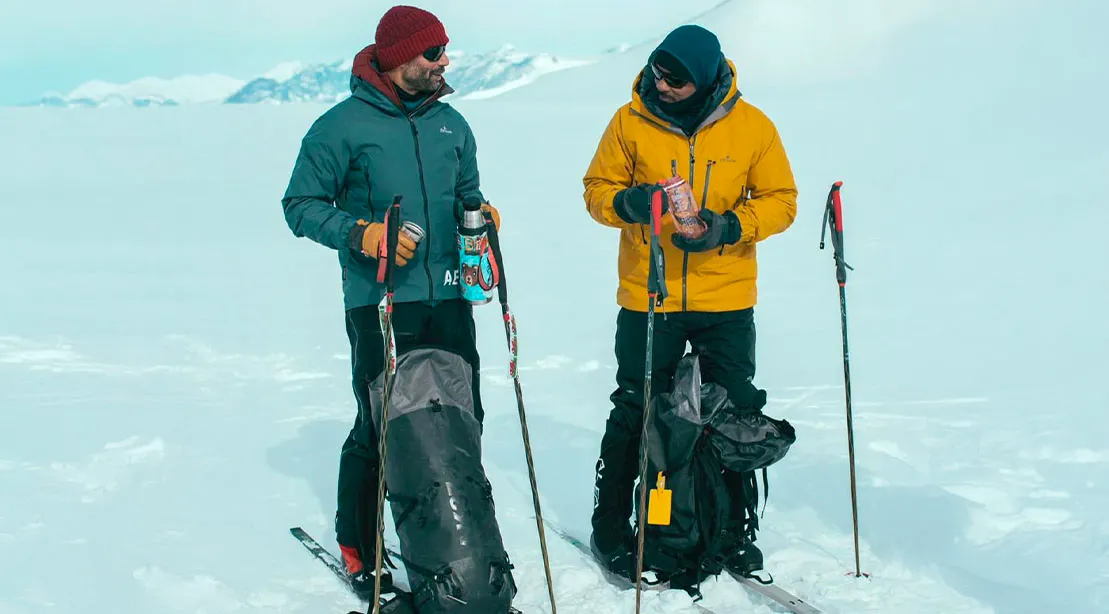
During Episode 1 of a series that see’s Smith taking on various extreme challenges, Parks served as an expert guide through one of the most treacherous environments on Earth, helping the icon to ski towards the South pole, get to grips with ice climbs, and master survival skills. The former rugby star went into this perilous journey with full faith in his less experienced client, however.
“I just don’t think you achieve the mastery of craft in the way that Will has, for the duration that Will has, without having steel,” explained Parks. “And performance is performance, whether it’s on a rugby field, whether it’s in Antarctica, or whether it’s in Hollywood productions. So no, I didn’t have any doubts about him quitting. I had doubts about the continent in the sense that Antarctica is unforgiving. In these remote wilderness environments, you are submissive to Mother Nature and there are things you can control, but a lot of it you can’t control.”
In fact, as Parks got to know Smith better, he became even more impressed. “Very quickly, I was inspired by how courageous Will was to be vulnerable,” he shares. “What I mean by that is, when you’re put in positions of adversity, your fight or flight reactions kick in. That prefrontal cortex shuts down, and Antarctica does that. You get off the plane, you’re hit with minus 30 degrees, it’s whiteness for as far as you can see it. The wind is scouring your face like sandpaper. And your whole being is like, ‘S**t, get me out of here.’ Even physiologically, your heart rate increases, but your blood capillaries can constrict, and they divert all of your blood to your survival organs. But through the courage to be vulnerable and through his sense of joy, he has a way of shortcutting the fear mechanism. And it’s freaking incredible, because as soon as that situation of adversity doesn’t elicit a fear response, you allow that prefrontal cortex to stay open, which then allows you to be more fluid in your thinking or creative in your problem solving. And, actually, what starts off as a threat situation now becomes a situation of growth. We might see it on the field with incredible athletes and sports people, but to actually witness that in Antarctica through Will, that was really inspirational.”
What Richard Parks Learned About Himself in Pole to Pole
Despite his expertise with environments like Antarctica, Parks tells M&F that guiding at this level was a relatively new experience. “This was my chance,” he says of achieving his own growth. “But what isn’t new to me is teaching, is coaching, and eliciting or trying, or at least understanding the process to elicit the best self from somebody, And, actually, that’s something that I take a lot of joy in: seeing other people fly. Whether that’s on the rugby field with the juniors or whether that’s in a corporate boardroom. On this occasion, it was with Will in Antarctica and I’m really grateful for that opportunity. But very quickly after meeting Will, it became clear that he was just a really, really great human and we were able to kind of create a rapport and create a connection. I think the environment went some way to do that because Antarctica, or just extreme environments, have a way of stripping back some of the psychological and social layers that we create our identities, and we create our lives around. Very quickly, you become exposed and it’s just the person, the man. Not the Hollywood legend or the rugby player, it is just two men on the ice. One with more experience than the other, but actually you’re going to have to work together to get through this.”
To follow Richard Parks on Instagram, click here.
Pole to Pole with Will Smith is available now via National Geographic, Disney+, and Hulu.
To watch the official trailer, see below.