
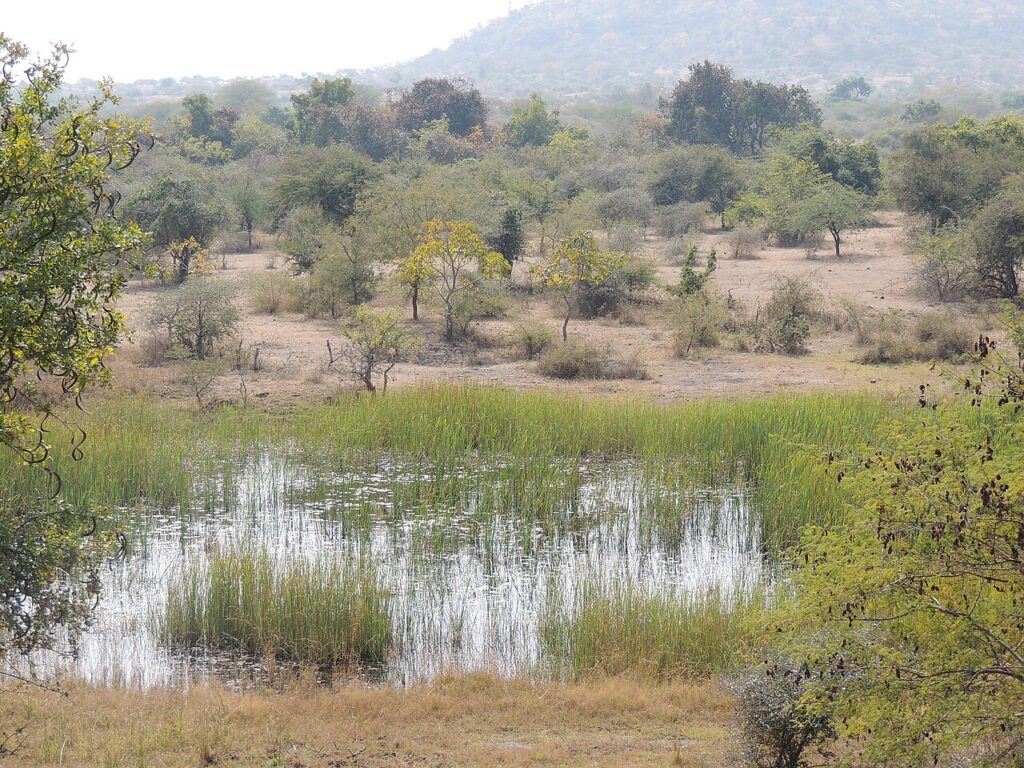
- A new study uses traditional literature and ancient texts to highlight the antiquity of savannahs in western Maharashtra.
- Data gathered from 28 excerpts reveals the presence of 27 wild floral species that are commonly found in fine-leaf and broadleaf savannas. Records also mention savanna indicator bird species.
- The study highlights the importance of biocultural research in reconstructing ecological history and establishing appropriate conservation measures.
It might have been just another coffee session between two researchers catching up on their work, but when Ashish Nerlekar noticed the mention of savannah specialist trees in Digvijay Patil’s historical references, the duo realised they were onto something new.
“Digvijay’s research focuses on people’s perceptions of natural environments, and he was showing me some of his references from the western Maharashtra region, when I noticed savannah-specialist or indicator trees in them. That led us to systematically study traditional literature to understand the ecological history of savannahs,” says Nerlekar, Presidential Postdoctoral Fellow, Michigan State University, USA. Patil is a PhD student in the Humanities and Social Sciences Department at the Indian Institute of Science Education Research, Pune.
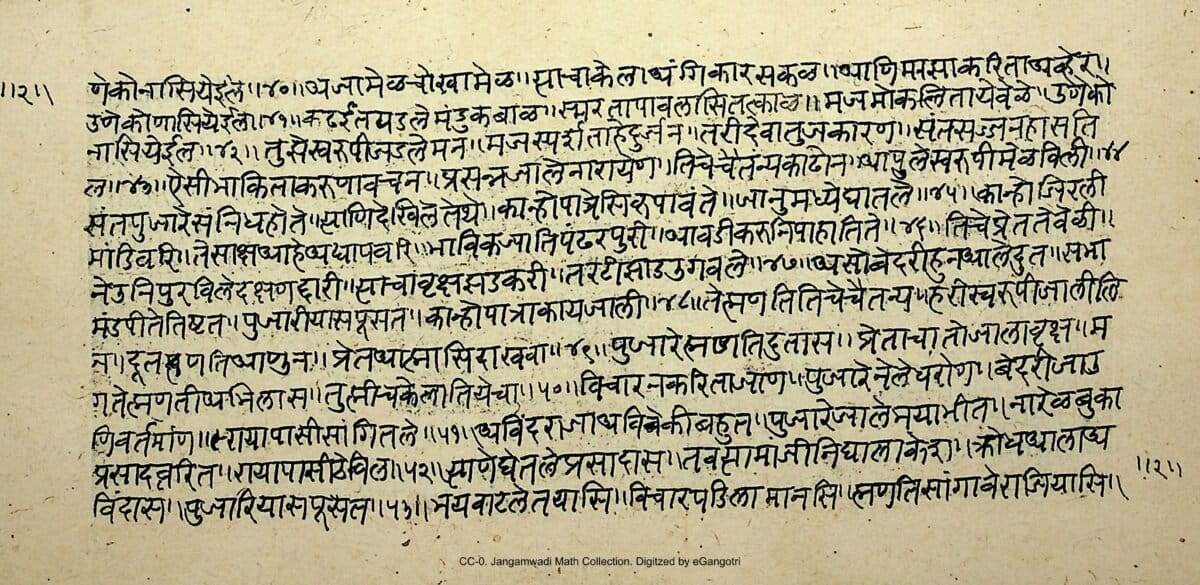
Over the next two years, they scoured through narrative poems, religious texts, myths, field notes, biographical and hagiographical accounts in the Marathi language, published between the 13th and 20th centuries C.E. They found several savannah-specific landscape descriptions and mentions of flora and fauna in oral and literary references. These findings refute the popular claim that tropical savannahs are a result of anthropogenic deforestation.
The study, published in People and Nature has garnered wide attention and raised significant interest in unearthing the history of India’s savannahs. “While previous scientific research establishes the antiquity of Asian savannahs, and researchers have long been telling the general public and policymakers that these ecosystems are ancient, the misconception continues to prevail,” Nerlekar explains. Apart from providing an appropriate window into an ecosystem’s past, traditional literature also enables spreading the message to a larger audience, the researcher shares.
Time travel into ecosystems past
The researchers focussed on seven districts for the study, namely Nashik, Ahmednagar, Pune, Solapur, Satara, Sangli, and Kolhapur, georeferencing savannah-related landscape and floral data to reconstruct the ecosystem’s evolution over time. The plants were identified and then classified as savannah indicators, forest indicators, generalists (which are found in both savannahs and forests), and cultivated species.
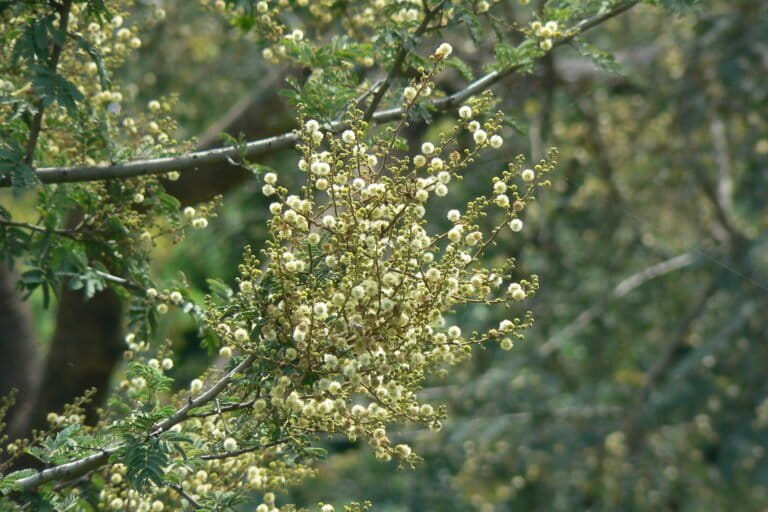
Based on data gathered from 28 excerpts of traditional Marathi literature, 44 wild plant species were identified, of which 27 were savannah indicators, and 14 were generalists. Trees like hivara or white bark acacia (Vachellia leucophloea), bābhūḷa or gum arabic tree (Vachellia nilotica), khaira or black catechu (Senegalia catechu), palasa or palash (Butea monosperma), and śisava or Indian rosewood (Dalbergia latifolia), which are often found in fine-leaf and broadleaf savannahs, were commonly mentioned in these excerpts. Hivara, an endemic species found in Asian savannas, was mentioned in eight excerpts, the researchers noted.
Savannah indicator birds, such as species of partridges and bustards, and grey francolins, were also mentioned in ancient texts along with other faunal species that frequent the ecosystem.
The literature review also revealed how people interacted with these landscapes. For example, in the 16th-century narrative poem Ādiparva, an abundance of grass and thorny trees near the Baramati region (Pune district) are described. Apart from the white bark acacia, the poem mentions trees like the khaira and babhul, indicating a savannah landscape. Although the ‘thorny forest’ was frightening to the people, their cattle thrived by grazing on the grass and produced abundant milk, the poem elaborates.

Patil shares that acquiring these references and establishing chronology was a significant challenge that the duo faced. “The 13th-century biography Līḷācaritra was one of the oldest texts that we included in our study. It is available in multiple critical editions, and identifying the edition suitable for our study needed some thought. As we also included oral histories, we looked for specific elements to establish chronology. In one folk song, for example, a woman talks about her māher (parental home) in Satara and mentions the rich pomegranate shrubs there. We know that pomegranate cultivation was encouraged by the Government of India in the region around three decades ago, so we can place the song in that timeline,” explains Patil. The researchers also sought the help of historians and ethnographers to untangle some of these references.
Despite the challenges, Nerlekar and Patil emphasise that the wealth of information garnered using a biocultural approach is crucial for understanding the evolution of savannah ecosystems in the country. While sacred groves have gained significant attention in this regard, a similar approach would act as a much-needed catalyst to encourage the conservation of savannahs, they add.
“Moving forward, we plan to document stories and poems from other parts of the state as well, because these are quickly fading away from existence. There is a lot of data out there,” says Nerlekar. Patil adds that the study also highlights the importance of localised environmental histories in devising appropriate conservation initiatives.
The larger picture
The research comes at a crucial time when tropical savannahs are threatened by misguided afforestation initiatives, agricultural activities, and biological invasions. Nerlekar’s earlier research reveals that these land-use changes drastically impact the biodiversity of savannahs, pushing some of the endemic floral species towards extinction. The wrongful interpretation of Asian savannahs as woodlands or degraded forests and regions suitable for afforestation would lead to a 35-40% loss of the ecosystem, according to a 2020 modelling study by the Senckenberg Biodiversity and Climate Research Centre, Germany.

Simon Scheiter, Senior Scientist at the Senckenberg Biodiversity and Climate Research Centre, and a co-author of the 2020 study, shares that remote sensing or site-scale data from field surveys and experiments enable the ecosystem’s evaluation, but only over the span of a few decades. “Such biocultural work and reconstruction of past vegetation states could help us go further back into time and get information on vegetation and land use history,” he adds.
Adding to the conversation, Trisha Gopalakrishna, climate change ecologist and Royal Commission 1851 research fellow, University of Bristol, shares that natural historical context for any ecosystem aids in establishing baselines, which is key for conservation. She adds that the push towards renewable energy has led to India’s savannahs being considered for solar energy projects. Beyond the loss of biodiversity, these land-use changes also impact the pastoralist communities that depend on the ecosystems, she explains.
As climate change and anthropogenic factors further compound the threats to Asian savannahs, the researchers call for urgent measures to protect and conserve the ecosystem. “Savannahs are driven by a complex network of interactions between vegetation types, climate disturbance, and humans. There is grass-tree competition; two vegetation types that typically exclude each other in grasslands and forests,” explains Scheiter. He adds that elevated atmospheric carbon dioxide, changing rainfall patterns, and drought-induced tree mortalities can influence the two vegetations, and the ecosystem at large, making it challenging to predict how savannahs would respond to climate influences.
In their study, for example, Nerlekar and Patil reveal that an increasing aridity in the region over the centuries led to a change in livestock rearing patterns from cattle and buffaloes to goats and sheep. Additionally, the elimination of lowland savannahs due to agriculture and urbanisation is also observed through the study period.

In light of these changes, mapping the extent of natural savannahs in India is important, shares Gopalakrishna. “Having a map to show policymakers and practitioners of where savannahs are present is essential to designing any sort of protection schemes. Secondly, this might be a surprise, but we still do not clearly understand the underlying science of how natural fires and herbivory, key disturbances crucial for savannahs to function, interact with a changing climate. For example, with this knowledge, we can develop schemes to reintroduce fire and schemes detailing prescribed fire actions, mirroring those of countries like Australia and Brazil. In the same vein, developing schemes for the movement of livestock such that it supports savannah functioning is also key,” adds Gopalakrishna.
As ecologists and conservationists continue to unravel the mysteries of savannahs, Nerlekar shares that the oft-quoted adage by grassland ecologists “a grassland is not a grassland is not a grassland” holds true now more than ever. “We must acknowledge the fact that these ecosystems are different, and while some are ancient, others are a result of deforestation and anthropogenic interference. Humans are responsible for the subsequent modification of tropical savannahs, but they are not responsible for creating them. The origins are certainly ancient and natural,” he explains.
The study has been widely reported across media post its publication, and Nerlekar hopes that this paves the way for more interdisciplinary research and spotlights the urgent need to digitise historical documents. “While documentation is a significant constraint in India, our study shows that we still have enough to conduct interdisciplinary analysis and gain something from it. This also sets precedence to digitise documents and other forms of traditional literature. We have to take advantage of all this knowledge and drive it towards conservation,” he adds.
Read more: The plot twists about a river’s politics [Book Review]
Banner image: A savannah grassland in Dhule district, Maharashtra. Image by Yuvraj Shingate via Wikimedia Commons (CC BY-SA 4.0).

