
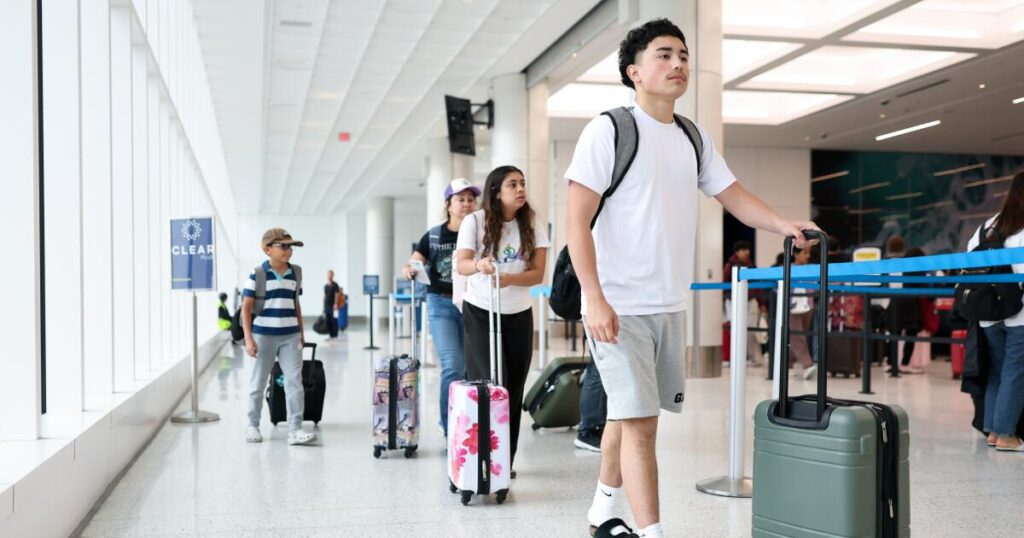
Tourist spending in Los Angeles fell for the first time since the pandemic last year as wildfires, ICE raids and trade tensions discouraged people from visiting.
Direct travel spending in 2025 was slightly below the previous year in Los Angeles County, according to an economic impact report this week from Visit California. That’s a step down from an average of close to 3% growth per year over the last 10 years and an average growth of 2.7% for the whole state last year.
Los Angeles has been the center of local crises that have kept tourists away, while President Trump’s controversial trade policies have damaged the country’s reputation.
Early in the year, wildfires raged for weeks, dominating national news cycles and essentially shutting down tourism in the area for the time. Over the summer, Immigration and Customs Enforcement agents descended on the city, forcing people to stay home out of fear.
“Los Angeles faced something no major American city has ever confronted with the wildfires,” Visit California Chief Executive Caroline Beteta said.
Despite the turmoil, California remained the most popular destination in the U.S. for tourism, and most counties in the state saw growth in travel.
Travel demand fell nationally, according to Visit California, but grew in 55 out of 58 California counties last year. Travel spending in the San Francisco Bay Area increased 2%.
Across Southern California, from Hollywood Boulevard to Palm Springs, foot traffic took a hit last summer. Tour buses carried fewer people, and souvenir shops sold fewer goods.
“Los Angeles is California’s primary global gateway,” Beteta said. “No other region relies as heavily on international visitation, so when global travel softens, L.A. feels it first and most acutely.”
International air arrivals to Los Angeles County fell more than 30% from August to November of 2025. In Los Angeles, current international arrivals are fewer than in previous months, though the state saw an overall 3% increase last year.
People ride the West Coaster on National Roller Coaster Day in Pacific Park on the Santa Monica Pier on Aug. 16, 2025.
(Genaro Molina/Los Angeles Times)
Travelers from Canada and the Middle East visited California in significantly fewer numbers in 2025, with arrivals from those regions down 18% and 30%, respectively.
“Less people are going to America, including the West Coast,” said Mike Duignan, a hospitality expert and professor at Paris 1 Panthéon-Sorbonne University. “People don’t like Trump, and people aren’t traveling because of lots of other geopolitical and political factors.”
Overall travel spending, which usually rises more than 2.5% a year, was down 0.1% in Los Angeles in 2025, according to this week’s data. The decrease could have been sharper if not for inflation, which is bumping up the prices of lodging, food and goods.
An 8% decline in visitor air spending — around $188 million — contributed to the county’s overall slump. The number of tourism jobs also shrank by around 1,000 last year.
Visit California said upcoming events will change the narrative around Los Angeles tourism. Some travel areas are looking up already, with hotel room revenue up 4% year over year in the county in the first quarter of 2026.
“The next three years change the equation entirely,” said Visit California’s Beteta. With the FIFA World Cup this summer and the 2028 Olympics, she said: “L.A. is entering a period of sustained global attention.”
This year, however, is starting with a lot of uncertainty as the conflict in Iran has driven up the price of fuel and airfare. A global jet fuel shortage is making it more difficult and expensive to fly just as an important summer travel season rounds the corner.
Flights to and from smaller California hubs such as Sacramento and Burbank have been canceled, while Air Canada and German airline Lufthansa slashed routes from their summer schedules earlier this month.
Rising fares and fewer flights could keep some travelers from coming for the World Cup or other reasons during the summer travel season.
“Travel is a luxury product,” Duignan said. “Significant portions of the market fundamentally choose not to engage when there are price hikes and when there is market uncertainty.”