- Much of environmental policy rests on a familiar assumption: that if people understand the problem, they will change their behaviour. It is an appealing idea, but also one that reality continues to challenge.
- Designing for visibility, celebrating uptake and communicating participation rates can be as influential as financial incentives. When sustainable action looks mainstream, its uptake accelerates.
- When the sustainable choice becomes the easy choice, change does not need to be forced. It begins to happen on its own and it lasts.
- The views in this commentary are those of the authors.
When rooftop solar subsidies were introduced across several Indian states, adoption did not rise gradually with awareness campaigns or climate messaging. It surged when upfront costs fell and application processes were simplified. Households that had long expressed interest in clean energy suddenly acted. In some states, capital subsidies and easier processes, such as single-window online portals for applications, approvals, and subsidy disbursement, lowered both financial and procedural hurdles, allowing interest in rooftop solar to translate into visible uptake across residential areas.
A similar pattern has been visible in the shift to electric mobility. For years, surveys (also here) showed strong public concern about air pollution and a stated willingness to consider electric vehicles. Yet meaningful uptake accelerated (here) only when incentives under schemes such as FAME reduced purchase costs, charging infrastructure expanded, and state-level tax exemptions made total ownership competitive with petrol vehicles. Concerns existed. Intention existed. What changed was affordability, convenience, and institutional design.
And yet, much of environmental policy rests on a familiar assumption: that if people understand the problem, they will change their behaviour. It is an appealing idea, but also one that reality continues to challenge. Across sectors, the gap between what people say and what they do remains one of the most persistent features of environmental action.
Behavioural science offers a more grounded explanation on why good intentions do not automatically translate into action. People do not make decisions in a consistent or a rational way. They respond to what is immediate, affordable and convenient. When a choice feels complicated or costly, even those who care deeply about an issue tend to put it off. Not because they disagree, but because something else is easier.
This plays out in small ways everyday. A commuter may support cleaner air but still choose a private vehicle if public transport is unreliable. A household may understand the harms of plastic but continue using it if alternatives are harder to find or more expensive. Behaviour does not shift simply because people care more. It shifts when the better option fits more easily into daily life.
In this sense, subsidies and incentives are not just financial tools; they are behavioural tools. By lowering barriers and reshaping incentives, they alter what behavioural economists called “choice architecture” in which decisions are made. They signal what is practical, mainstream and achievable, and increasingly normal. India’s LED transition under the UJALA programme is a good example. Energy-efficient bulbs were not adopted because people suddenly became more environmentally conscious. They were adopted because they became cheaper, widely available, and easier to buy than the alternatives.
The limits of awareness
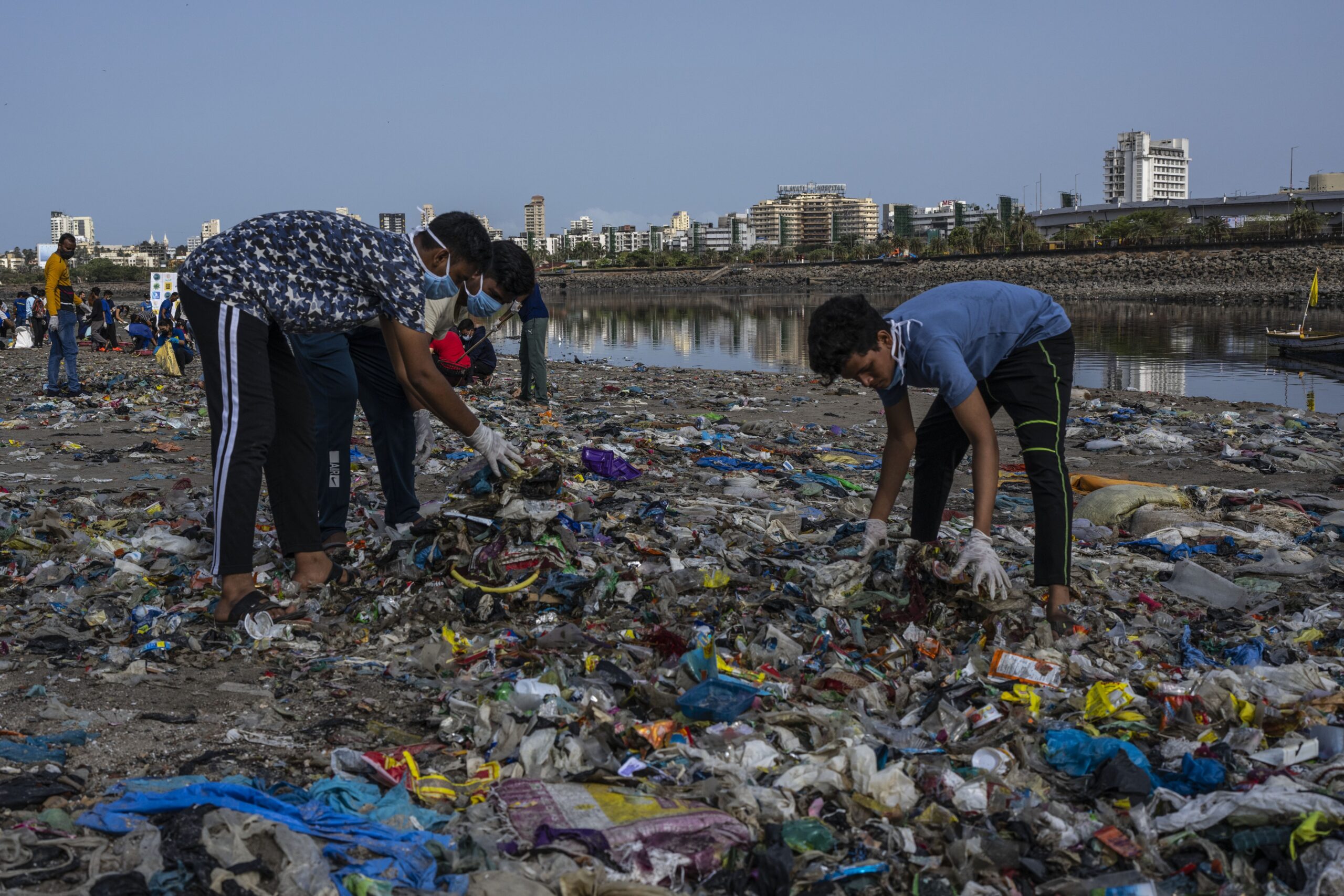
Environmental campaigns have long focused on raising awareness, about climate change, biodiversity loss, plastic pollution. Citizens are asked to do their part: segregate waste, reduce consumption, carry reusable bags. The assumption is straightforward: once people understand the stakes, they will change their behaviour.
Yet across contexts, the results are uneven at best. Behavioural economists have long documented the “intention–action gap” that captures a familiar contradiction of modern life. People express concern, even urgency, and yet continue to act in ways that contradict those concerns. In India’s cities, awareness of plastic pollution is widespread, and yet single-use plastics remain embedded in everyday transactions. Climate anxiety coexists with rising private vehicle ownership. Knowledge accumulates, behaviour stalls.
This is also visible in the uneven outcomes of plastic bans across states. While initial compliance is often high, usage frequently returns where enforcement is inconsistent and affordable alternatives are limited. Without systems that make new behaviour sustainable, change rarely endures.
This is not simply inertia or apathy. It reflects the conditions under which decisions are made. Daily decisions are influenced less by conviction and more by convenience, price, habit, time constraints and what others appear to be doing. When sustainable choices demand extra effort or cost, even well-intentioned individuals revert to established routines. For instance, waste segregation remains inconsistent not because households are unaware, but because downstream systems, collection, sorting, recycling, are often invisible.
Similar patterns are visible beyond cities. In rural areas, transitions to clean cooking or water-efficient agricultural practices often depend less on awareness and more on reliability and access. Households may understand the health risks of biomass cooking yet continue using it when cleaner fuels are expensive or supply is inconsistent. Farmers may recognise the benefits of water-saving techniques, but adopt them only when supported by extension services, financial incentives, and visible examples within their communities. Here too, behaviour follows systems, not information alone.
In environmental policy, the difference between appealing to values and redesigning systems can determine whether a programme sustains momentum or quietly dissipates after initial enthusiasm fades.

Behaviour follows what others do
Behaviour is also not shaped in isolation; it is shaped in relation to others. People constantly look for cues about what is typical, acceptable, and expected. In situations of uncertainty, social information often carries more weight than abstract principles.
Yet shaping these environments is not always straightforward. Systems that make unsustainable choices easy are often deeply embedded in infrastructure and policy. Energy pricing, urban design, and long-standing subsidies can all reinforce existing behaviours. In many cases, shifting behaviour requires more than nudges, it requires rethinking the structures that make certain choices the default in the first place.
A widely cited hotel study found that guests were significantly more likely to reuse their towels when told that most guests in this room reuse their towels, compared to when they were simply encouraged to help the environment. The message did not intensify environmental values. It conveyed that reuse was normal behaviour. That subtle signal shifted action.
The same pattern is visible in environmental transitions. Solar panels multiply faster once they are visible across rooftops in a neighbourhood. Electric vehicles gain momentum when colleagues and neighbours adopt them. Waste segregation improves when housing societies act collectively rather than leaving individuals to decide alone. Visibility transforms private choices into shared standards.
Social norms work as multipliers. When policy interventions create early adopters and visible change, they generate loops in which participation reinforces participation. For environmental policy, this has important implications. Designing for visibility, celebrating uptake and communicating participation rates can be as influential as financial incentives. When sustainable action looks mainstream, its uptake accelerates.
The quiet power of defaults
There is another factor that shapes behaviour just as strongly: default.
Research consistently shows that default options and nudges strongly influence decisions. People tend to accept what is presented as the standard option. When renewable energy is the default electricity source, participation rises dramatically. When employees are automatically enrolled in pension schemes, savings increase. Environmental policy rarely exploits this powerfully. Too often, sustainable options are available, but optional. They require opting in, filling forms, taking extra steps. The unsustainable choice remains the path of least resistance.
Examples are beginning to emerge. Some urban transit systems have made digital ticketing and integrated mobility cards the default, subtly encouraging public transport use. Similarly, building codes that mandate energy-efficient appliances or materials shift behaviour without requiring repeated individual decisions.
Price signals work in similar ways. Charges on plastic bags or congestion pricing in cities do not rely on persuasion. They simply make certain choices less convenient, nudging behaviour over time. These interventions are not dramatic, but they work because they align with how people actually make decisions.

Aligning systems with intentions
None of this suggests that individual responsibility is irrelevant. Personal choices influence markets and social networks. Early adopters often drive change. Youth and public movements have transformed climate discourse globally.
But for change to scale, systems must support those choices.
A city that invests in reliable, accessible recycling systems will achieve higher compliance than one that merely urges responsibility. A government that embeds energy efficiency standards into building codes locks in behavioural change for decades. A subsidy that reduces the cost of clean technologies shifts purchasing decisions more rapidly than moral exhortation. Similarly, expanding reliable and safe public transport systems does more to reduce emissions than campaigns urging citizens to “drive less.”
Individual action flourishes when systems support it.
Over time, repeated actions become habits, and habits reduce the need for constant decision-making. This is where systems have their deepest impact. When public transport becomes reliable enough to be used daily, or when waste segregation becomes part of routine household practice, behaviour stabilises. At that point, change is no longer effortful it becomes embedded.
Behavioural change must therefore operate at two levels simultaneously. At the individual level, information, social norms and leadership can strengthen motivation. At the systemic level, policy must reshape incentives, defaults, infrastructure and pricing so that sustainable behaviour becomes affordable, convenient and socially reinforced. When these layers align, change accelerates. When they diverge, even motivated citizens struggle.
Designing for easier path
Similar lessons are emerging globally. Cities that have successfully reduced car use have done so not only through awareness campaigns, but by redesigning streets, improving public transport, and introducing pricing mechanisms that discourage congestion. In each case, behaviour shifted not because people were persuaded, but because the system made different choices easier.
For governments and institutions, the challenge is not only to inform, but to design environments where better choices are easier to make.
This means making sustainable options more affordable, more accessible, and more visible. It means building infrastructure that supports new habits, rather than expecting individuals to sustain effort on their own. It also means recognising that behaviour change is gradual, it builds through repeated signals, small shifts, and growing trust in systems.
Most importantly, it means understanding that people rarely change because they are told to. They change when the alternative fits more easily into their lives.
The transition to sustainability will not be driven by constant effort or moral pressure. It will depend on whether everyday systems from transport to energy to waste make sustainable choices feel simple, practical, and normal. The question for policy is no longer whether people care enough, but whether systems allow them to act on that care.
When the sustainable choice becomes the easy choice, change does not need to be forced. It begins to happen on its own and it lasts.
Balakrishna Pisupati is Head of UNEP India Office and Flavia Lopes is Programme Officer, UNEP India.
Banner image: Volunteers clear plastic and other garbage littered on the shores of Mumbai on World Environment Day in 2022. (AP Photo/Rafiq Maqbool)