
There’s something of a split personality about Earth Day — operating as it does at two levels
At one level, it is perched on global conversations — with timelines stretching far enough out into the future that they can feel both urgent and slightly abstract. Target ambitions, green transition pathways, financing calculations, geopolitical architecture, and similarly high-level topics. This side of Earth Day is where framing matters because it creates direction and a sense of shared responsibility.
At another level, it plays out much closer to home. Schools putting up posters, residents of societies deciding to switch off lights for an hour, and neighbourhood clean-ups. Small gestures that are easy to dismiss but have a way of shaping how people relate to the idea of the environment in their everyday lives.
Both levels matter, and yet it is the gap between them where things often get lost.
Spend time outside the global conversation and the texture of climate action shifts rather starkly. It becomes more immediate, more uneven, and a lot less tidy. People are responding to what is in front of them — weather that no longer behaves as expected, costs that keep moving, resources that are getting harder to rely on. The choices made in that space rarely show up in plans, but they quietly determine whether those plans land or not.
A vital component we would be well served to reflect on this Earth Day is how to act as a bridge between these two sides — of the same coin it must be stated.
For instance, in parts of the world that deal with recurring forest fires for instance, none of this feels theoretical. Communities have been managing fire risk for years, not as a formal system but as a set of practices that have evolved with experience. Clearing undergrowth, watching for small changes in wind or moisture, knowing which areas will carry fire faster than others — these are not new insights, and they are not particularly visible unless you are looking for them. What needs to be made even more of norm rather than exception is that bridge between community knowledge and practise and fire response policies and systems. Intent, investment and technology are all catching up and amping up the integration of community intelligence closes the loop.
Something similar plays out in agriculture, although it looks different on the surface. Fertiliser use is one of those areas where the data is clear and the messaging has been consistent. Use less, use better, optimise. The logic is sound. The difficulty is that it does not fully line up with how decisions are actually made on the ground. For many farmers, fertiliser is a buffer. Weather has become harder to read, markets remain uncertain, and margins leave little room for error. Given all these are outside the control of farmers, the one thing they can control is what they choose to control — which is avoiding the risk of applying less fertiliser than is required. In that situation, fertiliser is considered as insurance against bad outcome, and the prevailing practises lead to over-application.
This is also where a lot of well-meaning interventions lose traction. Better information helps, but it does not override lived experience. People adjust when they are convinced the risk has shifted, not just because the advice has. Where change is happening, it tends to be slower and more deliberate. It involves working with farmers over time, testing what works in their conditions, and staying through the variability, and building honest relationships with credible influencers. Trust builds in increments. Once it does, behaviour follows.
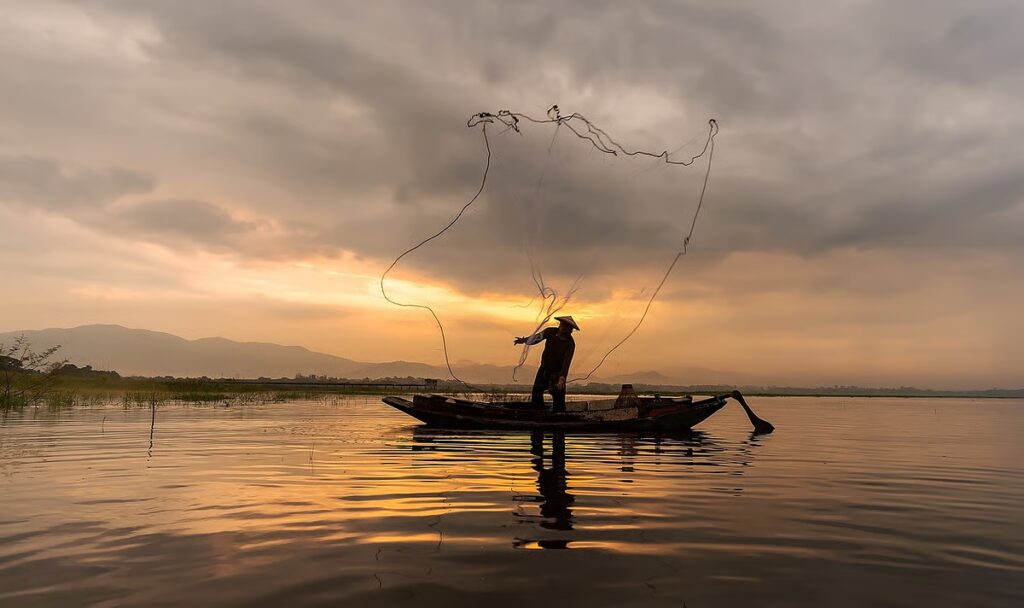
On the coast, fisheries bring out another version of this. Sustainability here is often framed through rules, and those rules matter. Fish stocks are under pressure and need to be managed. At the same time, fishers are not external to that system. Their understanding of local ecosystems is detailed, and in many cases, more current than the data that feeds into policy. When they are brought into management in a way that goes beyond consultation, the dynamic changes. It becomes less about compliance and more about shared interest. That shift does not happen on its own. It needs policy backing, access to better information, and signals from buyers that make sustainable practices viable.
The common thread across these examples is not hard to see. Solutions tend to hold when they reflect how people already think about risk, and when they leave room for those closest to the issue to shape what happens next.
This becomes particularly relevant when we start talking about learning from communities.
There is growing interest in identifying practices that are working on the ground and taking them to scale. That instinct is understandable. The risk is that the process becomes extractive without intending to be. A practice is identified, refined, and applied elsewhere, but the connection to where it came from weakens along the way. While there is an evident lack of fairness in the solution not being attributed to the rightful developers, there is also a loss of ownership that reduces the passion and persistence with which it gets adopted.
Another interesting shift in recent years has been the role of youth voices in the climate conversation. Many would have noticed how much more young people — logically, given their obvious vested interest — think, talk and act about climate and the environment. It’s beginning to manifest in young not waiting to be part of the just conversation; they are already in it — but to start being part of the prevention and the response. While policy, finance and technology are real and urgent challenges, one that is not always given the priority it deserves is talent. There is going to be the need for an epic infusion of new talent and upgrading skills in the workforce. Every one of these new professional advances not just their specific career objectives but act as points of light within their homes, colleges, social circles and workplaces. More power to them!
Climate action is often described in terms of scale, and that is fair. The problem is large. The responses need to match that. These signals do need to line up with how people experience risk and opportunity, or they could stumble and be ignored or adapted in ways that dilute their impact.
This is why the local matters as much as it does. Not as a slogan, but as a practical reality.
The larger frameworks will continue to shape direction, and they are necessary for that reason. Their effectiveness, though, will depend on how well they connect with what is already happening on the ground, and whether they are able to strengthen it rather than work around it.
That is where most of the work still sits.
Hisham Mundol is Chief Advisor, India to Environmental Defense Fund
Views expressed are the author’s own and don’t necessarily reflect those of Down To Earth