
- The Supreme Court adopted a unified definition for the Aravalli hills, which geologists and researchers say ignores the range’s geological characteristics and ecological value.
- Critics warn that the new definition risks stripping lower ranges of the Aravallis of legal protections, as ordered in older judgements.
- The Court also ordered a Management Plan for Sustainable Mining be drawn up to balance extraction with conservation.
A new definition for India’s oldest mountain range has thrown its future into flux.
On November 20, the Supreme Court approved of a definition for the Aravalli hills — a two-billion-year-old hill range stretching from Delhi to Gujarat — that has confounded geologists, triggered protests, and spurred a political firestorm between the ruling Bharatiya Janata Party and the opposition party, Congress.
The Court agreed with a government-led committee which suggested the Aravalli hills be defined as landforms with an elevation of at least 100 metres from “local relief” (ground level), with a hill range constituting two or more such hills falling within 500 metres of each other. “The entire area of landforms falling between the lowest contour lines of these hills as explained, along with associated features such as hills, hillocks, supporting slopes, etc., shall also be included as part of Aravalli range,” the committee’s suggestion goes on to say.
This definition doesn’t account for the range’s geological characteristics or ecological values, several experts say. The change has also raised concerns about protection for hills that do not meet the new criteria. “What was considered part of the Aravallis before November 20 are not considered Aravalli hills today, because this definition is exclusionary,” said Chetan Agarwal, an independent researcher who specialises in the governance of the Aravallis. “Multiple court orders have restricted mining and real estate from taking over the Aravallis, but this judgement undoes much of that, and opens the door to mining.”
The Ministry of Environment, Forests, and Climate Change rushed to clarify that no mining would be allowed in “core” protected areas, and it wouldn’t approve of any new leases till a Sustainable Mining Plan was made, in line with court orders.
Hanging in the balance is regulation for the mining critical, atomic, and other minor minerals, which are gaining national importance as pressure to scale up renewable energy sources and secure a mineral supply chain mount. The government recently exempted mining projects involving critical and atomic minerals from conducting public consultations under the Environmental Impact Assessment notification.
Understanding the Aravallis
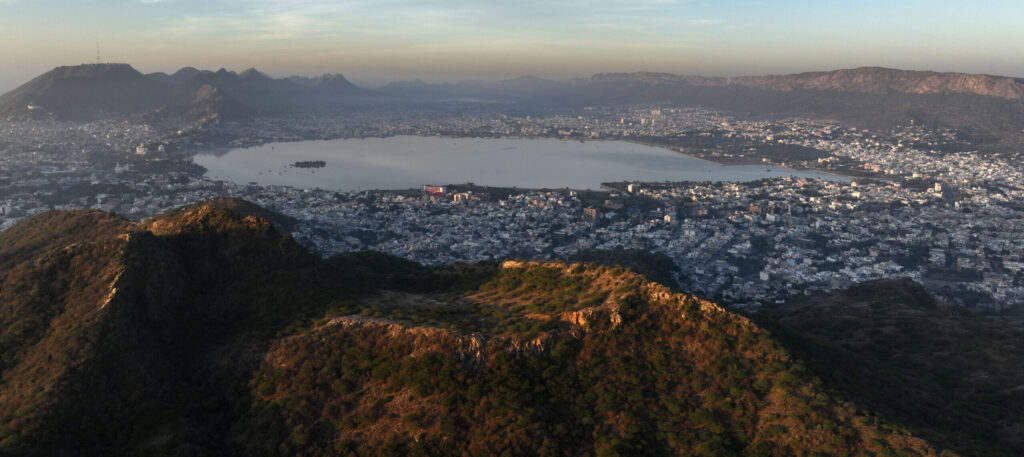
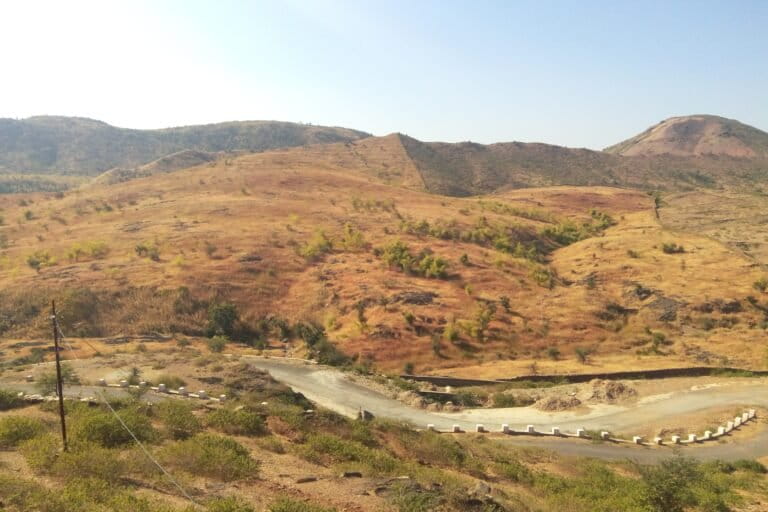
The Aravallis span approximately 650-800 km across Delhi, Haryana, Rajasthan, and Gujarat. Weathered by billions of years of erosion, they appear rocky and sparsely vegetated in the northern stretch, with sharper edges and lower elevations. Towards the southern end of the range, the Aravallis have retained more structural integrity, with higher peaks, well-defined slopes, and thicker forest cover.
Beneath these hills lie rocks that capture the Earth’s protracted evolution over more than 2.5 billion years. “The Aravallis are a natural museum,” said Gaurav D. Chauhan, an assistant professor of geology at the KSKV Kachchh University. “They hold evidence of the Earth’s first crust formations.” Its geo-heritage includes stromatolite fossils from the Proterozoic age and rocks and minerals formed over millennia. Marble, granite, limestone are all found in the Aravallis, and have been mined to aid infrastructure development.
Regardless of their appearance, even the stoutest hills with low elevations help moderate rainfall and provide a barrier against desertification. The scrubby forests and hills in the northern stretch help recharge groundwater aquifers that supply cities like Delhi with groundwater, the Forest Survey of India says.
The hill range is also an important wildlife corridor and habitat for several endemic species. It is home to 22 wildlife sanctuaries, including three major tiger reserves.
According to Chauhan, the new definition fails to take into account what constitutes the Aravallis. “The Aravallis are a line of rock. What’s found 100 metres above ground can be found 200 metres below ground too. They should be seen as a terrain and protected accordingly,” he said, adding, “The new definition also doesn’t account for the range’s ecological richness.”
The government-led committee was helmed by the Union Environment Ministry’s joined secretary, and included the secretaries from the Forest departments of each Aravalli state, representatives from the Forest Survey of India and Geological Survey of India, and member of the Supreme Court’s expert Central Empowered Committee.
“The Committee should have included a geologist from both academia and a research institution, in addition to an ecologist, for a more representative definition,” said Chauhan.
Legal interventions
The Supreme Court decided to intervene on the definition of the Aravalli hills to avoid “conflicting judgements” from two ongoing cases pertaining to mining in the region. The Aravallis did not share a common definition despite passing through multiple states, the Court observed. Since 2006, Rajasthan has used the 100 metre threshold as a classification for the Aravallis, which has enabled mining on smaller hills. Haryana did not have its own definition of the Aravallis, but identified them as forest or through other local land classifications, like gair mumkin pahad, which refers to uncultivable parts or wasteland in the hills.
In 2024, led by chief justice B.R. Gavai, the Court decided to settle the debate and ordered a government-led committee to recommend a uniform definition for the hills.
Inconsistencies in how the Aravallis are defined administratively has led to cross-border disputes, and made the ranges vulnerable to rampant mining. Rajasthan has reported over 20,000 cases of illegal mining, transportation, and stocking in the Aravallis since 2020, the government revealed in Parliament earlier this year.

Some parts of the Aravallis are protected by laws like the Environment Protection Act and the Forest Conservation Act. A notification issued by the Ministry of Environment, Forests and Climate Change in 1992 explicitly prohibits certain activities –including setting up new mines and expanding existing ones — in the districts of Gurgaon (Haryana) and Alwar (Rajasthan), without seeking permission and clearances first.
Legal interventions in the past have also protected the Aravallis from widespread industrial mining. Multiple judgements issued from 2002 onwards said mining in the Aravallis would be considered illegal if done on forest land without acquiring the requisite clearances. Another Supreme Court order banned mining and ground water extraction within five kilometres of the Delhi-Haryana border, and the adjoining Aravalli hills.
“If the new definition is to be applied, this order won’t stand,” said Agarwal, referring to the Delhi-Haryana jugement. “None of the Aravalli hills around the Delhi-Haryana border are more than 100 metres in height, so does that now mean they are not Aravallis worth protecting, even though there has been a legal precedent in the past to do so?” asked Agarwal.
Defining the Aravallis
The Supreme Court adopted the 100 metre definition despite a warning by the amicus curiae — the “friend of the court” referring to an independent expert — that it could strip ranges with lower elevations of their existing protections.
“If the definition as recommended by the Committee is accepted, all the hills below the height of 100 metres would be opened up for mining and as a result the Aravalli hills and ranges would lose their continuity and integrity,” K. Parmeshwar, the amicus curiae, told the court, adding that “if the definition as suggested by the Committee is accepted, it would totally endanger the environment and ecology of the mountains.”
An internal assessment by the Forest Survey of India determined most of the Aravalli hills in Rajasthan would fall outside the proposed definition, as per a media report. The assessment said that just 1,048 hills out of 12,081 in Rajasthan were 100 metres or higher, leaving most lower ranges without protection.
Instead, the FSI recommended defining the Aravallis as hills with gentle slopes of three degrees or more, with a buffer of 100 metres around the slope’s downside – a recommendation it has maintained since 2010. This definition was endorsed by the Supreme Court’s own expert committee, which advises the court on environmental matters. There was “no reason” for the government-led committee “to not accept the definition as proposed by the FSI,” the amicus curiae, or independent expert, argued in court.
However, the Supreme Court accepted the government-led committee’s proposed definition. Advocates representing the Union government said the FSI’s definition would be more exclusionary, but did not explain how.

In subsequent press releases, the Ministry of Environment justified its recommendation, saying that in defining the hill as being 100 metres above ground, including its slopes and foothills, “the entire ecological unit is protected. This prevents piecemeal exploitation of slopes or foothills that are vital for soil stability, water recharge, and vegetation cover.” The definition of a range will ensure “smaller hillocks between major peaks are also safeguarded,” it adds.
Older hill ranges in Gujarat and Delhi, several of which are below 100 metres from local relief, with no major peaks in between, are unlikely to be considered Aravallis at all, said Chauhan.
Mineral mining
Apart from defining the hills in terms of their height, the government-led committee also recommended that no new mining leases be granted in the Aravalli hill ranges except in the case of critical, strategic, and atomic minerals, as well as those found in the seventh schedule of the Mines and Minerals (Development and Regulation) Act. The Court accepted these recommendations as well.
It also recommended a prohibition of mining in the following areas: protected areas (like tiger reserves and wildlife sanctuaries), eco-sensitive zones as notified or drafted by state governments, areas where plantations had been raised under compensatory afforestation laws, and areas within 500 metres of Ramsar sites and other recognised wetlands.
Critical minerals like copper, nickel and zinc have been found in small quantities in the Aravallis. Minerals under the seventh schedule of the MMDRA such as limestone, gravel, and sand, are more commonly found and are already mined in large quantities in the hill range. New mining leases for these minerals are permitted, as per the Committee’s regulations.
Akshaydeep Mathur, general secretary of the Federation of Mining Associations Rajasthan said that more than a definition, the Aravallis were in need of a land use plan. “The Industry is asking that 2% of of the area falling under Aravalli districts be made available for mining,” he said, adding, “A land use plan demarcating exclusive mining zones, as proposed by the National Mineral Policy 2019, is needed, to avoid conflicts and promote coexistence between various departments and protections.”
The Supreme Court has instructed the government to come up with a Management Plan for Sustainable Mining to identify permissible areas for mining, ecologically sensitive, conservation-critical and restoration- priority areas within the Aravalli landscape, similar to what was done in Jharkhand’s Chaibasa region by the Indian Council of Forestry Research and Education.
“It should be ensured that the continuity and integrity of the Aravalli hills and ranges is maintained,” the court said.
Read more: Delhi and Haryana’s Aravallis support rich biodiversity and need protection
Banner image: Ana Sagar lake in Ajmer, Rajasthan, flanked by the Aravalli hills. (AP Photo/Rajesh Kumar Singh)

