
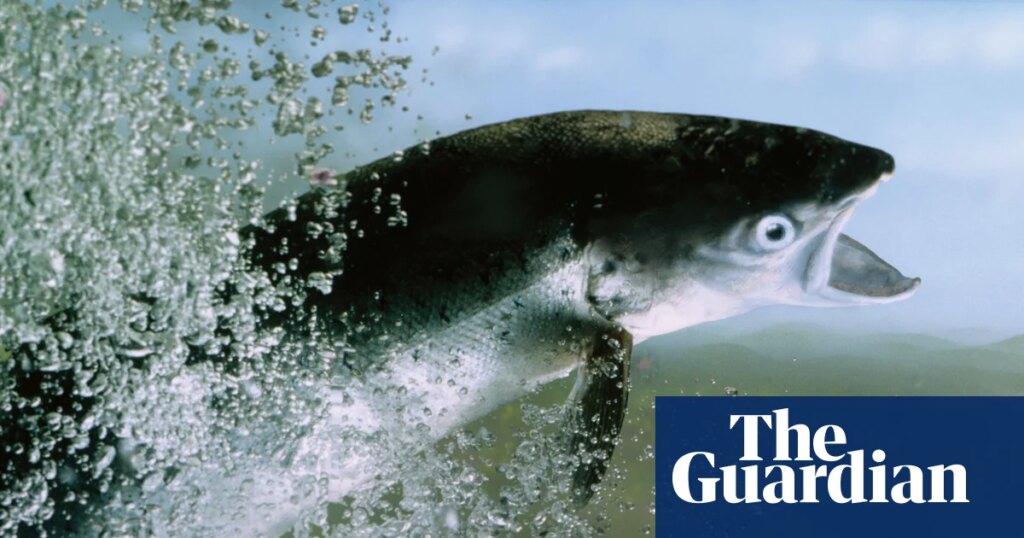
Young Atlantic salmon have been seen in three rivers in north-west England for the first time since 2015, marking a “significant environmental turnaround”.
The salmon species was declared critically endangered in Britain in 2023 but fish have been spotted in the Mersey, Bollin and Goyt rivers, meaning they have successfully travelled from the Arctic Circle to spawn.
A spokesperson for the Environment Agency said the body would be undertaking a new salmon distribution study early next year, telling the BBC they were “very excited to find the fish successfully spawning, considering the species’ critically endangered status”.
The salmon spawn in freshwater gravel beds, returning to their rivers of origin after spending two or three years feeding in the Arctic.
Their survival in Britain has been threatened by various factors including climate change, pollution and invasive non-native species, with a 30-50% decline in British populations since 2006.
Mark Sewell, a wastewater catchment manager at United Utilities, told the BBC: “Significant stretches of river were biologically dead in the 1980s but today they support thriving ecosystems and are home to a number of pollution-intolerant fish species. Those species are recovering thanks to a significant environmental turnaround.”
Atlantic salmon are also threatened by blockages in rivers such as dams. While they are able to swim up the Mersey to spawn in the gravel beds of the Bollin, which flows through Cheshire, and the Goyt, which runs through Derbyshire and Stockport, obstacles in other rivers block their paths.
They cannot migrate up the River Tame because of its weirs or the River Irwell because of the Mode Wheel locks at Salford Quays.
Mike Duddy, of the Salford Friendly Anglers Society, told the BBC: “If we wanted to do something for our future generations, now is the time to build a fish pass because there are huge numbers of people that would love to see salmon returning to the Roch and Irk, as well as the rivers in Bolton.”
The species declined in Britain during the Industrial Revolution but built back before being declared critically endangered again two years ago.
The Environment Agency spokesperson said: “We will be undertaking a new salmon distribution study in early 2026, using eDNA sampling, to build an even better picture of the spawning range and assess the extent of recovery.”