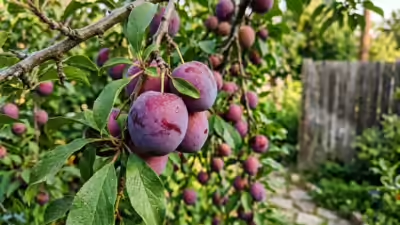
Imagine walking outside and picking your own figs, Meyer lemons or peaches. For a growing number of Americans, it’s not a fantasy tied to a farmhouse; it’s just Tuesday in a modest backyard. Dwarf fruit trees have quietly brought home harvests to anyone with a decent patch of sun and a little outdoor space, however small.Fruit trees are having their momentHome gardening has become popular among younger Americans, and the reasons are more than just aesthetic. Research published in Systematic Reviews finds that gardening activities increase fruit and vegetable consumption, promote physical activity, and are linked to improved mood and reduced stress, with proximity to nature being an important factor in these outcomes.It is not just a matter of mental health. In a randomised controlled trial published in Current Developments in Nutrition, community gardeners reported significantly higher vegetable intake than non-gardeners. According to participants, the taste of homegrown produce, feelings of pride and self-reliance, and simple enjoyment of eating what they had grown themselves were motivating factors. Growing your own fruit isn’t a fringe hobby anymore. It’s a practical, feel-good investment in your space and in your lifestyle. Here are the trees worth planting in a small space:Dwarf apple: The classic that actually worksDwarf apple trees top out at around 10 feet, making them a natural fit for small yards or large containers. Columnar varieties take this even further. They’re narrow enough to tuck up against a fence, while still producing full-sized fruit. One planning note: for a good harvest, apple trees need at least two different varieties grown close to each other. If you want something with a bit of character, try the Cox Orange Pippin and Orleans Reinette for pies, cider and applesauce.Dwarf fig: Easy to grow and beautifulIf you live in a warm climate, such as California, Texas, or the Southeast, a dwarf fig deserves serious consideration. It is drought-resistant, mostly pest-resistant, self-pollinating and requires little pruning. The Black Jack and Violette de Bordeaux are perfect for smaller spaces, but the Brown Turkey can also be used as a generous shade canopy.Meyer lemon: The patio MVPNo yard? Meyer lemon can be grown in a pot on a patio, porch, or balcony and is small enough to bring inside during the colder months. It’s fragrant and productive, and honestly, one of the more satisfying things to grow when you want results without a lot of land.Dwarf cherry: Surprisingly easy, wildly rewardingA dwarf cherry will grow to about 8 feet tall and offers its harvest within arm’s reach without taking over your space. Montmorency and other sour varieties tend to be naturally compact and better for smaller yards. The real problem? Before you get to it, protect the fruit from the birds.Dwarf plum: The one that earns its place twice overThe dwarf plum has two reasons to earn its place, in spring when it bursts into pale pink bloom and in autumn when the foliage turns a warm gold and amber. It’s one of the more decorative options on this list, but it does pull its weight in the fruit department too. Upright and tidy, it’s the perfect plant for narrow yards or tight fence lines. In Europe, there are naturally compact varieties such as Jefferson and the Italian plum, which produce intensely sweet fruit. If you prefer Asian plums, the Weeping Santa Rosa is easy to train and won’t overwhelm a small space.
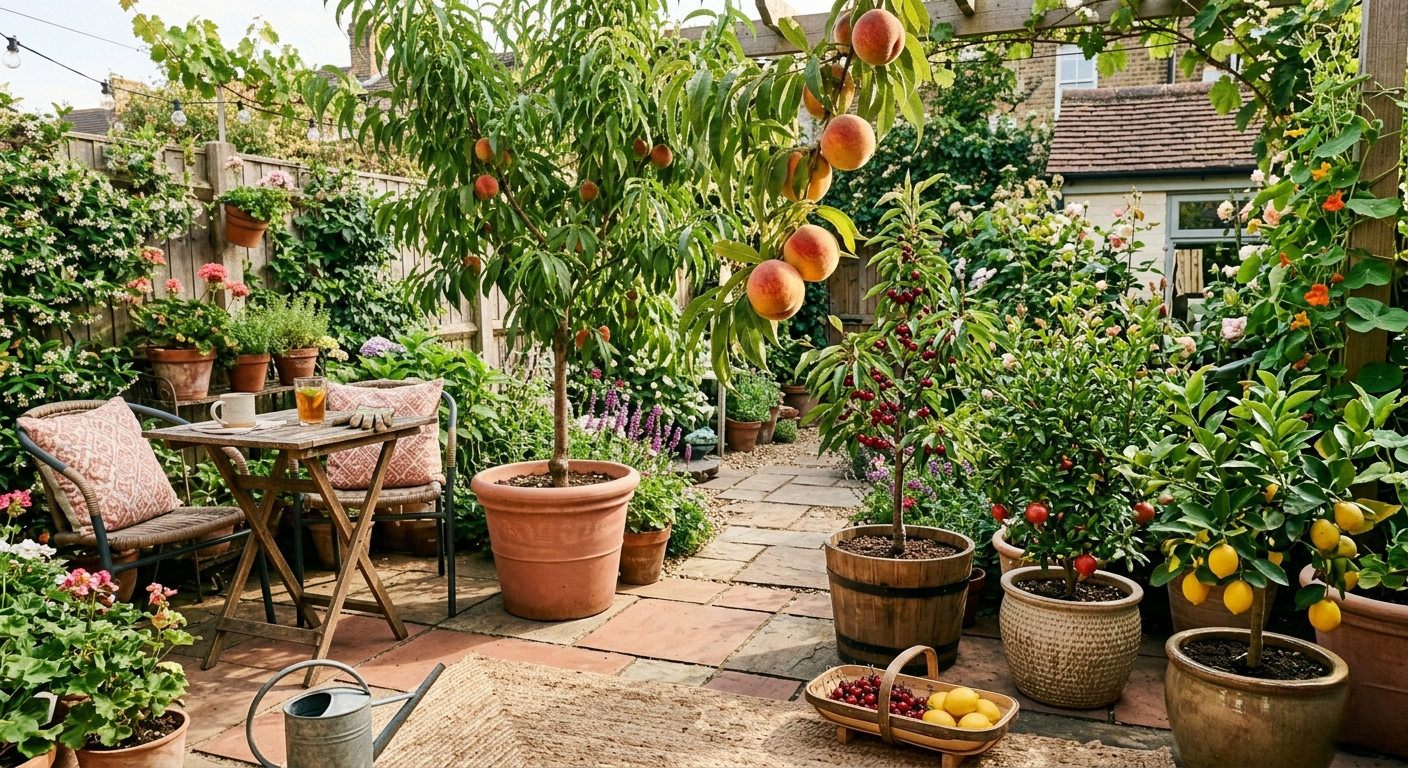
A patio full of dwarf fruit trees is less work than it looks and more rewarding than most people expect.Image Credits: Google Gemini
Peach and Nectarine: Backyard friendly, more than you would thinkPeaches don’t always get credit as a good choice for small spaces, but they are naturally compact and can be managed with good pruning. They are also self-pollinating, so you only need one tree. The Snow Queen nectarine is particularly good for the balance between sweet and sour.Dwarf mulberry: The forgiving oneIf you think you’re a plant killer, start here. The dwarf everbearing mulberry is fast-growing, self-fertile, and very forgiving of beginner mistakes. It does get a little messy around decks or concrete, so placement is key, but for sheer ease, nothing on this list can beat it.Dwarf Pear: Elegant, structured and tougher than it looksThe dwarf pear is naturally pyramidal, so it stays neat with little fuss, and unlike most of the fruit trees on this list, it does quite well in heavier clay soils. The Seckel is small in size but intensely flavoured. Both the Duchess d’Angouleme and Warren are dependable, low-maintenance choices. Dwarf pomegranate: The showstopper that fits on a patioIf you have a true micro-space, it’s worth knowing about dwarf pomegranates. They only reach 3 to 6 feet tall, tolerate drought well, and are genuinely ornamental with their vivid orange-red blooms.What you should know before plantingMost of these trees prefer full sun, six hours a day at least. Almost all of them require well-draining soil, and regular watering in the first year is the foundation for all that follows. Container growing is great for figs, pomegranates and Meyer lemons, but be sure the pot is large enough to sustain root growth.Most people underestimate the cost of a fruit tree, and are usually surprised by the payoff, in food, in beauty, in the quiet satisfaction of growing something yourself. You don’t need a farmhouse to have a garden. You just need a start.