Hello and welcome to Best of BS Opinion, our wrap of the day’s Opinion page.
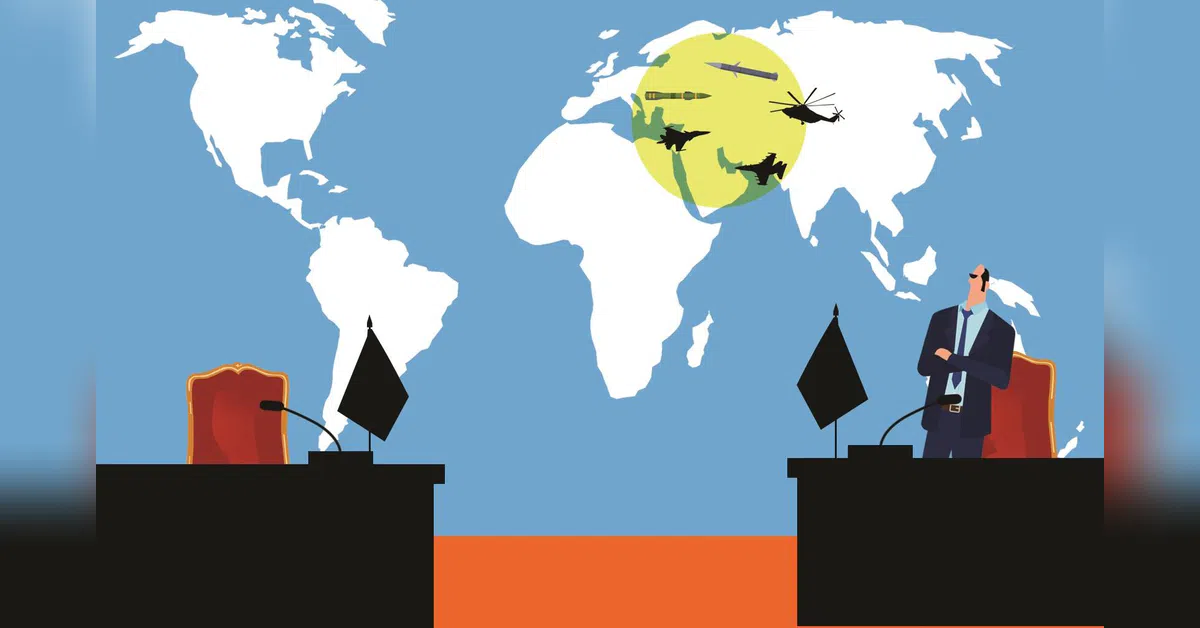
In his column, Shyam Saran argues that the Iran war has exposed the fragility of stability in West Asia, simultaneously narrowing India’s diplomatic options. US-led security integration – which includes major Gulf nations and, later, Israel – has deepened through America’s Central Command (Centcom), indirectly tying India closer to this bloc since it is also an observer to it. This has constrained New Delhi’s ability to balance ties with Tehran, drawing criticism from Iranian media. Its abandonment of strategic projects such as Chabahar port has also not gone down well in Iran. India’s visible tilt towards the UAE signals a shift from past neutrality, but carries long-term risks. Saran contends that India must urgently repair relations with Iran, given it is a key component of India’s western security perimeter. Beyond strategic considerations, Saran writes, is the people-to-people dimension, considering Iran is India’s civilizational twin, with which it shares centuries of relations and cultural affinity.
Devangshu Datta warns that artificial intelligence could break the historic link between productivity and employment, creating an economy with little demand. While past technological shifts generated new jobs, AI may deliver efficiency without equivalent employment gains, triggering falling incomes and consumption. This could create a self-reinforcing cycle of layoffs and declining demand across industries. For India, with its large workforce and dependence on services employment, such a scenario poses acute risks. Datta argues policymakers may need unconventional responses, such as an ‘automation tax’, as traditional tools could fail to prevent a destabilising collapse in demand.
Shekhar Gupta goes to bat for developing the Great Nicobar as a critical military-naval base, arguing that India must pivot strategically to its eastern seaboard. He cautions against complacency, citing Asim Munir’s remark that future conflict could originate from the east, targeting India’s vital assets. Rising Chinese influence in Myanmar and potential regional shifts heighten this risk. In particular, he points to Chinese visits to Myanmar’s Great Coco Island, which is a mere 20 km from Landfall Island, the northernmost in the Andamans archipelago. He contends that rather than indulging the foolhardy premise of potentially blocking the Malacca Strait, as some have suggested, India should prioritise strengthening island defences, such as the Great Nicobar. Developing it as a forward base would enhance surveillance, deterrence, and preparedness against emerging maritime threats from that side of the world.
India’s threefold Pakistan policy of diplomatic isolation, calibrated retaliation, and assumptions of economic decline is no longer tenable, argues Mihir S Sharma. Pakistan’s role in facilitating Iran-US talks and its improving external ties with multiple actors challenge the idea of isolation. Its economy, while fragile, has stabilised enough to avoid collapse, while its military establishment has gained confidence and diplomatic space. For India, this weakens deterrence assumptions and raises escalation risks. New Delhi, he suggests, must reassess its approach, as a more resilient and strategically active Pakistan complicates India’s regional diplomacy and long-term security calculations.