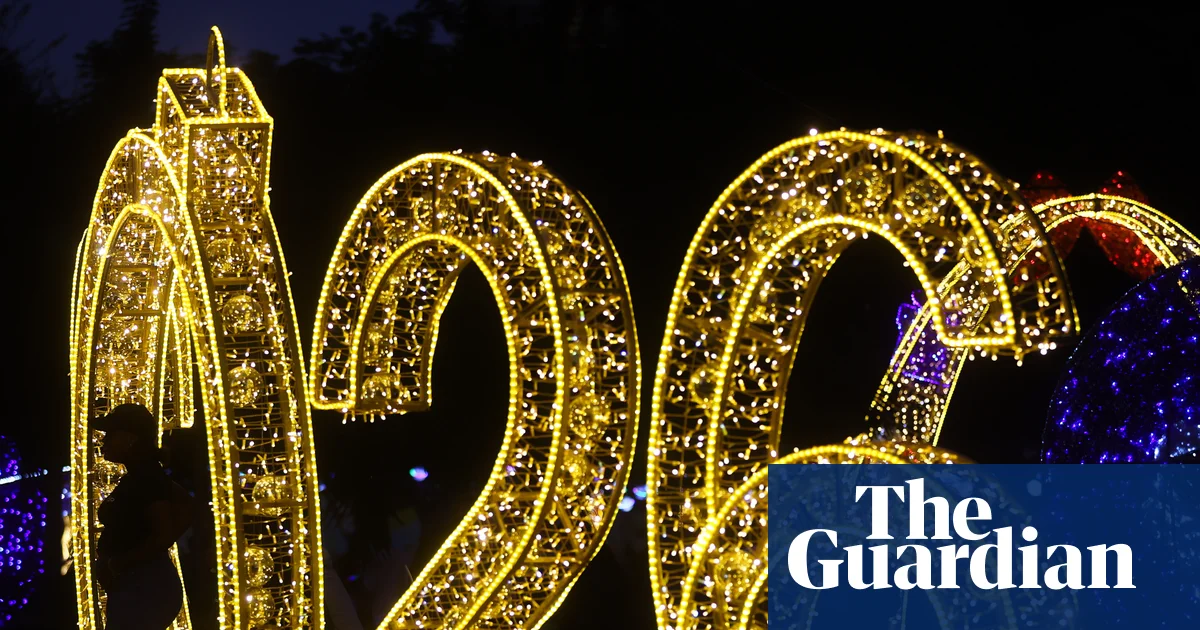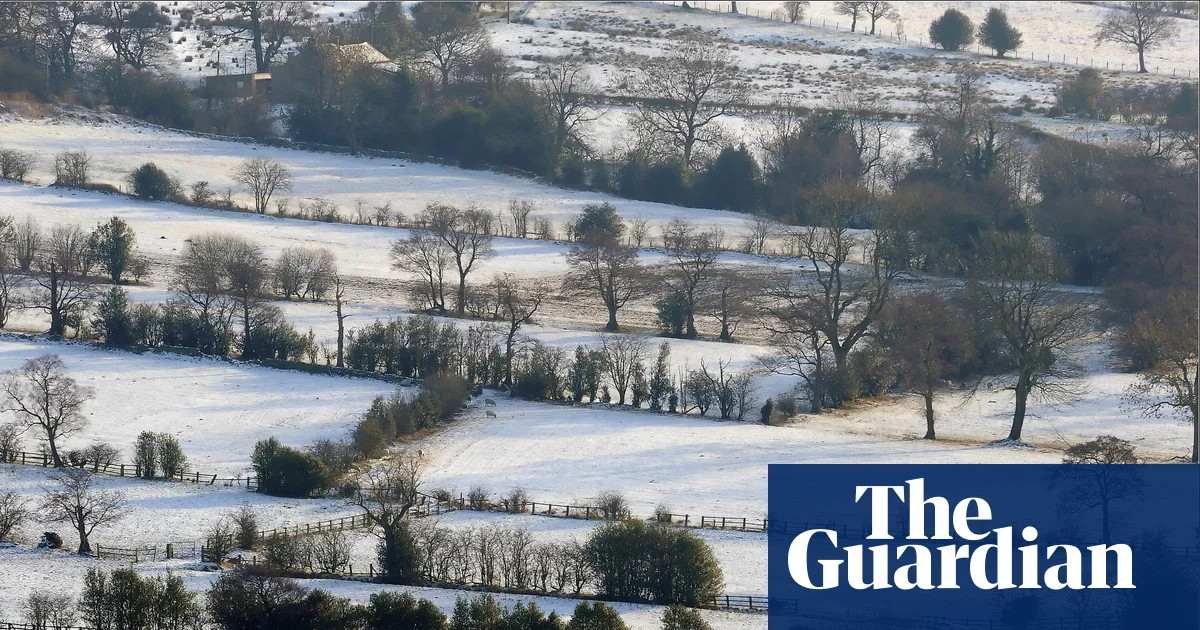
While ongoing showers might suggest this Christmas will be a washout, experts say a wintry snap is on its way and some areas of the UK might even have a white Christmas.
According to the Met Office, high pressure is building – meaning that, while some areas may experience showers, many will have drier and more settled weather.
The UK’s national meteorological service added that a strong easterly breeze would make it feel colder – although not unusually so for this time of year, with temperatures on Christmas Day expected to reach a daytime high of 7C and night-time lows at -3C or -4C. As a result, Father Christmas might be accompanied by Jack Frost.
“The south coast of England down towards South Devon and Cornwall perhaps [has] the greatest chance of seeing the odd wintry flurry if there were to be [any],” Marco Petagna, of the Met Office, told the Guardian. “Of course, for a white Christmas, technically now all we need is one flake of snow to fall anywhere in the UK. And it’s not an unusual occurrence – it’s more unusual for it to be lying snow.”
According to the Royal Meteorological Society (RMetS), a snowflake has tumbled from the sky on Christmas Day 54 times over the past 66 years at least somewhere in the UK, and except for 2024, every year since 2020 has technically been deemed “white”.
In 2023, 11% of weather stations recorded snow falling on Christmas Day, and 9% in 2022, although snow was not recorded as settling in either year. Indeed, as the RMetS notes, a thick blanket of snow at Christmas has only occurred four times since 1960 – in 1981, 1995, 2009 and 2010 – with 2010 having snow on the ground at 83% of stations, the highest percentage ever recorded.
But anyone expecting festive snowball fights is likely to be in for a disappointment this year. “The chance of noteworthy snowfall is only around 10%, so nothing significant,” said Petagna.
It was not always thus: the little ice age meant that between the 16th and 19th centuries it was more common to have a harsh winter – perhaps explaining why the writings of Charles Dickens, who was born in 1812, often refer to a cold and snowy Christmas. In addition, before 1752, when the transition to the Gregorian calendar was completed in Britain, 25 December fell later in the winter.
More recently, particularly harsh winters have included those of 1946–47 and 1962-63. “Much of England remained covered in snow every day from late December until early March 1963,” the Met Office has noted.
The rarity of festive snow cover today is, perhaps, not a surprise, given the climate crisis. Met Office data has revealed that Decembers in the UK have become warmer in recent decades, and snowfall on Christmas Day has become less likely on average.
But just because a snowy Christmas is unlikely this year, it doesn’t mean snowballs are a thing of the past: the Met Office notes that most of the UK’s snow days happen between January and March.
As the poet Sara Coleridge put it: “January brings the snow, makes our feet and fingers glow.”