
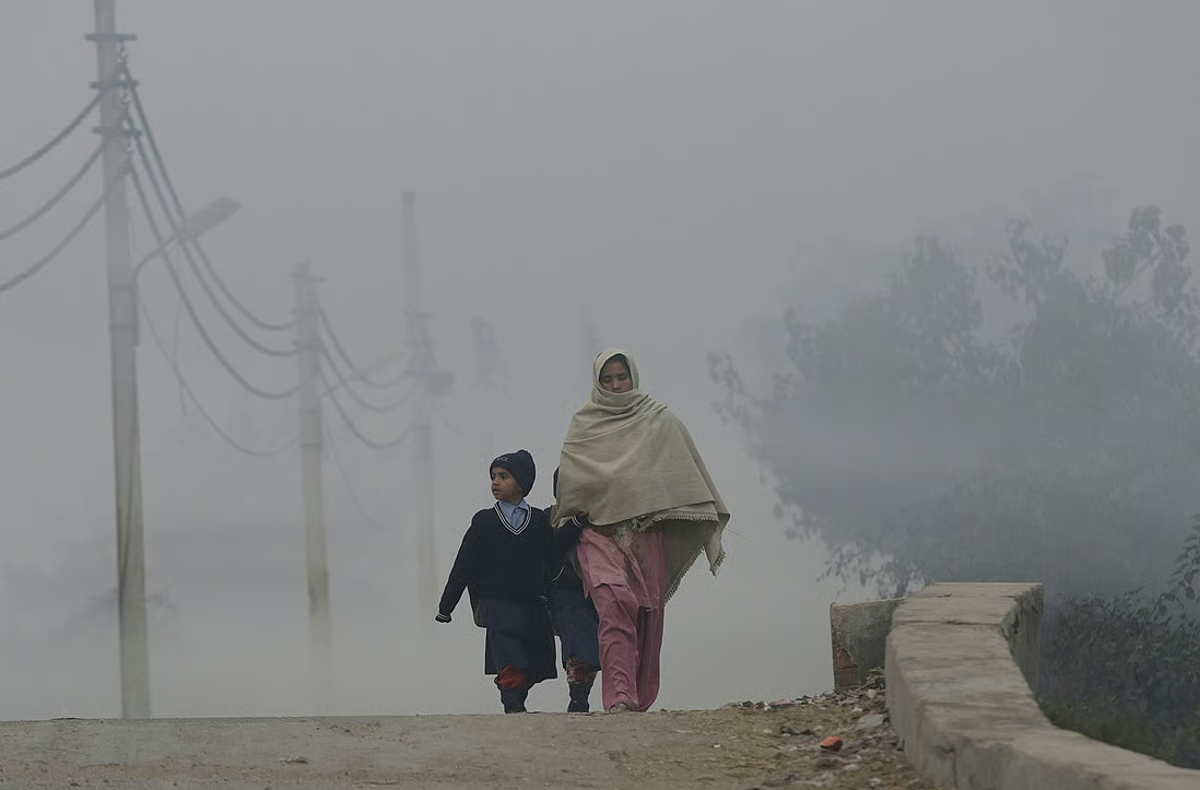
At Raja Vihar, a small colony in North Delhi, the morning air feels heavy as children walk their way to school through the solid, grey wall of smog. It looks like the wall is made of a thick, clammy substance — the kind that makes your throat itch and your eyes burn within minutes. The haze hangs heavy over cramped houses and narrow lanes where children once played freely. Today, many of them stay indoors, coughing and choking, rubbing their eyes, waiting for relief that never seems to come.
Across Delhi’s clumsy, informal settlements, toxic air is no longer a seasonal inconvenience. It has become a daily public health emergency — one that is quietly reshaping childhoods.
When it becomes a struggle to breathe
11-year-old Ayaan (name changed) from Raja Vihar was a live wire — always known to be full of energy, busy with playing gully cricket, racing with friends, doing quick errands for his mother. Movement was his second nature. Then came the cough. What began as a mild fever quickly escalated into violent coughing bouts so severe that he stopped playing completely.
“He was never so sick before,” his mother says, her voice strained with worry. “Now, even sleeping is difficult. He coughs till he can’t breathe.”
Doctors diagnosed a respiratory infection — pretty common during Delhi’s pollution peaks. The timing was telling: Ayaan’s symptoms began just as the city’s Air Quality Index slipped into the ‘severe’ category.
Little did his parents know that for children whose lungs are still developing, prolonged exposure to PM2.5 and PM10 particles can cause serious damage that lasts a lifetime. The scale and magnitude of the problem is evident as the Mohalla Clinics and Hospitals report attending increasing number of children ailing from chest infections, and over-the-counter sales of anti-allergic medicines and cough syrups skyrocketing yielding little result.
Vision blurred by sooty air
In the same Raja Vihar Colony, the 12-year-old Ritika (name changed) rarely steps outside her home anymore. A student of eighth standard who wanted to continue her studies with science, she had to drop out last year due to financial struggle at home. Yet, even within four walls, there was no escape.
“My eyes feel like they are burning all the time,” she says, while cooking meals on a kerosene stove in the poorly ventilated kitchen with smoke soot clings to the walls. Outside, dust and exhaust fumes thicken the air. Ritika’s recurring fever and burning eyes are signs of chronic exposure to toxic air — both indoors and out.
The story of Arjun (name changed), a seven-year-old at Suraj Park in the North-West of Delhi, is no different. When he first complained about his swollen eyes a couple of months back, his parents thought it was a passing discomfort. They got him eye drops, but with no result. Doctors eventually diagnosed allergic conjunctivitis, aggravated by pollution.
What the experts say
Together, these forces weaken immunity, damage developing lungs, and turn minor illnesses into prolonged battles for survival. Doctors warn that children breathe faster than adults and inhale a higher volume of pollutants relative to their body weight. In Delhi, this has led to alarming outcomes — irreversible lung damage, rising asthma cases, stunted growth, and even cognitive and behavioural impacts.