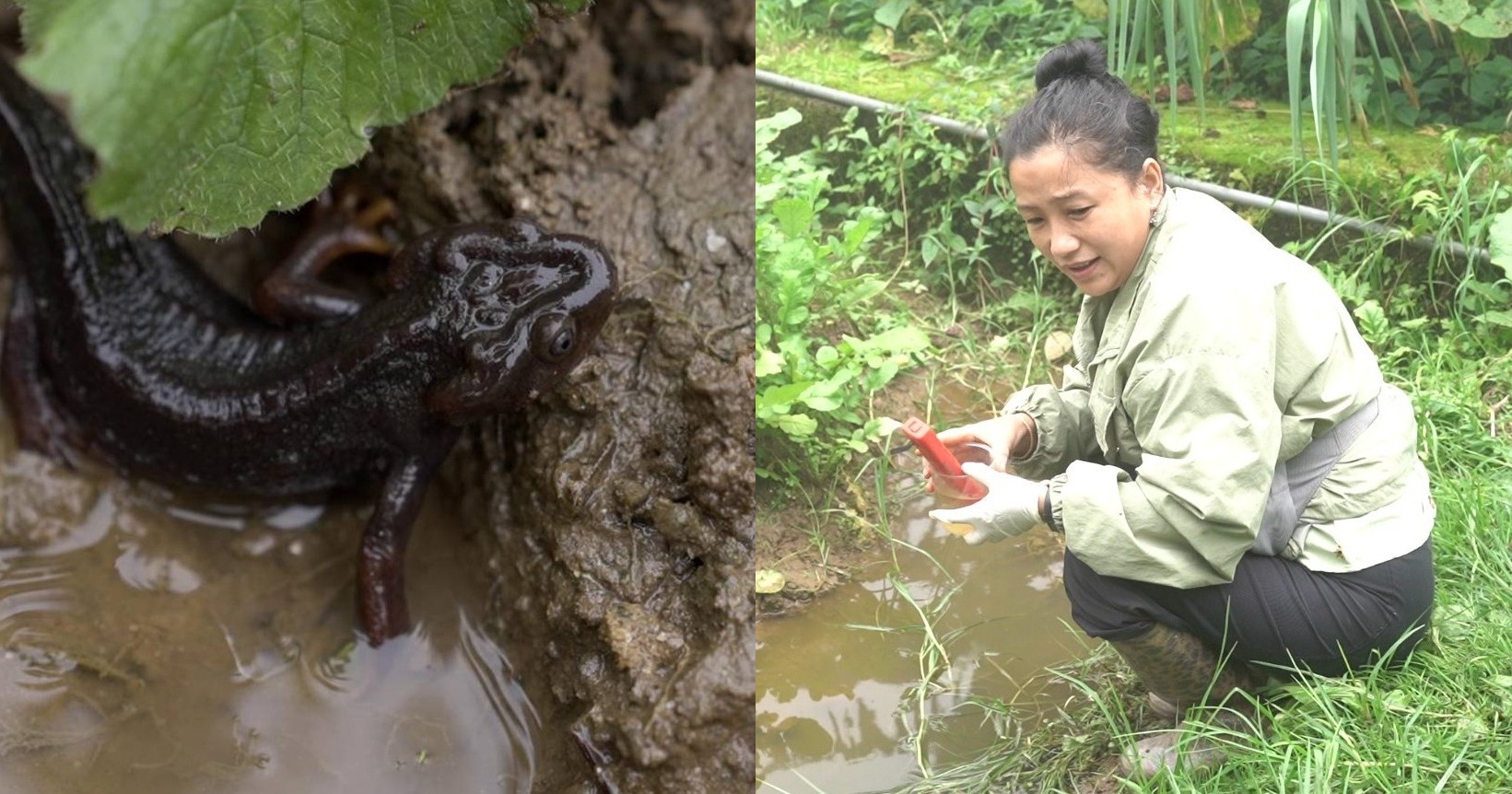
Whitley Fund for Nature, a UK charity, has announced the 2026 Whitley Award for Barkha Subba to lead the first grassroots protection effort for Himalayan salamanders and their wetland habitat in the Darjeeling Himalaya, West Bengal. The award, also known as the Green Oscars, supports grassroots conservation leaders in the Global South.
A scientific adviser at the local NGO Federation of Societies for Environmental Protection, Subba’s project is designed to restore Himalayan salamander habitat, remove invasive species, screen for the deadly chytrid fungal disease, as well as engage local people in awareness programmes, promoting sustainable land use and eco-friendly tourism.
Talking about her subject of research and conservation, Subba says, “Meeting a salamander feels like meeting a messenger from deep evolutionary time – a reminder of how long nature has endured and how quickly we can lose it.”
Endemic to India, Nepal and Bhutan, the Himalayan salamander, which can grow up to 17 cm in length and live for up to 11 years, was once widely distributed across Darjeeling’s wetlands and forest fringes. The species is now listed as Vulnerable on the Red List of the IUCN as wetlands are increasingly drained, filled, polluted or disturbed.
Salamanders’ return to their natal sites to breed and lay eggs, a process called philopatry, makes them highly vulnerable to changes in habitat and an indicator of wetland health. With her Whitley Award, Subba aims to focus on seven of the most critical breeding sites of the rare and evolutionarily distinct amphibian. She says her goal is to create a transboundary framework for wetland protection that extends to Nepal and Bhutan.
Wetland loss, unregulated tourism and tea garden land diversification are altering habitat and shrinking breeding areas. Approximately 30 breeding sites remain locally, many of which lie outside protected areas. Subba says, “What keeps me going is what I see on the ground. I see communities standing up for places they love. I see young people choosing to protect rather than exploit. I see forest officials ready to listen and cooperate. I see a species that has survived for millions of years, still trying, still returning home.”
The wetlands where Himalayan salamanders breed are culturally revered water bodies, associated with local deities and rituals. In many villages, disturbing them has historically been discouraged. Subba will also focus on strengthening partnerships with local communities, tea estate managers and government agencies to cover the salamander’s breeding sites in areas that have been chosen for conservation.
The Whitley Award is given annually to those achieving exceptional success in grassroots protection for threatened species and habitats. In addition to Subba, the other winner from India is Parveen Shaikh, who is leading efforts to protect the endangered Indian skimmer along India’s rivers, especially the Chambal.
Watch this video on how Barkha Subba’s works helps protect Darjeeling’s Himalayan salamander.
Banner image: Images courtesy of Subhrajit Sen.