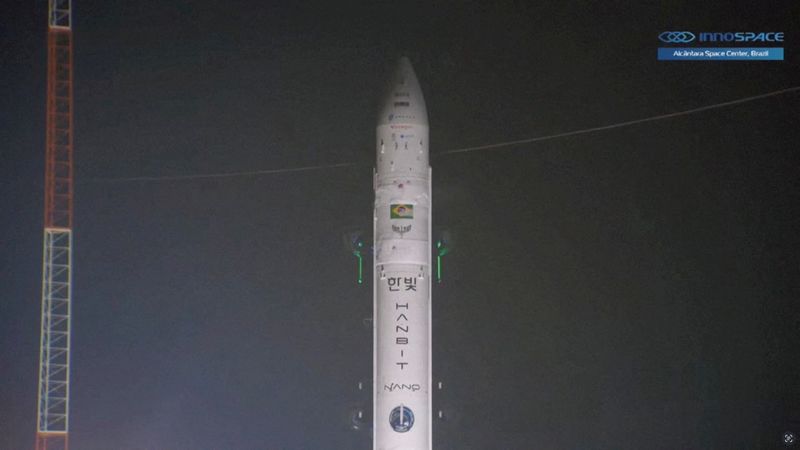
Dec 23 (Reuters) – South Korean satellite launch company Innospace on Monday launched the first commercial rocket from Brazil’s Alcantara Space Center, a milestone for the firm and Brazilian aerospace ambitions that ended with a crash.
The HANBIT-Nano vehicle lifted off at 10:13 p.m. Brazil time (0113 GMT), five days later than originally scheduled.
Just two minutes after the launch, a live feed within the official livestream showed a message noting an “anomaly” was experienced during the flight. The livestream ended immediately afterward.
According to Brazil’s air force, the rocket began its vertical trajectory as planned, but an issue prompted a crash into the ground. Officials and firefighters were sent to analyse the wreckage and the collision area, the air force added in a statement.
Innospace has not provided further information about the launch and did not immediately respond to a request for comment.
The firm’s South Korea-listed shares fell about 24% in midday trading after the crash, the biggest intraday decline since August.
The launch was delayed from Wednesday after an anomaly in a cooling unit component of the first-stage oxidizer feed system during final inspections, and again on Friday for a few hours due to unfavourable weather conditions.
In a previous statement, Innospace said it replaced the component on the launch pad, allowing the Spaceward mission to proceed within its December 16-22 launch window. It was launching eight registered cargoes, including five small satellites, for undisclosed customers.
The Brazilian air force and space agency offered operational support for the launch in coordination with key agencies.
In March 2023, Innospace had launched its test vehicle HANBIT-TLV from the same facility in northeast Brazil to verify the performance of its 150 kN hybrid rocket engine.
(Reporting by Fernando Cardoso; Editing by Jamie Freed)