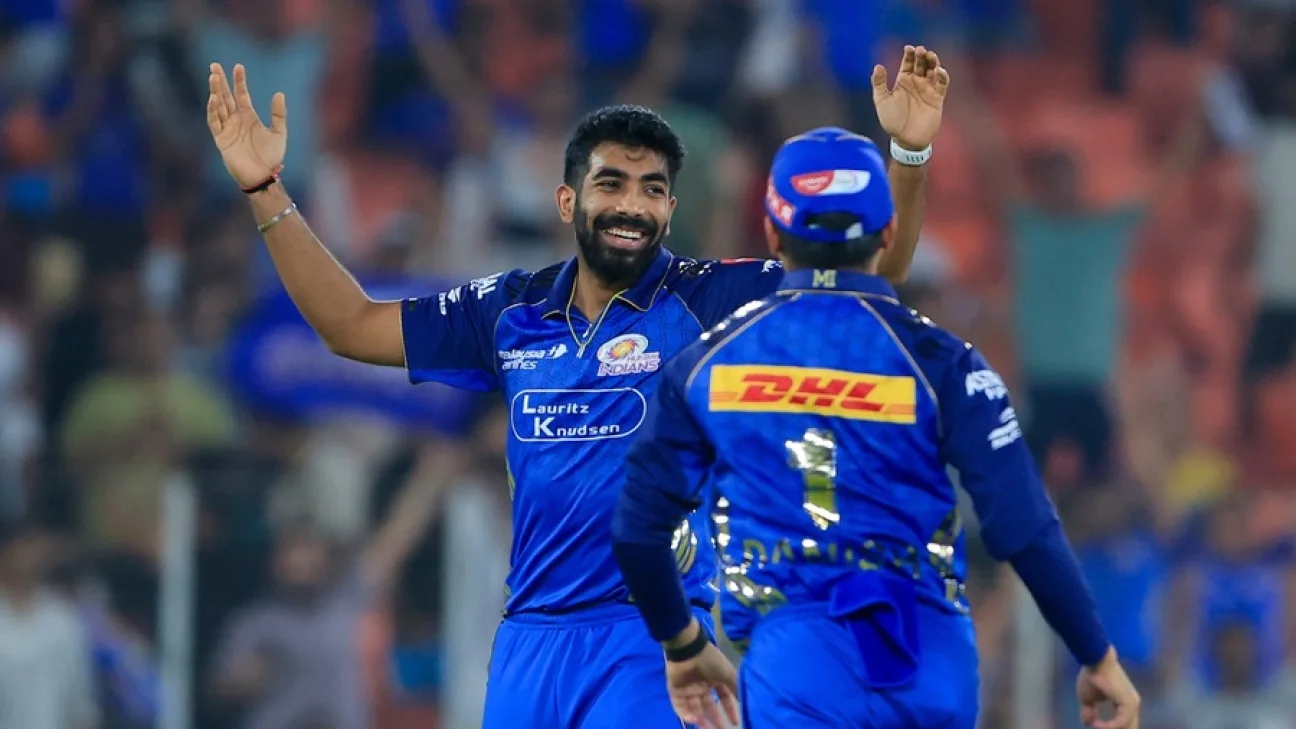
On the three occasions Chahar had opened the bowling, Bumrah had bowled the second overs – and the fifth and fourth on the other occasions. It’s still opening the bowling if you send down the second over, you’d think, but overs work differently in T20s these days. The second over is quite different from the first. Which is what Bumrah bowled against GT, and voila! The first wicket. Of B Sai Sudharsan. Off his first delivery.
“[On this occasion, it was] 0 for 0, he comes in, and then suddenly he strikes and you end up seeing a difference. I’m not saying the first-over wicket was the turning point of the game, but I’m just saying the affordability to do that against a side like Gujarat Titans, who aren’t so great in the middle [overs] against spin – so you decided to go with two spinners – sort of adds up for this game.”
For du Plessis, the best bowler in the side getting a wicket early on in a defense of 199 worked to lift the side.
“We talk about this as a momentum [shift] in the field. Everyone comes out, ‘come on boys’, you know, ‘today is the day’, and then the first over goes for 13-14 and the wind just gets knocked out of you a little bit,” du Plessis said. “You just feel like straightaway in the field the body language drops a little bit. So the fact that Bumrah – we all agree is the greatest bowler of this generation in white-ball cricket – [bowled the] first over and it just kicks belief into that team that today is the day that we can have a good day.”
“The fact that with this impact player thing, I know teams are going hard. The ball also doesn’t swing after the third over now in the last four to five years, and sort of coincided with Mumbai’s decline, where they bring him on [later in the powerplay] and then you expect him to get wickets with his sheer skill,” Abhinav said. “He does [get wickets], with his yorker and slower ball and he’s got the skills. [But] if you give him a ball that’s moving, brand-new, then he’s going to be [more effective].”