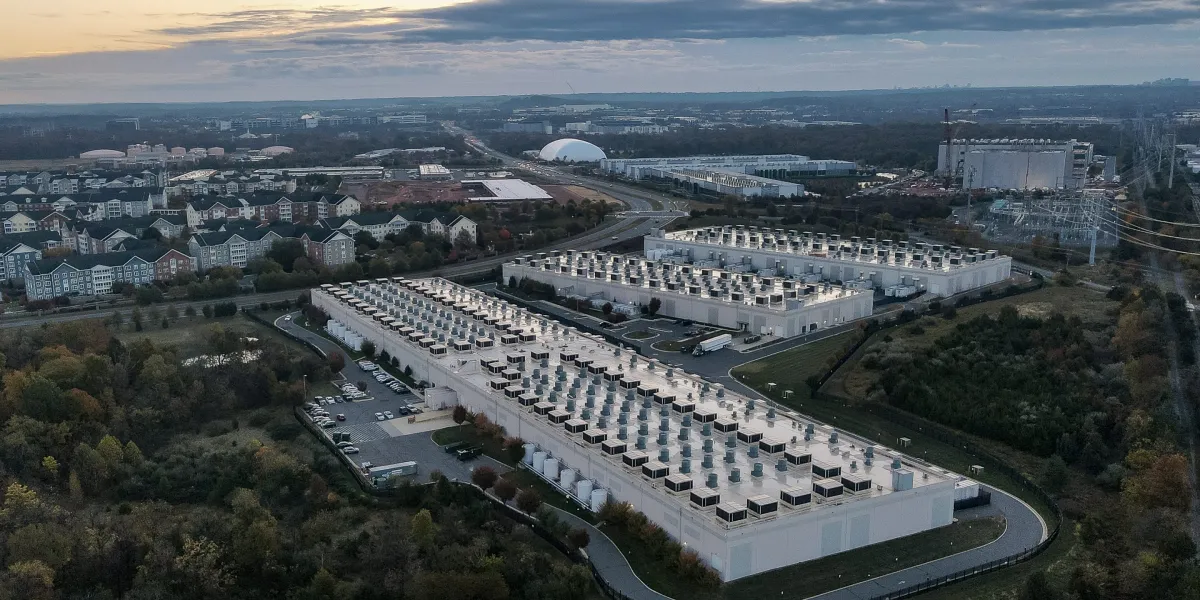
Data centers—the computing infrastructure required to power the country’s AI, on which companies are shelling out nearly $700 billion to build this year alone—are quickly popping up in rural and suburban towns across the country, some of which are more than two times the size of Manhattan’s Central Park. But the massive footprint of these projects may come with an equally massive public cost.
At least 36 states currently provide tax breaks for companies to build the facilities, coming at a cost of billions in forgone revenue. Virginia, the state with the most data centers, is dishing out $1.9 billion annually to data center developers. For Georgia, it’s $2.6 billion annually, according to an official state estimate. And after offering $150 million in breaks in 2024, Texas’s comptroller’s office this year upped that number to more than $1 billion annually, a nearly 567% increase in just one year.
In Louisiana, those numbers pale in comparison to what the state is offering to just one company, Meta, to build the Hyperion, a mammoth $10 billion data center currently under construction in Richland Parish, La. The company will receive $3.3 billion in tax breaks, according to a Sherwood News analysis, enough money to fund the entire state’s police budget for more than seven years, according to the report.
“These are wasteful subsidies for an industry that is growing very quickly and doesn’t need any public investments or support,” said Kasia Tarczynska, senior research analyst at Good Jobs First, a policy resource center that focuses on government accountability around the use of public subsidies. Tarczynska told Fortune the $3.3 billion estimate is a conservative estimate, and that the subsidies are likely larger than anyone can predict.
As predictions of AI’s groundbreaking societal shifts intensify, such as Elon Musk’s “universal high income” and thousands of new high-paying skilled-trades jobs, state governments are racing to attract the developers who could make that forecast a reality.
The Louisiana state legislature recently passed a new bill that would allow Meta stand to receive a major tax break for the facility, according to Sherwood News’ analysis. Hyperion will be exempt from state and local sales and use taxes on its data center equipment for the next 20 years, which includes the GPUs that train and develop AI models. Sherwood News estimated that since the state’s combined state and local sales tax stands at 9.56%, spending the roughly $35 billion for the GPUs of the center will hand the firm about $3.3 billion in tax breaks.
The tax breaks were reportedly approved by Richland Parish commissioners in July 2024, and will go to a Delaware-registered company called Laidley LLC, which it turns out is an affiliate of Meta.
Data center tax incentives and the landscape of pushback
Hyperion is just one of more than 3,000 data centers either planned or currently under construction, adding to the nearly 4,000 facilities that are already in operation. Tarczynska emphasized that many of the subsidy numbers available are estimates calculated by state governments and local officials. Most of the data is opaque—only 11 states disclose which companies receive the breaks.
Hyperion isn’t the only data center to receive a multibillion-dollar tax break. Good Jobs First estimates that an Amazon facility in New Carlisle, Ind. has received a 50-year $4 billion abatement, and a separate $4 billion tax break for technology and property over the next 35 years. The subsidies total $8.2 billion.
Neither Meta nor Amazon provided Fortune with a comment. Both Louisiana’s and Indiana’s Departments of Revenue did not immediately respond to Fortune’s request for comment.
For state governments, the payoff seems clear: Data center construction means more jobs and more local investment. Meta said Hyperion will employ more than 5,000 skilled-trade workers during peak construction, and that it’ll support more than 500 operational roles when completed. The tech giant has also committed to investments in schools and nonprofit organizations in Richland Parish, as well as more than $300 million to help improve local infrastructure, from roads to wastewater management.
According to a report from the National Conference of State Legislatures, lawmakers in at least 28 of the states with tax incentives have introduced proposals to substantially amend the existing tax breaks. The amendments would create guardrails to manage energy demand, or to modify existing incentive costs—mainly the money those states are forgoing in tax revenue to attract data center developers.
Out of those, nine states, including Virginia—the state with the most existing data centers—have considered bills to completely repeal their data center tax incentives.
That comes as backlash to data centers continues to rise. Local opposition blocked the construction of 48 data centers in 2025, totaling $156 billion in investments. A recent Gallup poll found that more than seven out of 10 Americans oppose building data centers where they live.
“At this point, I’m not sure if there’s any benefit coming to these [local] or state budgets from these massive projects,” Tarczynska said.