According to the India State of Forests Report, 3.41% of the country’s total geographical area is covered by trees lying outside forest areas. These are trees lining pavements, planted in orchards and in farm woodlots. Little is known, however, about the diversity of these trees — particularly in rapidly urbanising regions at risk of developing urban heat island effects in the summer.
A new database capturing India’s urban tree diversity attempts to bridge this gap. Generated using existing surveys and literature, the database recorded at least 742 tree species, “representing approximately 15.7% of the 4,734 global urban tree species reported in the latest global urban tree inventory assessment,” the study says. The database is a preliminary collection of plant diversity data in built up areas, stitched together with the objective of documenting their traits, IUCN Red List status, and species prevalence.
Some of the more dominant tree species found in built up areas include the Psidium guajava (guava), Ricinus communis (castor oil), and Azadirachta indica (neem) species. It also revealed that most taxa belonged to the IUCN Red List Least Concern list. Around 41% of trees recorded belonged to non-native tree species, while 58% were evergreen.
“In urban areas, tree species which are ultimately chosen to grow are often decided by how quickly they grow and how easy they are to maintain, not necessarily based on their ecological importance or potential for ecosystem service,” said Shyam S. Phartyal, a professor in the Department of Forestry, Mizoram University, and a co-creator and co-owner of the database. “This is also why we see exotic species favoured by municipalities and urban local bodies which are in charge of maintaining these plantations.”
The database was put together by parsing through 1,250 published literature sources, out of which 39 articles were included for having a list of tree species specific to urban areas. This database was further supplemented by data from the Global Biodiversity Information Facility (GBIF), covering a total of 380 urban areas from 32 states and union territories. These areas span both large cities like Hyderabad, Pune, and Bengaluru and smaller, emerging towns like Rewari (Haryana), Barmer (Rajasthan), and Bathinda (Punjab).
Tree-mediated ecosystem services — such as shade and cooling — are highly dependent on context and species, making city-level data collection crucial for planning. “A lot of data is in grey literature, such as municipal or institutional reports and records, which are not published or accessible. As a next step, we hope to invite more contributions for data collection, so the database is more detailed,” said Phartyal.
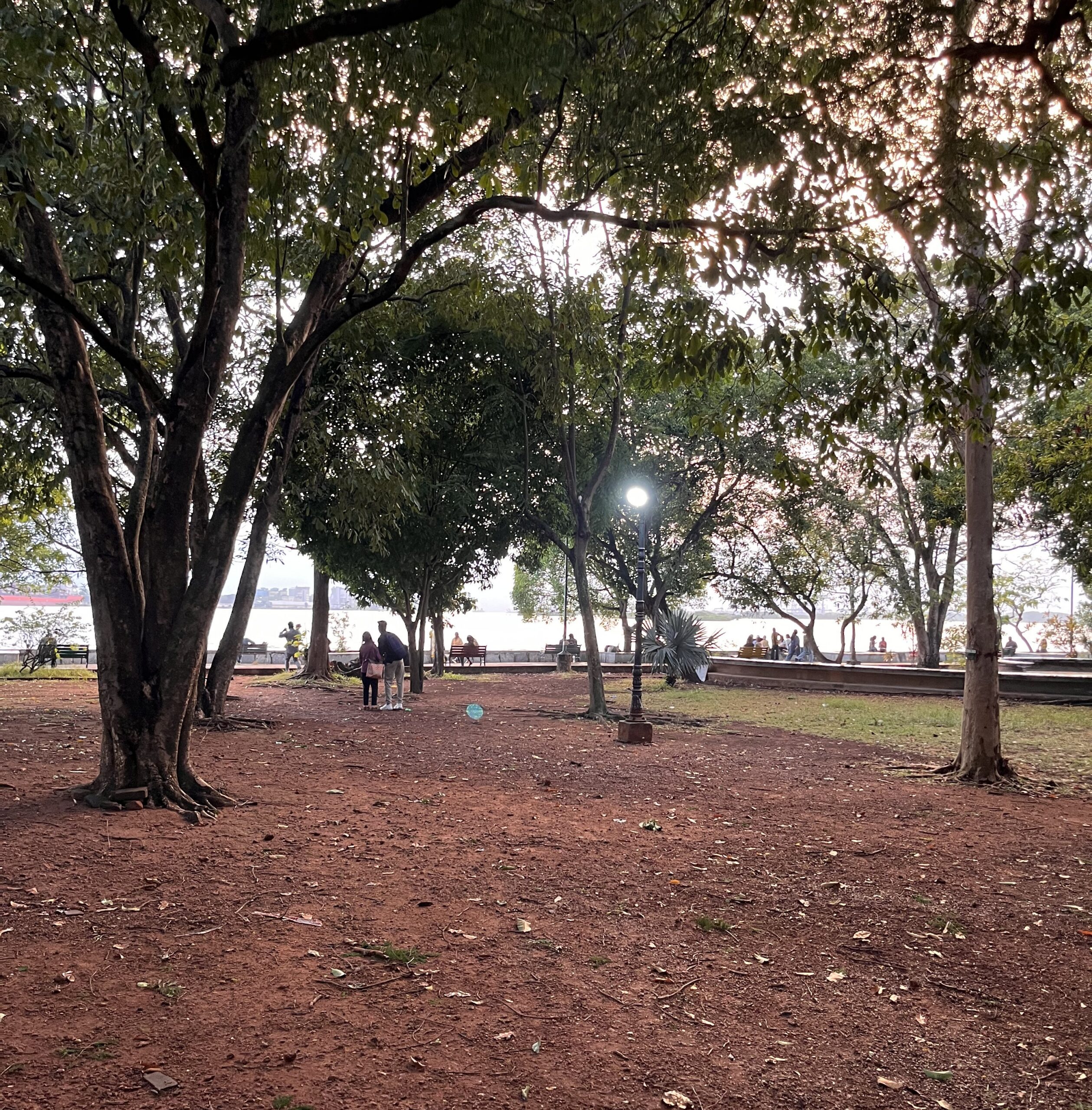
Banner image: Trees at a park in Kochi, Kerala. Image by Divya Kilikar/Mongabay.