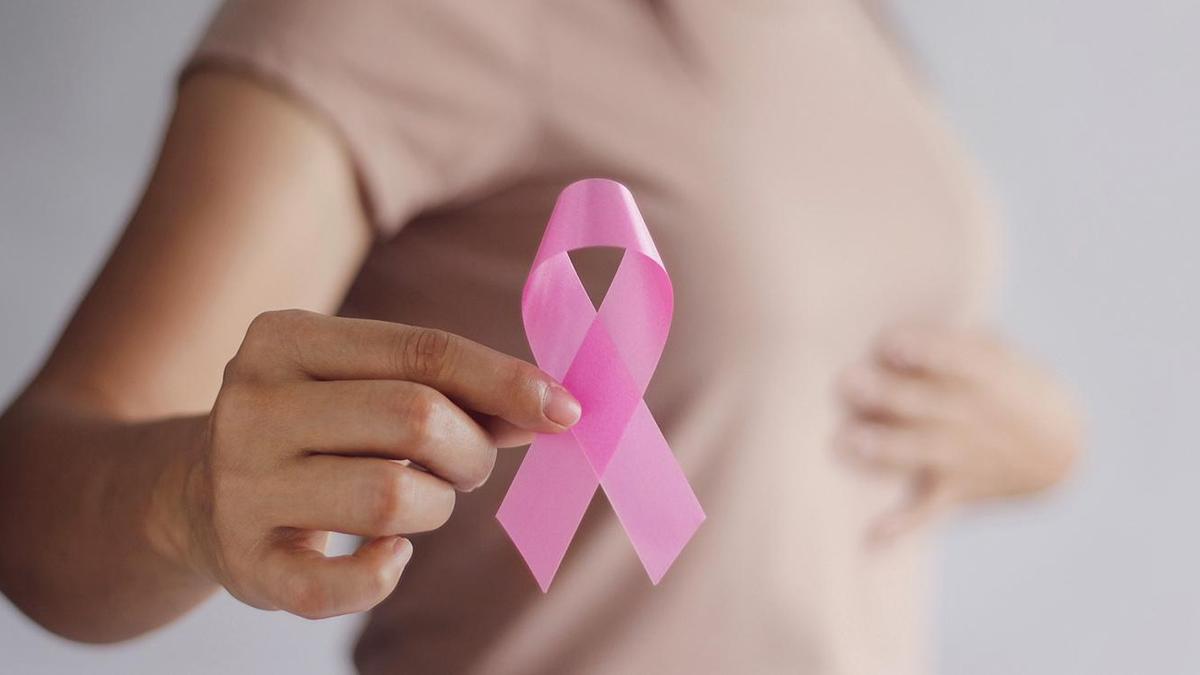
Image for the purpose of representation only.
| Photo Credit: File
Higher levels of physical activity have been shown to contribute to lowering the risk of breast cancer in individuals, a study has found, while indicating that reproductive timing, hormonal exposure, central obesity, and family history also influence the occurrence of the disease. The odds of developing breast cancer were three times higher in women over 50 years compared to those under 35 years.
Women reporting more than two induced abortions had a higher risk compared to those with no abortions, while breastfeeding duration and use of oral contraceptives showed no significant association with breast cancer risk.
A recent research paper titled “Understanding female breast cancer risk in the Indian population: Evidence from a systematic review and meta-analysis”, published by the Indian Council of Medical Research, said there was a need for large, population-based prospective cohort studies in India to define breast cancer prevention and early detection strategies with greater precision.
The paper added that breast cancer incidence in India is expected to rise by about 5.6% annually, translating into an estimated increase of 0.05 million new cases per year.
In India, breast cancer is one of the leading cancer sites, accounting for nearly a quarter (22.8%) of cancers among women. The observed five-year survival rates were 81.0% for cases detected at a localised stage, 65.5% for those with regional spread, and 18.3% for cases diagnosed with distant metastasis, where cancer cells have travelled from the primary tumour.
The systematic review and meta-analysis aimed to examine the influence of India’s unique context on breast cancer risk by identifying and synthesising population-specific risk factors. For the study, a systematic literature search was conducted across the PubMed, Scopus, and Embase databases up to December 22, 2024. Observational studies assessing breast cancer risk factors among Indian women were included, and quality was assessed using the Joanna Briggs Institute checklist.
The research also noted that among lifestyle factors, poor sleep quality, irregular sleep patterns, sleeping in a lighted room, and elevated stress levels were contributing risk factors.
It suggested that public health efforts should prioritise reduction of central obesity and early reproductive health counselling. “Also, well-designed, prospective, multicentric studies with standardised measurements are urgently needed to strengthen causal inference and support the development of India-specific breast cancer risk prediction tools,” the paper said.
Published – December 24, 2025 05:16 pm IST