- A rare assassin bug has been rediscovered in the limestone caves of the Andaman Islands, nearly a century after its first record in Meghalaya.
- The new study provides a detailed redescription, including precise measurements and anatomical illustrations, providing a stronger reference for future identification.
- While India’s vast insect diversity remains underexplored, researchers say the rediscovery of this species paves the way for more in-depth explorations of cave habitats across the Andaman Islands, and underscores their value for conservation and scientific research.
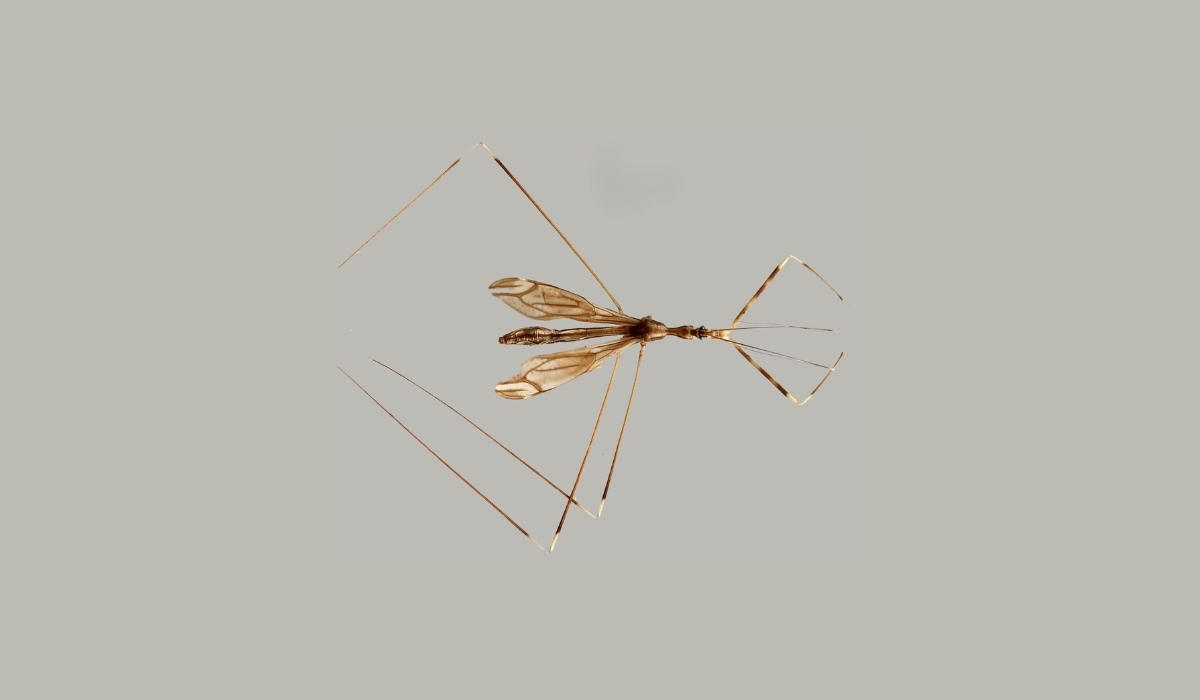
Researchers have rediscovered a rare thread‑legged assassin bug, in Andaman’s limestone caves, nearly 100 years after its original description from Siju Cave in Meghalaya. Documented in a study recently published in Subterranean Biology, this marks the first record of the Myiophanes kempi species outside its type locality and highlights the unexplored biodiversity of India’s subterranean ecosystems.
The species was first collected in 1922 by Stanley Kemp, an English marine biologist who was then serving as superintendent of the Zoological Survey of India. It was described by British entomologist William Edward China in 1924. Nearly 100 years later, in 2019, researchers from the Sálim Ali Centre for Ornithology and Natural History (SACON), the South India Centre of Wildlife Institute of India, collected two male specimens from the Baratang caves in the Andaman Islands. They confirmed these were M. kempi after comparison with images of the type specimen preserved in the Natural History Museum, London.
This rediscovery extends the known range of the species by over 1,000 kilometres southeast of its original site.
Uncovering a century-old mystery
Emesinae, or thread-legged bugs, are a subfamily of Reduviidae (assassin bugs) with slender bodies and long, thread-like legs. Their distinctive morphology and specialised hunting behaviour have earned them the name “assassin bugs.” The genus Myiophanes is largely cave-dwelling, inhabiting isolated subterranean habitats, and remains poorly studied. These rare predators feed upon smaller arthropods using their raptorial forelegs and complete their entire life cycle in darkness.
According to Manchi Shirish S., Principal Scientist at SACON, and the corresponding author of the study, cave research in India remains very limited, and biodiversity studies in these habitats are almost negligible. “These are challenging, mostly inaccessible environments that have no natural light, and exploring them requires specialised skills and expertise, which is one of the main reasons they remain so poorly understood,” he says.
Shirish and his team had long been studying caves as habitats for the edible-nest swiftlet in the Andaman and Nicobar Islands. While investigating invertebrates in caves, they found a thread-legged bug in 2019, but could not identify it at the time. In 2023, the team revisited the specimens with the help of insect taxonomist Hemant V. Ghate, the former head of the Department of Zoology, Modern College, Pune, and then confirmed it as M. kempi.
The original description from 1924 lacked detailed morphometric data, images, and finer anatomical features, partly due to the constraints of microscopy and photography at that time. The rediscovery has now enabled a more detailed redescription, including precise measurements and anatomical illustrations, providing a stronger reference for future identification.
Shirish says that the rediscovery far from its type location raises intriguing biogeographic questions and hints at possible historical connections between cave systems in Northeast India and the Andaman archipelago. Researchers who studied the biota of Siju Cave during a short visit, in February 2019, did not find the species. “Whether the species is native to the Andamans and has remained undetected, or was introduced through human movement, remains unknown,” Shirish adds.

Taxonomic challenges and limitations
India’s vast insect diversity remains underexplored, and gaps in taxonomic knowledge, along with limited historical records, often make it difficult to identify even known species, as seen with M. kempi. According to Ghate, much of the foundational work on insect taxonomy in India was conducted by European, particularly British, researchers in the early 20th century, with little follow-up work since.
Identifying insect species is time-intensive, requiring review of historical literature, comparison with type material, and detailed morphological analyses through dissection and microscopy. Obtaining images or access to type specimens in museums can take several months, further slowing the process.
Many early descriptions are extremely brief, and written in languages such as German, Russian, or Latin, making interpretation difficult. The process is further impeded when descriptions lack detail, photographs are poor, and preservation alters colouration, Ghate explains. “Photographing live specimens now allows us to capture more accurate features for identification,” he adds.
Advances in DNA barcoding further provide a complementary tool for species identification, when morphological traits are ambiguous.
The new study now includes illustrations of the male genitalia of M. kempi. “Genitalia are species-specific, and their characterisation is crucial for accurate identification,” Ghate notes. He cautions that variations in colouration and patterns can be misleading, resulting in the same species being treated as a different one, and should not be relied upon for taxonomic classification.

Research gaps and future directions
Subterranean caves are like islands, supporting a unique ecosystem with highly adapted organisms. Yet, they remain largely unexplored, holding great potential for the discovery of new species, particularly lesser-known smaller invertebrates.
Many caves in India are considered sacred, and natural caves often remain inaccessible due to religious or superstitious beliefs. Myths surrounding bad spirits, bats, and zoonotic diseases further discourage exploration, Shirish explains. “Such cultural and practical reasons limit the exploration of these unique habitats,” he adds. .
There are scientific limitations too, points out Amol P. Patwardhan, an entomologist and an assistant professor at K.J. Somaiya College. Despite India’s rich insect diversity, he says, taxonomic expertise remains limited. “Most entomologists focus on agricultural pests, but only a few study forest insects,” he says.
Patwardhan further adds that Indian museums hold fairly good insect collections, but obtaining permits from the forest department and responses from museums can take time, given the need to comply with stringent wildlife regulations. “The lack of funding for taxonomic work without immediate applications can further delay species identification, while studies with commercial outcomes are more likely to receive support,” he says.
“Effective conservation requires prior knowledge of existing biodiversity, or rare species may be lost before they are even identified,” he says.
Jayant Biswas, the director of National Cave Research and Protection Organization, remarks that biospeleology, also known as cave biology, is an exciting but demanding field requiring physical endurance and a willingness to explore challenging environments. “Research in India remains limited, partly due to funding constraints and its marginal presence within mainstream disciplines like geology and biology. As a result, caves are often understudied and sometimes even harmed in the name of research,” he adds.
However, the rediscovery of M.kempi paves the way for more in-depth explorations of untouched cave habitats across the Andaman Islands, and underscores their value for conservation, scientific research, education, and sustainable tourism, Shirish concludes.
Banner image: Myiophanes kempi (family: Reduviidae and sub-family: Emesinae) is a rare predatory bug with long and slender thread-like legs. Inhabiting remote subterranean environments, it remains poorly studied. Image by Hemant V. Ghate.