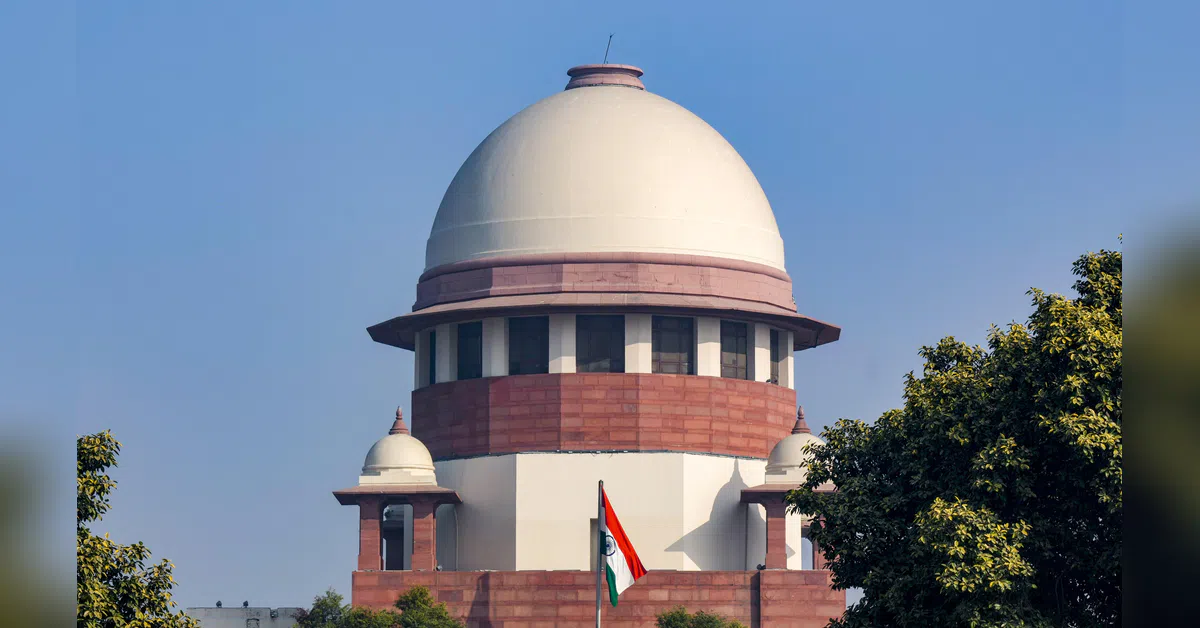
The Supreme Court on Tuesday held that liabilities arising from corporate guarantees constitute “financial debt” under the Insolvency and Bankruptcy Code (IBC), setting aside contrary findings of the National Company Law Tribunal (NCLT) and the National Company Law Appellate Tribunal (NCLAT) in the insolvency of Reliance Infratel.
A Bench of Justices P S Narasimha and Alok Aradhe allowed an appeal filed by a consortium of banks led by the State Bank of India, ruling that the lenders are entitled to be recognised as financial creditors on the strength of guarantees executed by the insolvent company.
The Court directed the resolution professional to reconstitute the committee of creditors (CoC) to include the consortium and proceed with the insolvency process in accordance with law.
The committee of creditors is a body of lenders making key decisions in the insolvency process of a distressed company.
The dispute arose from loans advanced to Reliance Communications (RCOM) and Reliance Telecom (RTL), for which Reliance Infratel had executed corporate guarantees in favour of the lenders. When defaults occurred and the insolvency process was initiated against Reliance Infratel, the consortium invoked these guarantees and filed claims as financial creditors.
However, Doha Bank challenged the validity of the guarantees, alleging irregularities in their execution, lack of disclosure in financial statements, improper verification and insufficient stamping.
Accepting these objections, the NCLT had held that the lenders failed to establish their claims with proper documentation and directed reconstitution of the CoC.
The NCLAT affirmed this view, raising concerns over the timing and manner of execution of the guarantees and their non-reflection in financial records.
Reversing these findings, the Supreme Court held that a liability arising from a corporate guarantee squarely falls within the definition of “financial debt” under Section 5(8) of the IBC. The Court reiterated that a guarantor’s liability is coextensive with that of the principal borrower and is legally enforceable.
On facts, the Bench found that the execution of the guarantees was not in dispute, noting that the insolvent company itself had acknowledged them and indicated that disclosures had been made in financial statements. The Court held that even assuming gaps in disclosure, such omissions could not defeat the lenders’ substantive rights.
Addressing concerns over timing, the Court observed that the guarantees were executed as part of a restructuring exercise before the account was classified as a non-performing asset in terms of applicable Reserve Bank of India norms. It rejected the inference that the guarantees were suspicious merely because the borrower group was under financial stress.
The Bench also rejected objections relating to non-production of documents before the NCLT, holding that relevant material could be produced at the appellate stage and that absence of such documents earlier did not undermine their genuineness.
On the issue of stamping, the Court clarified that insufficient stamping does not render an instrument void or unenforceable, describing it as a curable defect and cautioning against using fiscal statutes as a tool to defeat substantive claims.
Finding the conclusions of the NCLT and NCLAT to be “perverse”, the Supreme Court set aside their orders and restored the lenders’ status as financial creditors.
“The tribunals at the instance of a lender grossly erred in rejecting the claim raised by the consortium of lenders. For the reasons already assigned by us, in our considered opinion, the perversity of the findings of the tribunals are glaring and manifest, beseeching interference by this Court in second appellate jurisdiction,” the judgment said.