A powerful winter storm swept across California on Wednesday, with heavy rain and gusty winds leading to evacuation warnings for mudslides in parts of the southern part of the state, bringing near white-out snow conditions in the mountains and hazardous travel for millions of holiday drivers.
California’s governor, Gavin Newsom, declared a state of emergency in several counties, including Los Angeles.
“With atmospheric rivers, intense rainfall, and strong winds ahead, I’m declaring a state of emergency in Los Angeles, Orange, Riverside, San Bernardino, San Diego, and Shasta counties to activate emergency authorities and preposition resources to keep our communities safe,” Newsom said in a post on X.
Forecasters said southern California could see its wettest Christmas in years and warned about flash flooding. Areas scorched by January’s wildfires were under evacuation warnings, and Los Angeles county officials said on Tuesday they were going door to door to about 380 especially vulnerable homes, ordering residents to evacuate because of the risk of landslides and debris flows.
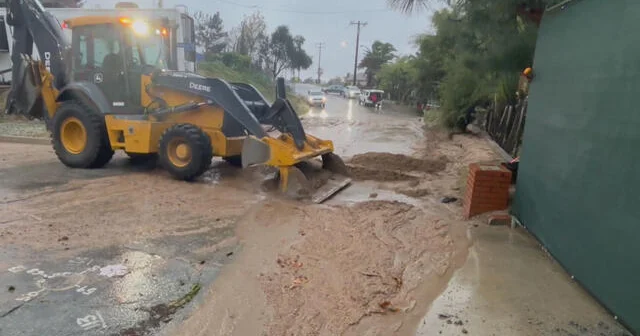
The San Bernardino county sheriff’s department also issued an evacuation warning on Wednesday morning for the community of Wrightwood, a mountain resort town in the San Gabriel Mountains about 80 miles (130km) north-east of Los Angeles, due to potential mud and debris flows from the storm.
Debris and mud flow was seen rushing down the road leading into Wrightwood in a social media video posted by county fire officials. Crews were working to evacuate some homes, the post said. County officials didn’t immediately return questions about the evacuation.
Areas along the coast, including Malibu, were under flood warnings on Wednesday, local officials said. Parts of Santa Barbara and Ventura counties were also preparing for potential flooding. Other parts of southern California were under wind and flood advisories. Farther north, much of the Sacramento valley and the San Francisco Bay Area were under a flood watch and high wind warning.
Early on Wednesday morning, the Los Angeles fire department rescued a man trapped in a drainage tunnel in north-west LA that led to a river.
Firefighters were able to get a ladder down through an opening, allowing the man to climb out, the fire department said. No injuries were reported, but the man is being evaluated.
In Monterey along the central coast, more than 5,000 people lost power on Tuesday night due to a damaged power pole, according to Pacific Gas and Electric Co.
The San Francisco and Los Angeles airports reported some minor flight delays on Wednesday morning.
Conditions could worsen as multiple atmospheric rivers move across the state during one of the busiest travel weeks of the year. The storm in Los Angeles was expected to strengthen into Wednesday afternoon before tapering off later in the evening.
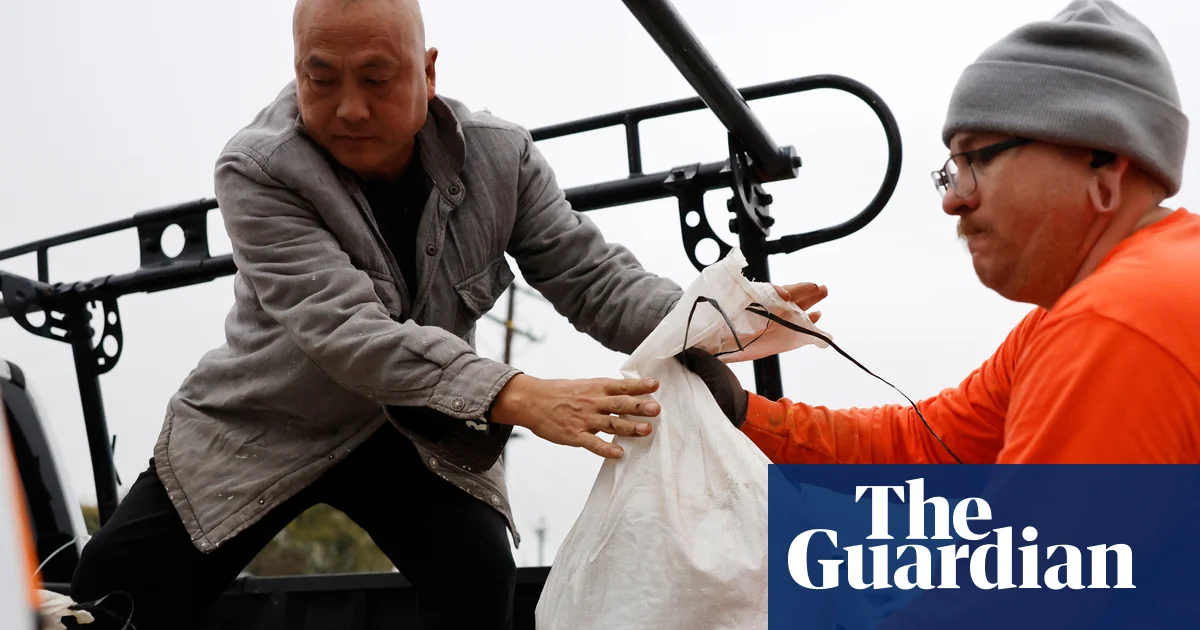
James Dangerfield, an 84-year-old Altadena resident, said his family and neighbor helped place sandbags in his back yard earlier this week. His neighborhood was under a flash flood warning as of Wednesday morning, but he wasn’t too worried.
The street he lives on is on a hill, so most rainwater flows away from his home, he said. For now, he and his wife, Stephanie, planned on staying in the house and spending Christmas Eve with their two adult daughters and grandchildren.
“We’re just going to stay put and everybody will have to come to us. We’re not going to go anywhere,” he said.
Southern California typically gets half an inch to an inch (1.3-2.5cm) of rain this time of year, but this week many areas could see 4-8in (10-20cm), National Weather Service meteorologist Mike Wofford said. It could be even more in the mountains. Gusts could reach 60-80mph (97-128km/h) in parts of the central coast.
Forecasters also warned that heavy snow and gusts were expected to create “near white-out conditions” in parts of the Sierra Nevada and make it “nearly impossible” to travel through the mountain passes. As of Wednesday morning, there was also a “considerable” avalanche risk around Lake Tahoe, according to the Sierra Avalanche Center, a non-profit partnering with the US Forest Service.
The National Weather Service said a winter storm warning would be in effect for the greater Tahoe region until Friday morning.
Atmospheric rivers transport moisture from the tropics to northern latitudes in long, narrow bands of water vapor that form over an ocean and flow through the sky.
Officials have taken steps to reduce the risk in and around burn scars, with Los Angeles county installing K-rails, a type of barrier to help catch sliding debris from burned areas, as well as offering free sandbags to residents.
The storm has already caused damage in northern California, where flash flooding led to water rescues and at least one death, authorities said.
The state has deployed emergency resources and first responders to several coastal and southern California counties, and the California national guard remains on standby.