- In 2025, Mongabay-India’s environmental storytelling moved beyond the screen, reaching multiple audiences through our reporting and sustained public engagement.
- We expanded audiences beyond our echo chamber and explored new formats, strengthening ground-first journalism, and building partnerships that carried stories across languages and regions.
- Our reporting continued to shape conversations and outcomes beyond story publishing, informing policy and legal processes, supporting community action, and drawing new readers to evidence-based environmental journalism through sustained engagement and visibility.
In 2025, Mongabay-India continued to strengthen its position as a trusted source of environmental journalism, while expanding both the reach and real-world resonance of its reporting. Over the year, our stories travelled far beyond the website, shaping public conversations, informing policy and practice, and finding new audiences across languages, formats and sectors.
Mongabay-India is the India-specific platform of the global environmental journalism organisation Mongabay. Publishing in English and Hindi, our work is rooted in evidence-based, field-driven reporting. We focus on environmental themes that are often under-reported or oversimplified in mainstream media, and use multiple formats on different platforms, to distill complex ideas. This approach has made Mongabay-India a go-to platform for a wide range of audiences, from daily commuters and students to researchers, practitioners and policymakers.
Growing output, reach and formats
In 2025, we told more stories, across formats and languages. We published more than 560 stories in English, and more than six million people read them on our website. We had 200 stories in Hindi and our Hindi reporting, in particular, continued to be shaped by ground-first storytelling, with almost a quarter of the stories reported and published first in Hindi.
We also made many more videos — about 40% more this year — branching out to lesser-known regions and amplifying the lesser-heard voices. We had almost double the number of views compared to last year. The Mongabay-India English YouTube channel, where you can watch these videos, now has more than 27,000 subscribers. If you aren’t one of them, come and join our growing community at Mongabay-India’s YouTube channel.
This year, we also branched into new formats. While we’ve always been known and loved for our long-form, in-depth stories, this year we complemented those with shorter pieces. We introduced Shorts, which are 500-word text stories that cover current news events and appeal to a non-specialist audience looking for immediate news.

Ground reporting with real-world outcomes
Mongabay-India’s emphasis on ground reporting continued to translate into tangible outcomes this year.
Our Hindi stories on crop damage and compensation linked to elephant movement in Chhattisgarh were followed by directives from the state government to clear pending payments and revise rates. In Arunachal Pradesh, our reporting exposed the crisis facing the Himalayan star anise and the loss of livelihoods for Monpa women as the spice declined and markets collapsed. The story went on to enable the first-ever direct procurement of Himalayan star anise from Nyukmadung village, by connecting institutions, thus strengthening livelihoods.
Our collaboration with Marathi magazine Baimanus continued, enabling our stories to travel into regional-language spaces. The collaboration’s report on shifting weather patterns affecting jamun harvests in Maharashtra helped connect farmers with new buyers, and a story on the impact of tourism on fireflies prompted regulatory action, with India’s environmental court directing Forest and Tourism Departments to address ecological harm caused by unsustainable firefly tourism.
We also partnered with the Keystone Foundation, working with Indigenous women storytellers to tell their climate stories from the Nilgiri Biosphere Reserve.
Mongabay-India’s work in 2025 was also recognised internationally. Our podcast Wild Frequencies received multiple global awards for audio journalism, while our reporting was cited, adapted and shared by international media, UN institutions and academic platforms, reinforcing Mongabay-India’s role as a source newsroom.


Building capacity beyond the newsroom
Alongside reporting on India’s environment, Mongabay-India deepened its role as a capacity builder, supporting journalists with specialised trainings within the wider information ecosystem. Editors and reporters engaged with journalism students, early-career reporters, researchers and practitioners to strengthen everyday climate and environment literacy beyond specialist beats.
Through workshops, lectures and masterclasses at institutions such as the Asian College of Journalism, Central University of Punjab, Himachal Pradesh University and PES University, the team worked with students and faculty to integrate climate, energy and biodiversity reporting into mainstream journalism training. Sessions focused on identifying local environment stories, understanding scientific evidence, and reporting responsibly amid misinformation.
Mongabay-India also partnered with leadership and learning platforms such as the ClimAct Initiative Climate Leadership Programme, UNEP India workshops, and international training initiatives linked to the University of London, positioning journalism as a tool for evidence-led decision-making across sectors.
Stepping outside the environmental echo chamber
A defining feature of Mongabay-India’s work in 2025 was a deliberate effort to take environmental journalism into spaces not traditionally associated with climate or conservation reporting. Editors and reporters spoke at platforms such as TEDx at RV College of Engineering, The Media Rumble and IIM-Kozhikode, engaging audiences that included engineers, management students, media professionals and policy practitioners.
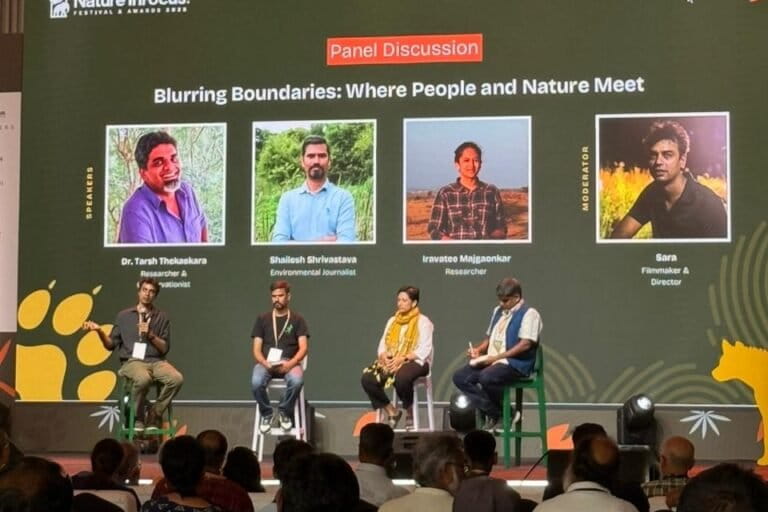
We also participated in and helped shape conversations at convenings such as Behaviour 2025, Nilgiriscapes, Students’ Conference on Conservation Science (SCCS) Bengaluru, the Ecological Restoration Alliance-India meet, the Green Literature Festival, Nature inFocus awards and Echoes of Earth. These spaces allowed environmental stories to intersect with culture, science, design, law and public discourse, expanding how and where environmental issues are discussed.

What happens after a story is published?
In 2025, we spent a lot of time thinking about a simple question: what happens to a story after it is published? This reflection shaped much of our work over the year. It led us to experiment with new ways of telling stories — from short reel cut-outs drawn from longer videos to campaigns that introduced Mongabay-India to new audiences and reminded readers why evidence-based environmental journalism matters in everyday life.
We also looked back more deliberately at our own work, tracing the on-ground, policy and institutional journeys of more than 5,000 stories published over nearly eight years. Doing so reminded us that the impact of journalism is often slow, uneven and unexpected — and that stories continue to travel long after they are first read or watched.
This is an exercise we plan to continue in the year ahead. If you’ve used Mongabay-India’s reporting — in classrooms, research, policy discussions, courtrooms, community work or everyday conversations — we’d love to hear from you. After all, a story’s life doesn’t end when it’s published.
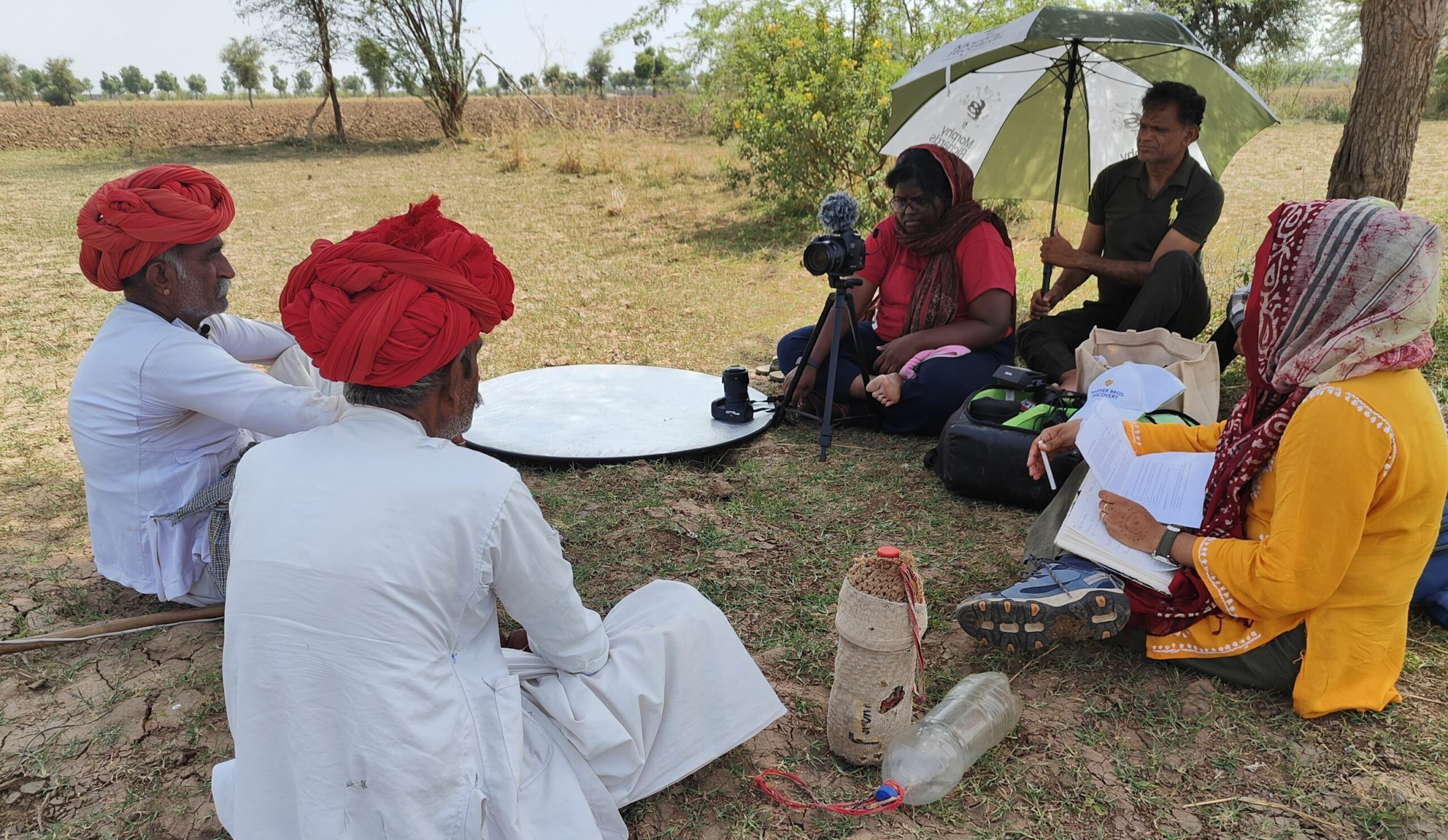
Banner image: Journalists Aishwarya Mohanty and Divya Vilvaraj on the set of Walking Against the Heat, a film produced as part of the Video Reporting Opportunity by All Living Things Environment Film Festival and Mongabay-India. Image courtesy of Aishwarya Mohanty and Divya Vilvaraj.