If properly constituted, the probe can help Israel understand how a catastrophe of this scale was allowed to happen, and how to ensure it does not happen again.
The country wants an independent investigation into the colossal failures of October 7. So the Ministerial Committee for Legislation’s decision on Monday to advance a new investigative framework is a step forward, right?
Wrong.
Instead of moving Israel closer to answers, the government’s decision has once again dragged the country back into a corrosive fight – not over the findings of an investigation that has yet to begin, but over the identity of those who would conduct it.
A commission of inquiry is not a panacea. It will not heal the wounds of October 7. It will not bring back the dead, restore the sense of security shattered in the border communities, or erase the trauma now etched into the national psyche.
But it is one of the essential tools in the country’s toolbox necessary for national healing. Properly constituted, it can help Israel understand how a catastrophe of this scale was allowed to happen, and how to ensure it does not happen again.
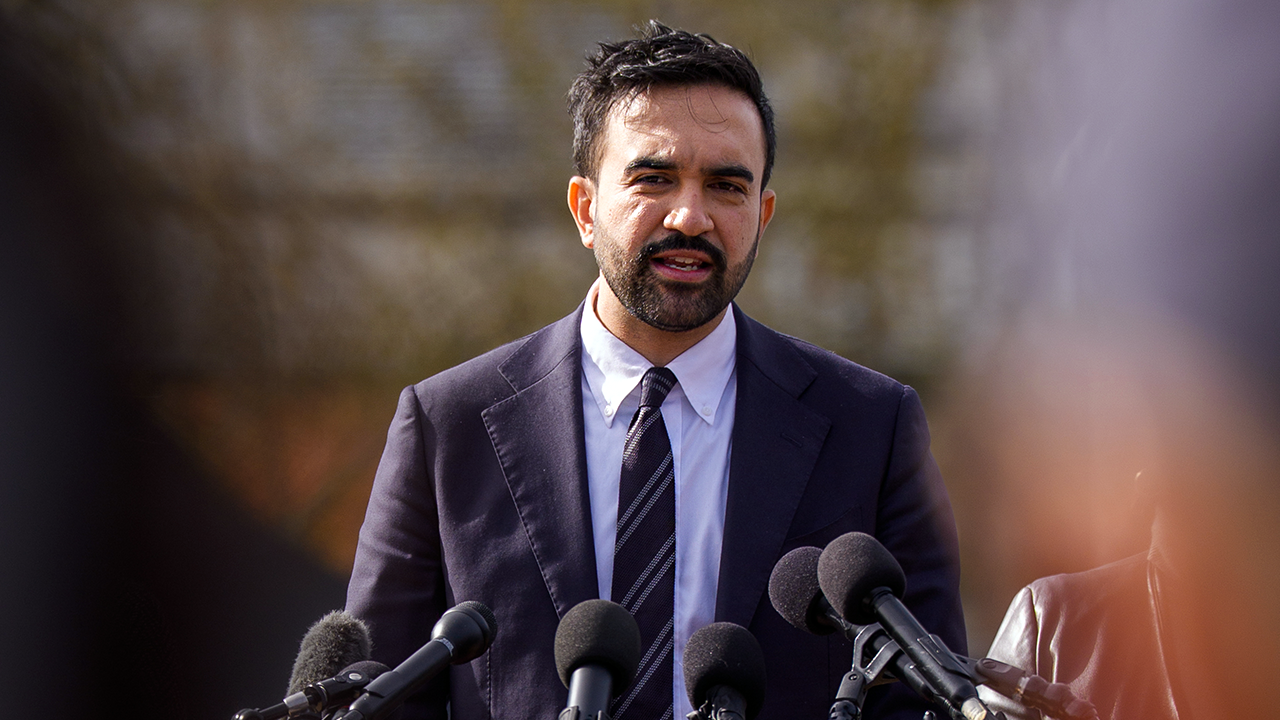
Ministerial Committee for Legislation approved the establishment of a political commission of inquiry into the failures of October 7, December 22, 2025. (credit: MARC ISRAEL SELLEM/THE JERUSALEM POST)
Improperly constituted, it risks becoming just another front in Israel’s never-ending domestic battles, which, unfortunately, is precisely where things now appear headed.
The legislation, sponsored by Likud MK Ariel Kallner and expected to come up for a preliminary Knesset reading this week, would establish what it calls a “national state investigation committee,” as opposed to a formal state Commission of Inquiry under existing law.
The makeup of the committee is yet unknown
Under the proposal, the investigative body would be established by the Knesset and the government, not by the president of the Supreme Court, as is the case with a state Commission of Inquiry.
The committee would be made up of six members. The bill first gives the Knesset two weeks to appoint them by broad consensus, requiring the support of 80 MKs. If that effort fails, the coalition and opposition would each appoint three members. And if the opposition refuses to participate – as it has already indicated– the authority to complete the appointments would fall to the Knesset Speaker, Amir Ohana, a Likud member.
Critics argue that this fallback mechanism could ultimately leave the committee entirely in the coalition’s hands.
Prime Minister Benjamin Netanyahu has been clear about why he rejects a state Commission of Inquiry appointed by the president of the Supreme Court. Such a body, he argues, would be rejected by at least half the country as biased and predetermined. In today’s Israel, that is not an imaginary concern. Years of unrelenting political attacks on the judiciary – attacks Netanyahu himself has led – have deeply eroded public trust among large segments of the Right.
Add to that the role of Supreme Court President Yitzhak Amit, whose appointment earlier this year was itself politically charged, and the lines harden even further still. On the Right, the argument is that Amit and the judiciary must also be examined, given court rulings over the years touching on security, Gaza, and the army, and therefore cannot be mandated to select the committee members.
On the other side, opponents of a government-appointed committee also make a compelling case: the subject of an investigation should not choose his own investigators. Netanyahu was the prime minister on October 7 and has been in power for roughly 15 of the last 17 years. Any inquiry whose mandate or composition is determined by the current coalition will inevitably be suspected of self-interest, whitewashing, or deflection.
And yet, for all the force with which both sides make their case, they share a blind spot.
Is Netanyahu correct in distrusting the judiciary?
The real question is not whether Netanyahu is right to distrust the judiciary, or whether the opposition is right to insist that those under investigation cannot appoint their own investigators. The real question is whether any inquiry whose very composition is contested from the outset can serve the role the country needs it to serve.
A commission of inquiry is not meant to settle political scores; it is meant to restore a measure of trust in a system that has failed catastrophically. That trust cannot be rebuilt if half the country will reject the findings before the investigation even begins. Even the most sweeping investigative powers will mean little if the findings are dismissed as partisan from day one.
There are, however, ways out of this impasse – if both camps are willing to accept that compromise is not surrender.
One proposal gaining attention would be to establish a commission headed by a retired Supreme Court or District Court judge, with members appointed by a small committee representing the judiciary, the government, the coalition, and the opposition. Every appointment to the commission would require unanimous approval by the appointment committee, so each side would feel that its perspective is represented.
Such a framework would frustrate ideologues on both sides. It would deny both the Right and the Left exclusive control over the process. And that’s precisely the point. A commission accepted reluctantly by both camps is far more valuable than one embraced enthusiastically by one and rejected outright by the other.
Lessons learned from October 7
This is not a technical debate about how to construct a commission of inquiry. It is a test of whether Israeli society has absorbed one of the most important lessons of October 7.
Author and philosopher Micah Goodman once framed Israel’s prewar judicial crisis as a clash between two supreme values. For one camp – the pro-reform camp – Israel’s Jewish character was paramount. For the other, its democratic character was non-negotiable. Compromise was viewed as weakness because only the weak and lily-livered compromise on core values.
Then October 7 happened.
In the immediate aftermath, a different virtue emerged: unity. Protesters who had been screaming at each other weeks earlier found themselves in the same tanks, sleeping in the same tents, confronting the same enemy. For a moment, it became clear that without unity, there might be neither a Jewish state nor a democratic one, because there might not be a state at all.
As the war dragged on, however, that insight and sentiment faded, and pre-October 7 divisions reasserted themselves. That is perhaps inevitable. But the lessons must not be forgotten, especially the critical need to compromise.
Compromise on the structure of a commission of inquiry is not a betrayal of values. It is recognition that in a deeply divided society, getting to the truth requires legitimacy. If each side insists on total control of the process, the result will not be accountability; it will be paralysis.
The question now is whether Israel’s leaders – and its rival political camps – understand that healing does not begin with winning an argument over who appoints a committee. It starts with establishing a committee that enjoys the confidence of the overwhelming majority of the country. And to get there, compromise is needed.