Lakhan is immersed in diagnosing faults in a motorbike. He barely finds a moment to attend to the growing line of customers waiting outside his cramped cabin in Phulbani town, the district headquarters in Odisha’s Kandhamal. Locals know little about what Lakhan did or where he came from. What they do know is that he is among the most sought-after bike mechanics in this central Odisha town.
Only a handful of people around him, along with the local police, are aware of the life he once lived. Five years ago, Lakhan was far more familiar with firearms than screwdrivers.
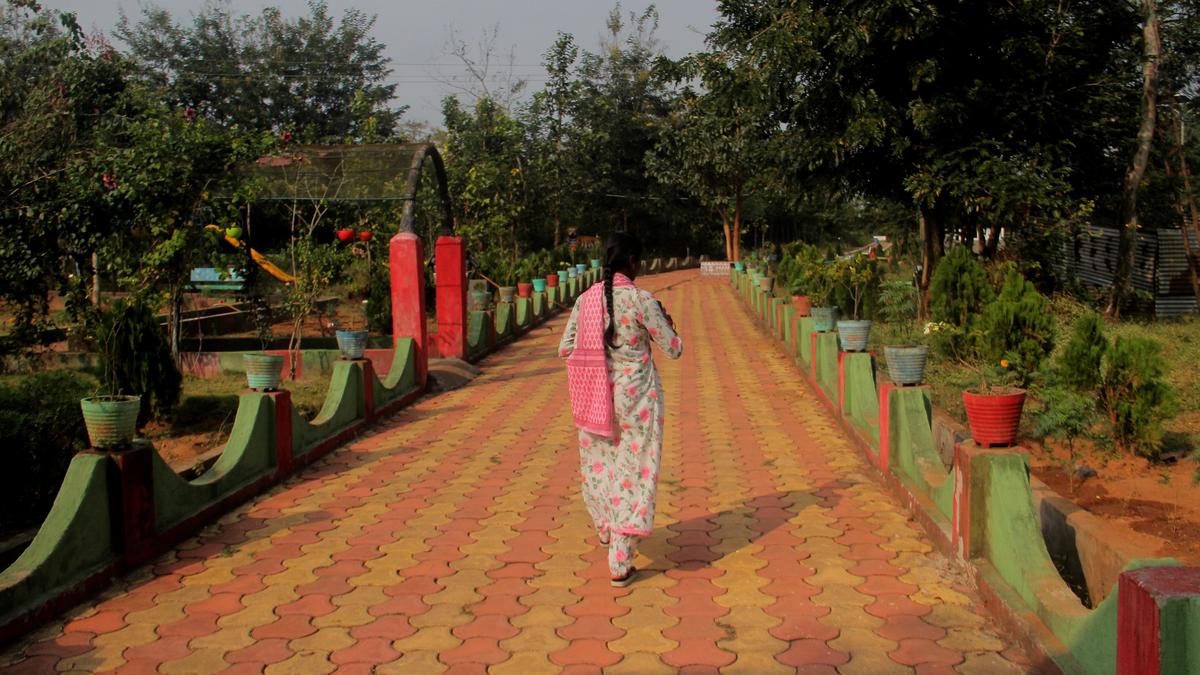
Karuna, meanwhile, sits at a ticket counter in the urban forest park, greeting visitors eager to learn about the diverse plant species on display. Few would guess that this soft-spoken woman once spent 13 years deep inside the forests of Odisha and Chhattisgarh, trekking across hills, living off the wilderness, and surviving on wild animals and plants when food was scarce.
What unites Lakhan and Karuna is their decision to abandon their past association with the CPI (Maoist), the outlawed group once described by former Prime Minister Manmohan Singh as India’s “greatest internal security threat”.
With Union Home Minister Amit Shah vowing to eliminate the remnants of this violent movement by March 2026, both Lakhan and Karuna stand as reminders of those who have chosen a different path.
While frequent skirmishes in Chhattisgarh continue to dominate headlines, a quieter but steady stream of Maoists is choosing to surrender. In November, the Odisha government significantly increased the reward for those willing to lay down arms and return to the mainstream.
A central committee, politburo or central military commission member who surrenders can now receive up to ₹1.10 crore. State committee members are eligible for ₹55 lakh — about 10% higher than what Chhattisgarh offers surrendered cadres.
“There are about 80 Naxal cadres active in Odisha, and nearly 75 of them are from Chhattisgarh. Naturally, they prefer surrendering in their home State. So, we added a 10% top-up to make Odisha’s package more attractive,” says Sanjeeb Panda, who heads anti-Maoist operations in the State. Odisha at one point time had 800 active cadres.

Terms and conditions
Surrender comes with money, but also conditions. Every surrendered member must disclose the identity of their associates, financiers, harbourers, and couriers, and share details of the organisation’s supply chain, including sources of arms, ammunition, and funds. They are treated as “assets” once they surrender to the police. “Surrendered cadres bring a wealth of information that gives us a tactical advantage. The more informers we get, the faster and more accurate our operations become,” Panda says.
For those who have left the outlawed organisation, life has taken a turn towards stability, even if the road is uneven.
At a Kandhamal police transit camp, Champa, a divisional committee member (DCM) in her 30s, is recovering from a bullet injury that damaged her internal organs. “In 2016, police bullets hit me. Our cadre doctor removed it, but the injury never healed. When I came to a hospital for treatment, a villager informed the police. I was caught. The arrest was converted to a surrender in July this year,” Champa recounts.
As a former DCM, Champa has already provided substantial intelligence to security forces. “I am being taken care of. Police have assured me treatment at AIIMS, Bhubaneswar” she says.

Ajay and Manju, in their 20s, both from Chhattisgarh, echo similar relief. “During our days in Kandhamal, we became close. One night, we escaped from the camp. But when we reached Phulbani, we were arrested and then allowed to surrender,” Ajay says. The couple were area committee members (ACM). Manju speaks about how she once stopped a group of security forces from advancing in the jungle by spraying them with bullets.
Lakhan and Ajay once served in the protection team of Nambala Keshava Rao alias Basavaraju, the general secretary of the banned CPI (Maoist), who was killed in Chhattisgarh on May 21, 2025. Their lives now stand in stark contrast to the years spent guarding one of the organisation’s most powerful leaders. “I would like to return to my home in Bijapur district of Chhattisgarh,” says Lakhan.
Since 2008, as many as 1,364 ultras have been arrested by security forces in Odisha; 2009 saw the highest number, when 221 were arrested. Only 625 Maoists have surrendered during this period in the State. This December, 22 armed Maoists laid down their arms before the Director General of Police in Malkangiri district.
The secret book
The Special Intelligence Wing of the Odisha police have a book with the names of Maoists. Only once a name is matched to the person surrendering is the money paid out.
The inner workings of the Maoist movement is opaque, an ecosystem of secrecy where the outside world does not see the workings of the organisation: who belongs to which unit, who commands who, how decisions are relayed down the chain of command. After any incident of violence, whether an attack on security forces or a retaliatory strike, the claim of responsibility comes from a division of the Left-Wing Extremists (LWEs).
Over the years, the SIW has quietly built and maintained the secret book, a constantly updated registry of Maoist cadres across ranks. It has become the ready reckoner for anti-Maoist operations in Odisha.
For two decades, the Odisha Police has engaged the Maoists in an extended battle. Many cadres have surrendered; many have been arrested. Each time a Maoist is taken into custody, interrogators prepare a detailed Interrogation Report (IR), documenting everything, from the food they ate in the forests to the routes they travelled and the names of fellow cadres. These confessions, when cross-verified, become raw data for the book.
Over time, this has helped intelligence agencies map the organisational pyramid: from the Central Committee Members (CCMs) at the top, followed by State Zonal Committee Members (SZCMs), Divisional Committee Members (DCMs), Area Committee Members (ACMs) and, finally, Party Members (PMs).
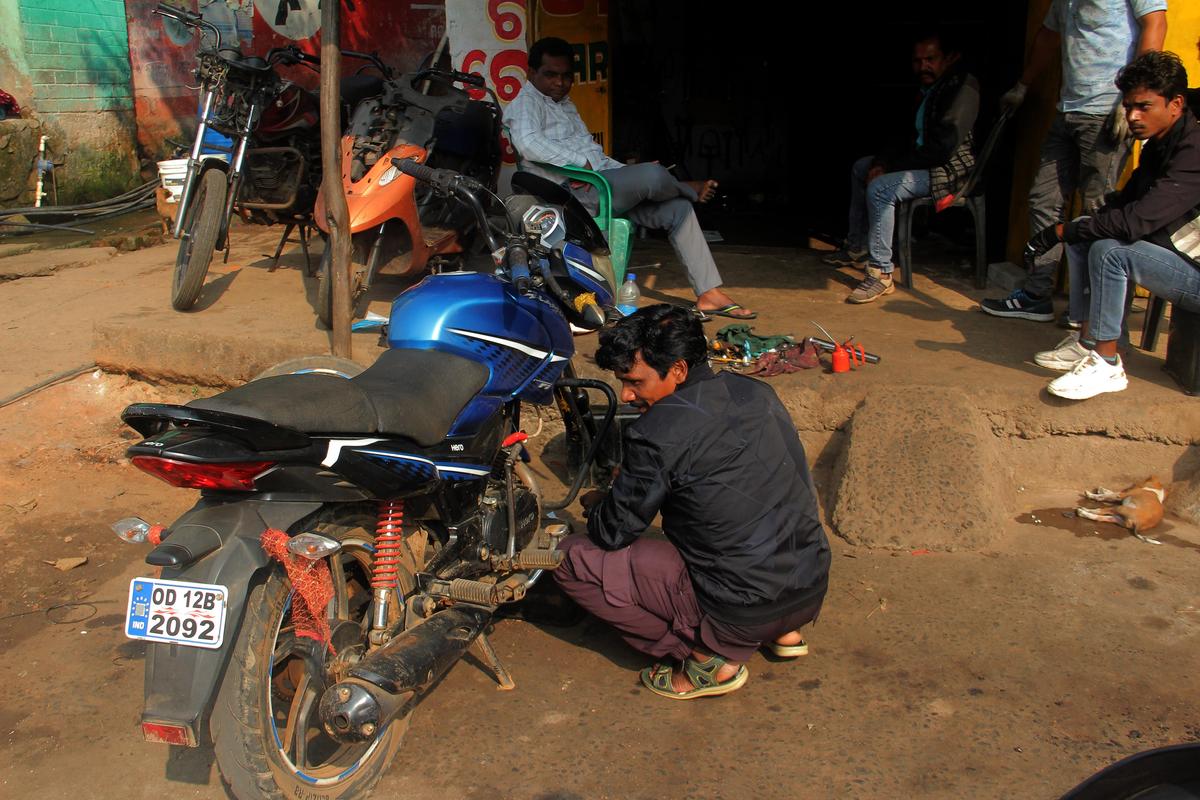
After his surrender, Lakhan has become one of the most skilled bike mechanics in Phulbani, Odisha.
| Photo Credit:
BISWARANJAN ROUT
Central Committee Member, Ganesh Uike, who was heading the Odisha operation, was killed in an encounter on December 25. Another senior leader, Modem Balakrishna, was killed in an encounter in Chhattisgarh’s Gariabandh district in September this year.
Home Minister Shah wrote on ‘X’, saying, “In a major operation in Kandhamal, Odisha, 6 Naxalites, including CC member Ganesh Uike, have been neutralized. With this major breakthrough, Odisha stands at the threshold of becoming completely free from Naxalism. We are resolved to eliminate Naxalism before the March 31, 2026.”
Laptops, hard drives, and handwritten letters seized in camp raids provide further clues. The letters often list sentry duties or supply responsibilities, revealing names that are meticulously cross-matched with the secret book. Since 2021, at least 15 Maoists have surrendered in Kandhamal alone.
Security forces also infer the presence of senior leaders from the nature of recoveries. Camps occupied by Central Committee members typically contain milk powder for tea, branded shoes, dry fruits, and medicines for diabetes that are indicators of older, high-ranking leadership.
Asset creation
A few years ago, Surjang, an ACM from Chhattisgarh, surrendered. After a few months, Amita, originally from Kandhamal, also laid down arms. After the formalities, police helped solemnise their wedding. Today, police personnel claim they still celebrate their daughter’s birthday. Surjang briefly worked as a security guard at an orphanage on a monthly salary of ₹15,000 before returning to Chhattisgarh.
In 2018, during an encounter, a DCM-level cadre named Badal was killed. His wife, Jyoti, surrendered soon after. She said she wanted to begin life anew, as per the police. Today, she is married to a home guard and lives peacefully in Baliguda, “an Odia daughter-in-law,” locals say.
Karuna, ex-cadre and a forest watcher is back with her family in Tikabali, with police facilitating medical support for her. “My family has accepted me. I am not looked at with suspicion,” she says.
Ashok, another surrendered Maoist cadre from Chhattisgarh, has been adopted as a son by a person in Kandhamal district. He now works as a mason.
“The closeness between two cadres is not always a contributing factor for the decision to surrender. Many cadres have over the years become disillusioned as they have achieved nothing against what they aspired for,” says Akhileshwar Singh, Deputy Inspector General of Special Intelligence Wing.
Nervous days and nights
Police press releases often portray the transition of surrendered Maoists as swift and seamless from a violence-ridden life to a new, law-abiding one. On the ground, the reality is far more complex. Cadres who lay down arms can still make a U-turn and slip back into CPI (Maoist) ranks. They cannot be chained or confined. They can only be watched, closely and continuously.
For many of them, money is not an incentive. They have lived austere lives for years, often without wages, surviving on whatever the organisation provided. The world outside their forests is unfamiliar. Something as simple as sleeping under a light becomes a struggle. Most cadres are used to pitch-dark nights and have cultivated a sense for navigating through the darkness.
“We constantly observe how they respond to this new life. Those who surrender or are arrested are assigned guards who stay with them round the clock,” said A.C. Sarkar, assistant commandant of the Special Operation Group.
In the first few days or months, small requests become big indicators. When a former cadre asks for a mobile phone, a jacket, help tracing a relative, or expresses a desire to ride a motorcycle, security personnel feel a sense of relief. These are signs that the person is beginning to lean towards the mainstream.
But the risks remain. If a cadre escapes back to the CPI (Maoist), they carry back intelligence, including the layout of police camps. They may not be safe there either. Police remember Biswa, a CPI (Maoist) member. After spending two to three months in the Rayagada police transit camp, he could not adjust to life outside the outfit and slipped away. Coincidentally, an exchange of fire occurred soon after. Suspicious of his disappearance, the party suspected he had shared information and executed him.
The elusive top tier
Central Committee members remain the most shadowy rung. They rarely come into the open and are heavily insulated. Once numbering around 21, their strength has dwindled to three or four. Police rely on surrendered cadres to help identify them through photos recovered from hard drives or phones.
CC members travel with three to four layers of protection: an inner cordon, an outer cordon, sentries, and a civil patrol party — those who mingle among villagers to detect security forces. Alerts are passed through walkie-talkies, cracker blasts, or distinct calls. Militia relay messages rapidly, enabling swift escapes.
Below them, SZCMs, DCMs, and ACMs also have personal security officers. In Kandhamal, three SZCMs— Nikhil and Indu (both from Jagatsinghpur) and Sukru from Malkangiri — remain active across Kandhamal, Rayagada, Kalahandi, and Gajapati.
While the CPI (Maoist) claims to fight for a communist order, its newest recruits are often young, rural, and minimally educated, say those rehabilitated. Their exposure to ideology is largely shaped by senior cadres’ discourse. Many know little about national events; their primary impulse is rebellion against perceived or real injustices.
Although most Central Committee leaders hail from Andhra Pradesh and Telangana, they now struggle to recruit in their home states. New cadres mostly come from tribal regions of Chhattisgarh, say the police. According to Panda, there has been no fresh recruitment by the CPI (Maoist) from Odisha in the past seven years.
Intelligence agencies believe that once the remaining CC leadership is neutralised, the organisation will begin collapsing due to lack of continuity and experience. With leadership thinning, SZCMs may be rapidly elevated to CCM positions, but they lack the battle-hardened experience of their predecessors.
Life in a Maoist camp
Constant movement is a way of life. Camps shift frequently to evade security forces. Solar panels now supply power for torches and phones, though phones, usually without SIM cards, are used mainly to watch downloaded videos on communism or motivational songs.
The Maoists know the risks of carrying digital devices; retrieving data from hard disks is often extremely difficult. Their once-vast human intelligence network, robust in the early 2000s, has weakened considerably. Earlier, information on security movement flowed instantly. Today, with four battalions stationed in Kandhamal and central forces dominating former Maoist strongholds, village meetings and gatherings have become nearly impossible.
“The situation is now favourable for a complete end to left-wing extremism. We appeal to all cadres to return to the mainstream. They will be taken care of, not merely as subjects of law enforcement, but with a sense of responsibility to rehabilitate those who have strayed,” said Harish B.C., Superintendent of Police, Kandhamal.
satyasundar.b@thehindu.co.in
Edited by Sunalini Mathew