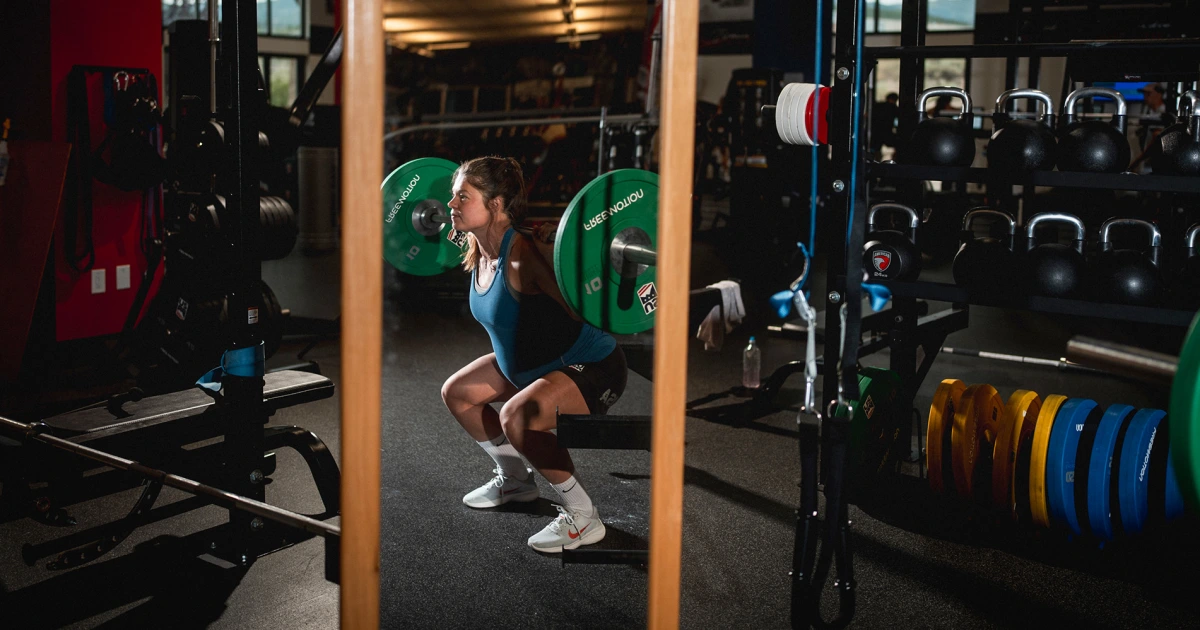
The day before her son was born, three weeks early, she pondered how her body would respond. Olympian parents do not receive a guide covering the emotional or financial support they can expect. Caldwell did not know of a group chat for athletes who are masters of their sport but novices as parents.
She wondered whether her sponsors or coaches or the U.S. Olympic & Paralympic Committee would view her as diminished, a concern that was not without precedent. A former professional runner once called getting pregnant the “kiss of death for a female athlete.” In 2019, the Olympic sprinter Allyson Felix wrote that her sponsor, Nike, had proposed paying her 70% less after she gave birth. Outcry led the company to change its maternity policy for Olympic athletes.
For guidance, Caldwell often spoke with Faye Gulini, a U.S. snowboarder and fellow four-time Olympian who lives less than a mile away. Gulini, 33, had given birth to her second child only three weeks before Caldwell, and she was also wrestling with whether to attempt an Olympic comeback in Milan Cortina.
“The very reason I thought I was done snowboarding, having kids and starting a family, was the very reason that I wanted to return,” Gulini said. “It was no longer about me and my journey. It was about us and our journey and what I could teach them and show them and experience with them. And it just gave me so much motivation to try — for them.”
When the Olympics’ opening ceremony begins Feb. 6, several new mothers could be on Team USA, such as Jamie Anderson, one of the most decorated snowboarders in U.S. history and a two-time Olympic gold medalist, who gave birth to her second child in April.
Less than 16 months after Meghan Daniel delivered her son child, a son, she is now trying to qualify for what would be her third Olympics for Team USA in snowboard cross.
When the U.S. snowboarding team hosted a training camp in Argentina in October, Daniel made the trip solo to attempt her first ride on a boardercross course since the fall of 2022 — before she had children — while her family remained another hemisphere away near Park City. The distance was necessary because her husband cannot work remotely internationally, she said. It was Daniel’s third two-week trip away from her family for a training camp, and she described feelings of guilt over her time away. But while she was in Argentina preparing for her “nerve-racking” ride, Daniel got a text message from her husband with a video from their 2-year-old daughter.
“She was like, ‘Good luck, Mommy.’ And, oh, my gosh, it gave me the most motivation ever,” Daniel said. “It was the cutest thing. I just feel motivated by them and just completely different than I feel or felt before having kids.”
Caldwell was motivated to start a family nearly two years ago, but said she was sensitive that although her career was well-established, her husband, who at 27 is five years younger, was just entering his prime and did not feel ready. After she learned she was pregnant, she was cautious about publicizing the news out of concern that getting pregnant could create a stigma — how patient would sponsors or coaches be in waiting for her return to the slopes?
As her due date neared, Caldwell began reconsidering, through a parental lens, the choices she and her parents made to enable her career. Would she have let her child leave home at 13 to train? (Maybe not, she said.) Would she still feel the physical risks of her sport were worth it? (Same.)
Training as a high-level athlete is, Caldwell said, “so selfish of an endeavor; everything you do 100% of the time is about performance. And when you have kids, that’s not really feasible as much.”

Yet those choices had also led to a career she hoped would serve as an example to her child to boldly pursue their dream, and competing only seven months postpartum could continue the overarching theme of her career, she believed.
“It’s female empowerment,” she said. “That’s been my thing my entire career, is you can push boundaries of what people expect.”
She was still determining her own boundaries. The difference between owning one gold medal, from 2022, and potentially adding a second was not so large as to motivate her to qualify for Milan Cortina all by itself, she said. Her first priority was giving birth to a healthy son and emerging healthy herself, she said, and yet, she also could not fully turn off her competitive instincts. By July, she had mapped out her breastfeeding schedule for the next six months to coincide with the opening ceremony.
“I’ve been to the last four” Olympics, she said. “If I’m not there at the next one, I’ll be like, what the heck?”
“Come back,” Schoenefeld answered, “when you’re 36.”
‘I just kind of have to find this happy balance’
After Gulini returned from the 2022 Winter Olympics in Beijing, she and her husband decided the time was right to try for children.
By the start of 2023, Gulini was pregnant with a son. She had expected that season to be her last before she retired, but she was ready to shut it down after she learned she was pregnant — until her obstetrician said it was safe to keep competing.