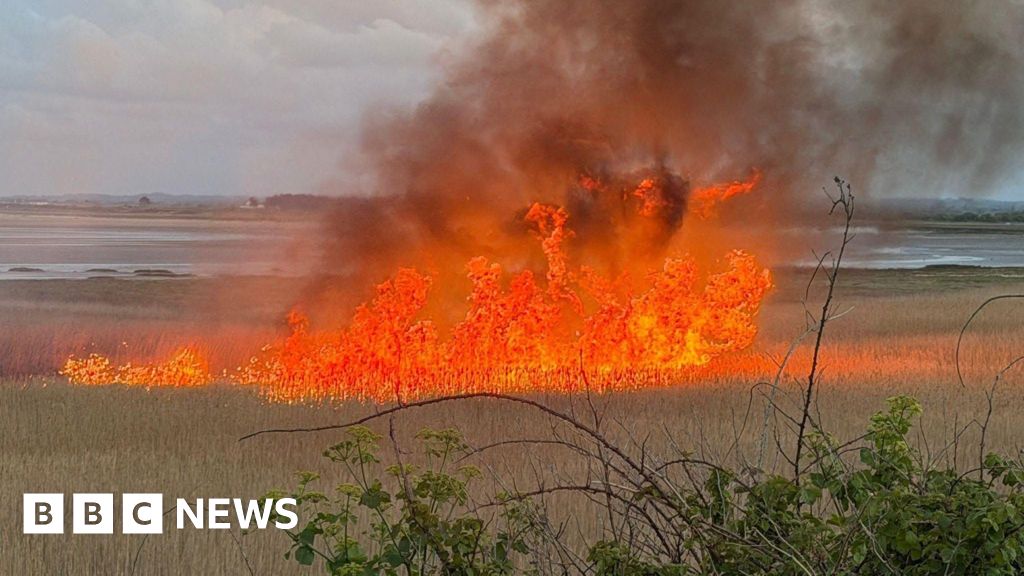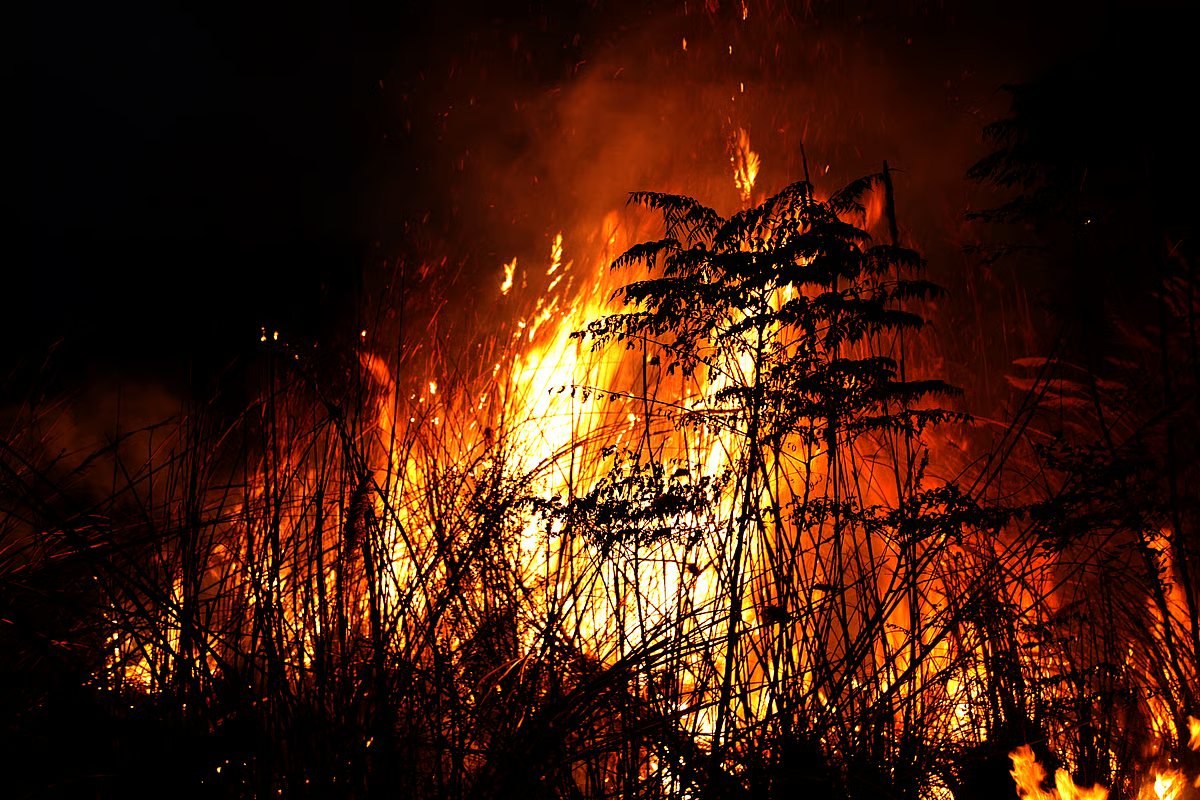
Wildfires across North America are increasingly defying their traditional “active day, quiet night” cycle, with scientists warning that climate change is reshaping the fire calendar — altering when, how and how intensely fires burn.
A study published in the found that fires in boreal, temperate and sub-tropical forests are lasting later into the night and starting earlier in the day, driven by hotter and drier conditions that fuel their spread.
The analysis drew on hourly geostationary satellite observations of nearly 9,000 fires larger than 200 hectares between 2017 and 2023. It showed that western mountain regions and boreal forests experienced the longest burning periods, with about one-third of active days exceeding 12 hours.
Longer burning hours and shifting seasons
The study found that around 60 per cent of fires reached peak intensity within 24 hours of detection. Based on fire weather conditions, annual potential burning hours are estimated to have increased by 36 per cent between 1975 and 2024, with particularly sharp rises in western regions and during the spring and autumn months, between 48 per cent and 57 per cent.
In some regions, such as the boreal tundra woodland west, there are now 26 additional potential active fire days each year, along with 1.2 extra burning hours per day. The number of extreme days — with 12 to 24 hours of potential burning — has expanded significantly, from 81 to 233.
While summer still accounts for the largest absolute increases, its relative growth of 24 per cent is lower than that seen during “shoulder months” – the periods between peak and off-peak seasons.
California now experiences around 550 more potential burning hours than it did in the mid-1970s, the study noted. Parts of south-western New Mexico and central Arizona are seeing increases of up to 2,000 additional hours annually when conditions are favourable for fires.
Across the south-west, about 90 per cent of combustible areas have gained 13 to 14 potential burning hours each year, with some locations recording increases of up to 40 hours.
The study also identifies a clear geographical pattern. Temperate and sub-tropical regions are seeing larger and more widespread increases than boreal zones. Sub-tropical mountains and deserts, for instance, have gained an average of 16.9 and 13.4 potential burning hours annually across most areas, while boreal regions in western Canada – including British Columbia, Alberta and Yukon – have recorded smaller increases of four to five hours per year.
The disappearance of ‘quiet nights’
Researchers say climate change is weakening the natural nighttime constraints that once slowed fires after sunset.
About 14 per cent of active fire days now see peak intensity occurring at night, significantly narrowing the window for effective firefighting.
The study points to temperature and humidity as the main drivers. “The combination of all hourly fire weather variables accounts for the largest share of performance gains, with relative humidity and temperature forming the first-tier drivers,” it notes, adding that hotter and drier conditions increase the likelihood of burning.
While topography and ignition patterns also influence fire behaviour, the researchers say meteorological conditions and fuel availability remain the dominant factors shaping how fires behave throughout the day. This shows that both fast-changing weather and slower-changing fuel conditions influence how likely fires are to start and continue each hour.
Traditionally, higher humidity at night helped dampen fire activity. However, the study identifies a decline in this nighttime “recovery”, allowing fires to retain energy and continue spreading during what were once quieter periods.
It also highlights a phenomenon known as asymmetric diurnal warming, where nighttime temperatures rise at a different rate to daytime temperatures. This limits the cooling that would otherwise help suppress fires overnight.
Strain on firefighting and ecosystems
The disappearance of quieter nights is placing additional strain on firefighting resources, reducing the time available for crews to safely and effectively contain fires. Recent fires, including the 2023 Maui fire in Hawaii, the 2024 Jasper fire in Alberta, and the 2025 Los Angeles fires in California illustrate how fires are increasingly active around the clock.
Study co-author Xianli Wang said wildfires often coincide with drought—especially extreme drought—when the air becomes hotter and drier, drawing more moisture from soil and vegetation and making fire fuels more flammable. “In a drought, there is often a vicious circle of drying. A warmer atmosphere has more power to draw moisture out of fuels,” he said. “Just as warmer nights during heatwaves do not allow the body to recover, warmer nights are not allowing forests to recover.”
He added that it can take weeks for dead vegetation to regain moisture and become less fire-prone. “It’s a stress to the plants,” Wang said. “That also increases fuel load and makes fire-burning easier.”