- In 2021, an ice-avalanche in Chamoli, Uttarakhand, resulted in landslides and damaged infrastructure, affected electricity and connectivity in several villages, killing over 200 people.
- A new study compares the Chamoli disaster with the 2025 Blatten avalanche in Switzerland, where early warning, and prompt communication and response, worked to evacuate people to safety.
- The study authors recommend identifying high-risk slopes, deploying targeted ground monitoring, defining clear warning thresholds and strengthening communication systems.
Five years after the 2021 floods in Uttarakhand, known as the Chamoli disaster, that resulted in the death of more than 200 people, a new study investigates hazard preparedness in the Himalayas. It compares the 2021 Chamoli disaster with the 2025 Blatten avalanche in Switzerland, where a large ice-rock avalanche buried most of the village and resulted in one fatality, after residents were evacuated in advance. It discusses how elements of the Swiss early-warning approach, especially integrated monitoring, communication, and community-linked response, can be adapted to Himalayan realities.
The study notes that as glaciers retreat, permafrost thaws and extreme precipitation intensifies due to climate change, effective hazard mitigation is essential.
Published in the journal Communications Earth & Environment, the study situates Chamoli within a wider pattern of warming-related mountain hazards and discusses that such failures are not isolated and need clearer recognition in risk governance and preparedness frameworks. “Early warning systems must move beyond small pilot projects and become a core element of national disaster preparedness,” it states.
Comparing disaster responses in Chamoli and Blatten
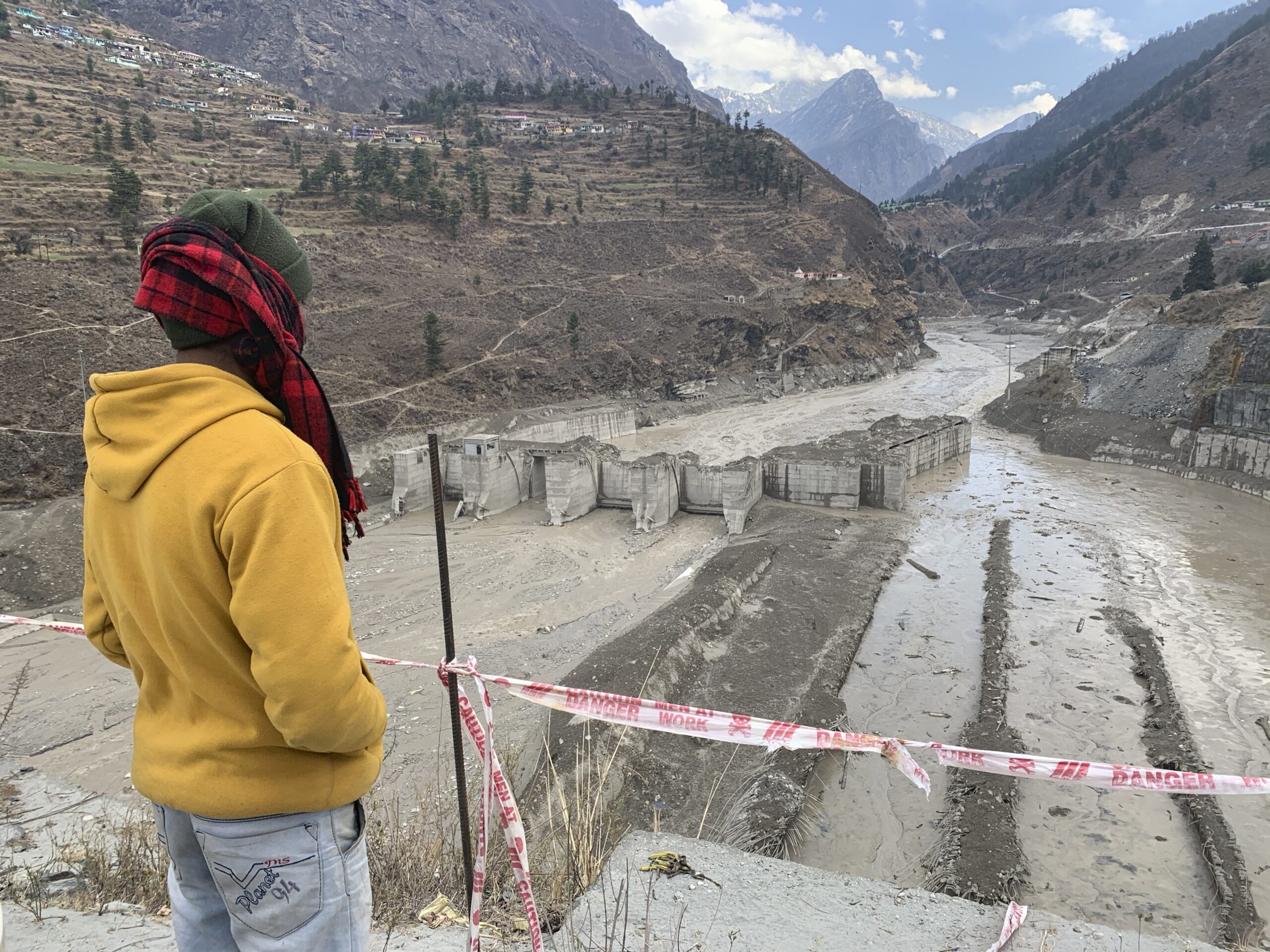
According to India’s National Disaster Management Authority’s (NDMA) detailed report on the Uttarakhand disaster, the event began at about 10:08 a.m. on February 7, 2021, when a huge rock mass along with a glacieret (small glacier) failed in the upper reaches of the Garhwal Himalaya, triggering an air blast and a massive debris flow through the Raunthi Gadhera, Rishiganga and Dhauliganga valleys. The disaster damaged the hydropower projects at Raini and Tapovan, along with roads and bridges, killed 204 people and affected electricity, water supply and connectivity in 13 villages. The disaster was caused by a rockfall with glacieret ice avalanche, not by a glacial lake outburst flood, the report noted.
However, in the case of Blatten, residents reported unusual slope activity, after which cantonal and federal experts deployed radar interferometry, GPS stations, and thermal and optical cameras. These confirmed accelerating deformation, prompting an evacuation order on May 19, 2025. Around 300 residents and their livestock were evacuated before the main detachment on May 28. The study notes that this response reflected open risk communication, cross-level coordination and clearly defined responsibilities.
The study’s corresponding author Rayees Ahmed noted the Chamoli-Blatten comparison shows that preparedness can shape disaster outcomes as much as the hazard itself. Ahmed is the Project Scientist at the Divecha Center for Climate Change, Indian Institute of Science. “The most important lesson from comparing the Chamoli disaster and the Blatten avalanche is that hazard magnitude alone does not determine disaster outcomes — preparedness does,” Ahmed told Mongabay-India in an emailed response. “Both were large ice-rock avalanches, but their impacts were drastically different. In Blatten, early detection of slope instability, rapid communication, and timely evacuation limited casualties to one, whereas in Chamoli, the absence of monitoring and coordinated response led to over 200 fatalities.”
He said the comparison shifts attention from the hazard itself to how societies respond to warning signs. “It shows that such disasters are often not entirely unpredictable, but insufficiently anticipated,” he said.
“The difference between catastrophe and survival was not luck, but preparedness, monitoring, and rapid response,” the study notes.
For Van Tricht, co-author of the study and a glaciologist, the Swiss case shows that governance mattered as much as monitoring technology. Van Tricht is a postdoctoral researcher at Vrije Universiteit Brussel and staff at ETH Zurich’s Professorship for Glaciology. “In Blatten, the success of the evacuation was driven primarily by governance and preparedness rather than technology alone,” Van Tricht said in an email response. “Early observations by residents were taken seriously and quickly communicated within a well-established hazard management structure, where roles and responsibilities were clearly defined across local and national levels.”

A hazard weakly recognised in planning
Compared to other glacial hazards, ice-rock avalanches remain under-documented in the Himalayan hazard assessments and policy frameworks, mostly due to their rare occurrences, the study notes. These events are often grouped under broader categories such as landslides or glacial hazards, obscuring their distinct triggers, failure mechanisms and mobility.
Ahmed said that this classification gap affects both science and preparedness.
He also added that the hazard itself is difficult to study. “Scientifically, they involve complex triggers such as permafrost degradation, glacier retreat, and thermal weakening, and they can rapidly transition from a solid collapse into high-velocity debris flows,” he said. “There are fewer datasets and less established monitoring frameworks compared to hazards like floods or GLOFs.”
The study also points out that hazard assessments in glacier-fed and permafrost-affected valleys do not fully account for permafrost degradation, expanding glacial lakes, accelerating slope destabilisation and cascading hazard chains, even as infrastructure continues to grow in exposed valleys.
Hazard risk is also shaped by exposure and frequency. Even if activity varies from site to site, expanding infrastructure and populations in mountain valleys are likely to increase exposure, while high-risk zones themselves may shift as warming alters glacier geometry, permafrost and slope stability.
India has been expanding weather and disaster-monitoring systems in Uttarakhand. At the World Summit on Disaster Management in Dehradun in November 2025, Union Minister of State for Earth Sciences Jitendra Singh said that the government had expanded monitoring infrastructure to include 33 meteorological observatories, 142 automatic weather stations, 107 rain gauges and three weather radars, with three more planned. He also said a specialised Himalayan climate study programme had been launched and the “Nowcast” alert system, which provides a three-hour forecast used in major metros, was being expanded across the state.
Ahmed’s study however, points out that broader weather preparedness does not fully address fast-onset cryosphere hazards such as ice-rock avalanches. It argues that such risks remain insufficiently integrated into planning, monitoring and response systems, leaving mountain communities vulnerable despite warning signs that may be detectable with focused monitoring and coordinated action.

Challenges in studying warning signs
Researchers argue that the Chamoli incident should be treated as a “sentinel cascading hazard” that exposed deeper weaknesses in Himalayan hazard governance. “Retrospective analyses of the Chamoli event highlight several useful precursor signals, including progressive slope deformation detectable through InSAR, widening fractures, and thermal anomalies indicating internal weakening,” Ahmed said. “However, a major limitation is that these signals are often subtle and difficult to distinguish from background variability.”
“In many cases, detectable changes occur over months to years, but translating them into actionable warnings is challenging due to limited continuous monitoring, lack of defined thresholds, and insufficient integration of multi-sensor datasets,” Ahmed added.
The challenge in the Himalayas is not real-time surveillance of the entire mountain range, but identifying a smaller set of geomorphologically predisposed slopes using satellite archives and then deploying targeted monitoring at the highest-risk sites, the study notes.
Previous government-backed research also pointed to precursor activity before Chamoli. A government press release from 2022, noted the region was seismically active before the disaster and that a sequence of precursory signals preceded the main detachment. The release said satellite analysis showed gradual crack growth near the failure zone over the previous five years, and that seismic precursors were active for about 2.30 hours before the main detachment.
The need for clear warning and strong communication systems
While noting that the Himalayan states do not have to replicate Switzerland’s full monitoring system to reduce casualties, Ahmed’s study proposes a modular approach: identify high-risk slopes through satellite and terrain analysis, deploy targeted ground monitoring, define clear warning thresholds, strengthen communication systems, and link alerts to authorities and communities that can respond. It also calls for updated hazard zonation, stronger transboundary coordination and better integration of cryosphere hazards into development planning.
“The most transferable aspects of the Swiss model to the Himalaya are its underlying principles rather than its technological complexity,” said Van Tricht. “He added that dense, high-tech monitoring networks and the level of institutional coordination seen in Switzerland are harder to reproduce in the Himalayas because of limited funding, connectivity and fragmented governance.
Asked what a minimum warning system would look like, Van Tricht said it would need “a simple but functional early warning chain,” including the identification of dangerous slopes through satellite data, a limited number of low-cost sensors at key locations, reliable warning channels such as sirens, radio or SMS, and a clear authority to issue evacuation orders.
“Overall, the priority should be a shift from reactive disaster response to anticipatory risk governance,” he said.
Read more: Chamoli floods trigger concerns against rapid development in the Himalayan region
Banner image: A relative of a missing person looks at the remains of Tapovan Hydro-Electric Power Dam that was swept away following an avalanche and landslide in Chamoli district, Uttarakhand, in February 2021. (AP Photo/Rishabh R. Jain)