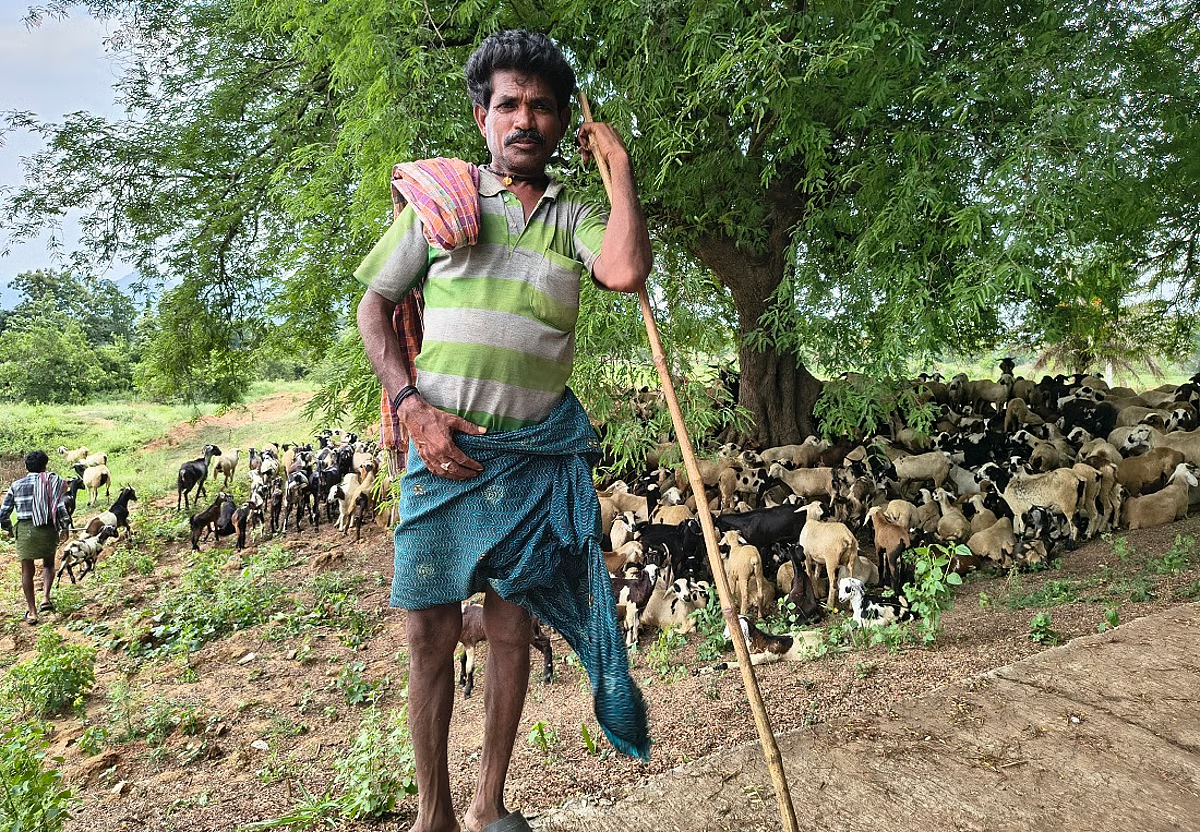
Most of us have, at some point, been slowed down by a herd of sheep or goats taking over the road, especially in the evening. Bells clink softly, dust rising in the golden light, as they move unhurriedly from one grazing patch to another. It feels like an everyday inconvenience, a familiar rural pause. But hidden within that slow-moving mass is an entire ecological process at work.
Long before settled farming took root, people were already moving with animals across landscapes. Rock art from the Bhimbetka Rock Shelters, an archaeological site in Madhya Pradesh that spans the Paleolithic and Mesolithic periods, depicts herds and herders, reminding us that pastoralism is among the oldest ways humans have engaged with nature. This constant movement was not just about survival; it quietly shaped ecosystems. As herds travelled, they became carriers of life—seeds.
This is the unseen journey of seeds moving with pastoral herds, where grazing, walking, and resting come together to regenerate land in ways we rarely notice.
Seeds on the move
If you stay with the trail behind a herd, what begins to stand out is not just where the animals go, but where the seeds go with them. A seed that begins its journey in one patch of grassland rarely stays there. It travels—caught in wool, tucked between hooves, carried through the gut, and dropped along the way.
Some seeds fall along pathways, others into harvested fields, and many into small pockets of dung that offer warmth, moisture, and nutrients. Not all seeds grow and that, too, is part of the story. Some remain dormant, waiting for the rain. Others sprout quickly with the first monsoon showers, releasing that unmistakable earthy scent of wet soil rising from rangelands.
What pastoral movement does is expand possibility. Seeds are no longer confined to one place. They are scattered across distances, across soil types, across seasons. Over time, this creates invisible ecological connections. A hardy legume that survives a drought in one patch finds its way to another. A native grass species travels from one village commons to distant grazing lands.
Pastoral routes, then, are corridors of exchange, quietly stitching together landscapes.
What appears simple is deeply ecological. Seeds hitchhike on animal bodies, a process known as epizoochory, or travel through their digestive systems and emerge elsewhere through endozoochory, often with improved chances of germination. As animals walk, their hooves press seeds into the soil, protecting them from wind and predators while helping them access moisture.
Dung returns nutrients to the soil, enriching it for future growth, while grazing itself creates cycles of use and rest, allowing plants to regenerate, flower, and seed again. These processes, working together, form a living system of regeneration.
Guardians of grasslands and forest edges
Across India, pastoral communities play a crucial role in sustaining this system. The Raika pastoralists, known for their deep relationship with camels, move across arid landscapes where they help regenerate native grasses and disperse seeds of hardy species like Cenchrus ciliaris. In the Deccan plateau, the Dhangar pastoralists migrate seasonally with sheep, spreading seeds of legumes and grasses that restore soil fertility.
In southern India, the Kuruba pastoralists graze their flocks along forest edges, aiding in the spread of native vegetation like Acacia nilotica and Albizia amara. In the high-altitude regions, the Changpa pastoralists move with their pashmina goats, helping sustain fragile alpine ecosystems.
Through their journeys, pastoralists contribute to the survival of native and often threatened species such as Boswellia serrata (Indian frankincense), Madhuca longifolia (mahua), and Hardwickia binata (anjan tree)—species deeply tied to local food systems, livelihoods, and cultural practices.
Culture, ritual, and the memory of seeds
Pastoralism is not only ecological, but also cultural. Many communities follow seasonal calendars that align with flowering and seeding cycles. Sacred groves are protected as seed reservoirs. Rituals mark the movement of herds, the arrival of rain, and the renewal of grazing lands.
Among several pastoral groups, seeds are part of memory, tradition, and identity. Traditional knowledge of when grasses seed, which patches to rest, and how long to graze an area is passed down through generations. This intimate understanding ensures that landscapes are not exhausted but renewed.
Traditional livestock breeds adapted to local climates and vegetation also play a role in this cycle. Their grazing patterns, digestion, and movement are finely tuned to the ecosystems they inhabit, making them partners in seed dispersal and regeneration.
Penning: Where movement meets stillness
If movement carries seeds, stillness allows them to settle. This is most visible in the practice of penning, where herds are kept overnight on agricultural fields.