Earlier this year, a rescued long-billed vulture was released back into its natural habitat in Nashik, a small step in protecting the population of the critically endangered species.
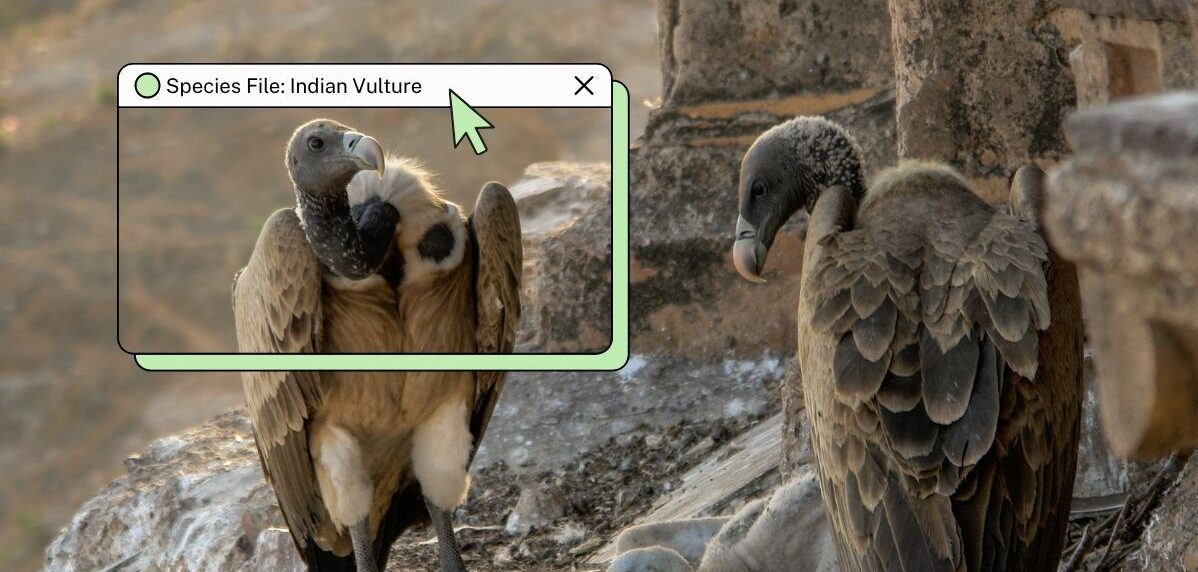
The Indian vulture (Gyps indicus), also called the long-billed vulture, is a bird of prey native to the Indian subcontinent. It lives in a range of habitats, from grasslands and shrublands to farmlands and urban areas, and prefers nesting in colonies.
The Indian vulture feeds on carcasses of dead animals, playing an important part in cleaning up rotting meat that could spread disease. In India, the species is found in central, south and peninsular India. It has also been recorded in south-east Pakistan, Nepal and Bhutan.
Estimates suggest 12,000 individuals of the Indian vulture remain in India. Given its small population, the bird is protected under Schedule I of the Wildlife Protection Act, 1972, the highest level of legal protection from hunting, poaching or trading. The species faces an extremely high risk of extinction due to its rapid population decline, because of which International Union for Conservation of Nature (IUCN) lists it as critically endangered.
In the mid-90s and early 2000s, Indian vultures, and other vulture species, were driven to near extinction after feeding on cattle carcasses containing diclofenac residues, which causes fatal kidney failure in vultures. Though India banned veterinary diclofenac in 2006, illegal use persists, and similar drugs like aceclofenac and nimesulide are still prevalently used.
The Indian vulture also faces other threats such as habitat loss, electrocution, windmill collisions, food scarcity due to industrial meat practices and water pollution.
In an earlier story that Mongabay-India published in 2025, S. Bharathidasan of the NGO Arulagam, Coimbatore, said, “Vultures are nature’s clean-up crew. Their absence forces communities to dispose of dead cattle at high cost, or worse, send carcasses to meat industries, exposing other animals and humans to contamination.”
Read more about the Indian vulture in our stories on declining vulture populations, conservation strategies, and the ecological value of vultures.
Banner image: Indian vultures in Orchha, Madhya Pradesh. Image by Yann via Wikimedia Commons (CC BY-SA 4.0).