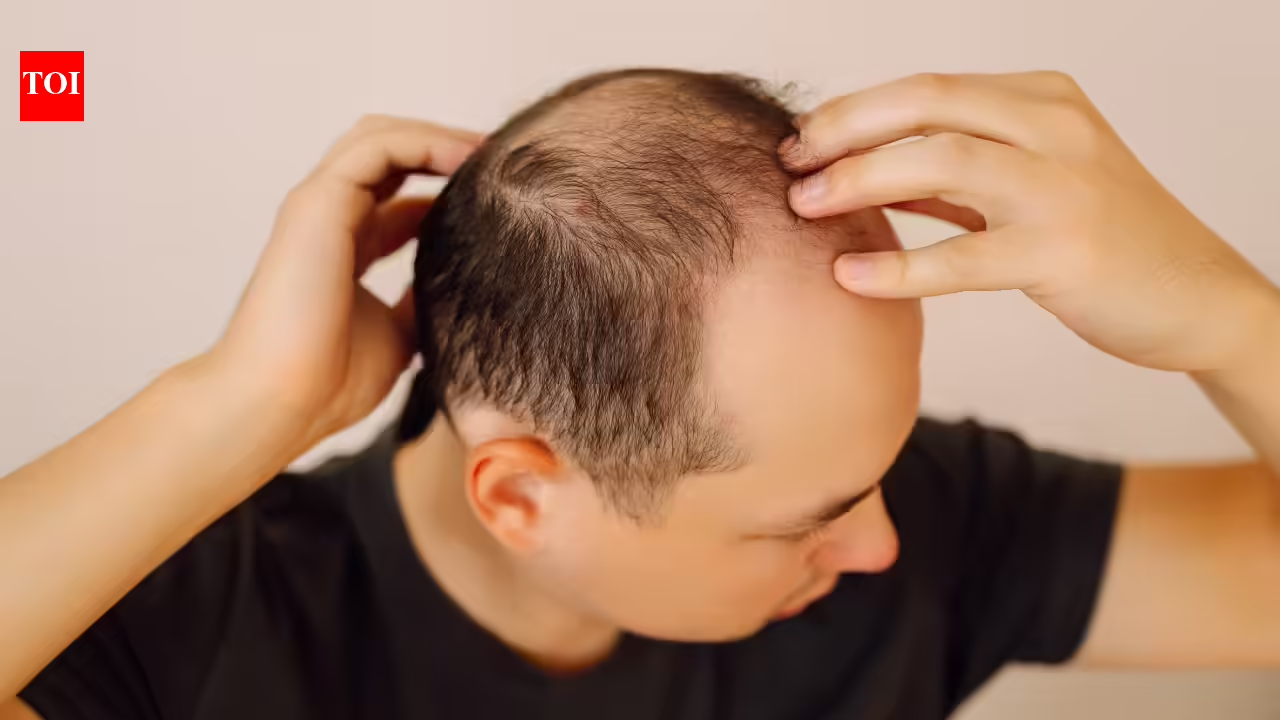
A new experimental hair-loss treatment has drawn global attention after researchers reported encouraging early results from a plant-based scalp serum. Scientists in Taipei, led by Dr Tsong Min Chang of Schweitzer Biotech Company, found that volunteers using the formula for eight weeks showed measurable improvements in hair density and thickness compared with a placebo group. The serum combines plant-derived compounds from Centella asiatica with ingredients already used in cosmetic and scalp-care products. While the findings are still preliminary and require larger independent trials, the study has raised interest because many current hair-loss treatments can take months to show results and do not work equally well for every user.
The plant-based serum that shows hair regrowth
The research involved 60 adults aged between 18 and 60 who took part in a randomised, double-blind, placebo-controlled trial. Participants applied 1 millilitre of the serum to the scalp each night for 56 days.Researchers tracked changes in hair density, thickness, length and shedding at regular intervals using standardised imaging tools. By the end of the study, the group using the most advanced formula showed the strongest improvements, suggesting the treatment had measurable biological effects over a short period.The product used a multi-ingredient formula designed to support scalp and follicle health. It contained plant-derived extracellular vesicles from Centella asiatica, along with caffeine and panthenol, both common ingredients in cosmetic products.The formula also included Fibroblast Growth Factor 7 (FGF-7) and Insulin-like Growth Factor 1 (IGF-1), two biological signals linked to follicle function and hair growth. Researchers believed the combined ingredients might help stimulate follicles and improve the scalp environment.Centella asiatica, sometimes known as gotu kola, is a tropical plant widely used in traditional medicine and skincare products.It has attracted scientific interest for its possible anti-inflammatory properties, wound-healing effects and support for tissue repair. In this study, scientists focused on microscopic vesicles derived from the plant, which may carry cell signals useful for scalp health and follicle activity.
Reported improvements in eight weeks
According to the study authors, participants using the full combination formula recorded close to a 25 per cent improvement in key hair-growth measurements compared with placebo.Researchers also observed that results improved as more active ingredients were added to the formula. This suggested that the treatment may work best when the components are combined rather than used separately.Hair loss affects millions of men and women worldwide and can have a significant emotional impact. Common treatments such as Minoxidil and Finasteride can be effective for some people, but they often require patience and continued long-term use.A topical formula showing measurable progress in under two months is therefore likely to generate strong interest among both consumers and researchers.
Limitations to note
Despite the promising results, the study has several limitations. It involved only 60 participants, making it relatively small by medical research standards.The trial also lasted just eight weeks, which is short when compared with natural hair-growth cycles that often take several months. In addition, the study was linked to those involved in developing the product, meaning independent replication will be important before stronger conclusions can be drawn.
What experts want next
Researchers are likely to call for larger trials involving people with diagnosed pattern hair loss rather than healthy volunteers alone.Future studies would also benefit from direct comparisons with established treatments such as Minoxidil and Finasteride. Longer follow-up periods will be needed to determine whether gains can be maintained after continued use.Safety monitoring will also be essential, especially when formulas contain biologically active growth signals.
Where this leaves people with hair loss
For now, established therapies remain the main evidence-based options recommended by many clinicians. However, the new plant-based serum represents an intriguing direction in hair-loss science.If future trials confirm the early findings, it could eventually provide another topical option for people seeking help with thinning hair.The serum should not yet be viewed as a miracle cure. However, the early data suggest researchers may be moving closer to faster and potentially more effective plant-based treatments for hair loss.For millions of people affected by thinning hair, that alone makes the study worth watching.