- Achieving India’s updated Nationally Determined Contributions (NDCs) targets depends largely on state-level action and coordination.
- States vary widely in their adoption of renewable energy, electrification, and infrastructure readiness.
- Improved procurement mechanisms, grid readiness through storage, decentralised renewables and transmission expansion, must work together to unlock reliable energy transition.
- The views in the commentary are those of the authors.
Amid the disruptions caused by the conflict in West Asia and the accompanying risk that climate action will be pushed down the global agenda, India has reaffirmed its commitment to climate goals by updating its Nationally Determined Contributions (NDC). In March 2026, the Union Cabinet approved NDC 3.0 for submission to the United Nations Framework Convention on Climate Change (UNFCCC) for the 2031–2035 period.
The NDC 3.0 targets include a 47% reduction in the emissions intensity of India’s gross domestic product (GDP), an expansion of its carbon sink to 3.5-4.0 billion tonnes of CO₂ equivalent from 2005 levels, and achieving 60% non-fossil fuel-based installed power capacity by 2035. These align with the country’s long-term net-zero goal for 2070 and its vision of self-reliance under Viksit Bharat 2047, with domestically available renewable energy at the core. Achieving these goals will require every Indian state to play a role, as most power procurement decisions are made at the state level.
From national targets to state action
India achieved the milestone of 50% non-fossil fuel-based installed capacity in October 2025, five years ahead of schedule. This progress was driven largely by Rajasthan, Gujarat, Maharashtra, Tamil Nadu, and Karnataka, which together account for more than 60% of the total non-fossil fuel installed capacity as of February 2026.
However, as India moves towards the more ambitious target of 60% non-fossil capacity, this concentration could become a bottleneck. Hence, expanding renewable energy capacity beyond early leader states will be necessary.
At the sub-national level, though, states differ in resource availability, economic structures, rural-urban composition, fiscal conditions, and institutional capacity. The Indian States’ Electricity Transition (SET) 2026 report by the Institute for Energy Economics and Financial Analysis (IEEFA) and Ember highlights that while states have advanced on multiple fronts, the pace and depth of their progress vary significantly across several parameters.
For instance, SET 2026 highlights that some states recorded a higher share of renewable energy in their procurement mix in the financial year (FY) 2024: Himachal Pradesh (65%), Uttarakhand (44%), Karnataka (37%), Rajasthan (25%), and Madhya Pradesh (23%). Meanwhile, Bihar (78%), Assam (46%), Jharkhand (33%), and Chhattisgarh (26%) have made appreciable progress in installing necessary infrastructure (smart meters) to enable solar-hour-aligned time-of-day (ToD) tariffs when electricity is cheaper.
However, states that are advancing smart metering may not fully benefit from solar-hour-aligned ToD tariffs if solar procurement remains limited. Conversely, states with higher solar shares may struggle to operationalise such ToD tariffs without adequate smart metering infrastructure.
This underscores a key point: renewable procurement, market design, and infrastructure readiness must progress together, as treating them in isolation risks underutilising clean energy investments.
Powering electrification with renewable energy
Electrification across transport, industries, agriculture, and buildings, combined with renewable energy procurement, can reduce dependence on imported fossil fuels and strengthen local energy systems.
In the SET 2026 report, Karnataka provided an example of this. The state saw an electric vehicle (EV) adoption rate of almost 10% in FY2025 and a renewable energy share of around 37% in its power procurement mix, indicating alignment between electrification and clean power supply. In contrast, Himachal Pradesh recorded a renewable energy share of around 65% in its procurement mix, but EV adoption in the state was just about 1%. Meanwhile, Kerala and Uttar Pradesh, despite higher EV adoption rates of around 10% each, showed scope to further decarbonise their transport sector by increasing the share of renewables in their power procurement mix, which stood at around 20% each.
This gap presents an opportunity. Greater electrification across sectors, alongside increased renewable energy procurement, can drive decarbonisation and reduce reliance on fossil fuels. There are some good signs as states are increasingly focusing on energy transition holistically.

Increasing focus on energy storage
With the release of its updated Renewable Energy and Energy Storage Policy, Maharashtra shows how states are starting to look beyond capacity addition and addressing system-level challenges. The state has set a target of meeting 65% of its electricity demand from renewable energy and mandated distribution companies to procure energy storage capacity equivalent to at least 10% of their demand by FY2036. The policy provides a useful reference point for other states seeking to strengthen system reliability while increasing renewable energy penetration.
States like Bihar, Kerala, Odisha, Telangana, and Uttar Pradesh are yet to accelerate renewable capacity deployment. Encouragingly, though, they have begun adding energy storage and preparing their grids for higher renewable penetration. For example, in July 2025, the Bihar State Power Generation Company Limited (BSPGCL) concluded auctions for a 125 MW/500 megawatt-hour (MWh) battery energy storage system (enough to supply power for about four hours). The Solar Energy Corporation of India Limited (SECI), on behalf of Kerala and Odisha, also concluded auctions for similar projects in each state. Meanwhile, Uttar Pradesh Power Corporation (UPPCL) concluded auctions for a 375 MW system with 1,500 MWh storage capacity, and Telangana Power Generation Corporation (TGGENCO) has invited bids for a project of the same scale.
The shift towards pairing renewables with storage is likely to shape how states plan their next phase of power sector expansion.
State budgets prioritise renewable energy
The year 2026 has brought another aspect of the power sector into focus. In April, many regions across the country witnessed record temperatures and high power demand.
As India’s electricity demand continues to rise, with peak demand expected to reach around 270 gigawatts (GW) in 2026, the pressure on state power systems is set to intensify. In this context, the next phase of India’s transition will depend less on setting new targets and more on how states reorganise decision-making around the power system itself.

Multiple states’ budgets tabled in 2027 signal a clear shift towards strengthening power systems through renewable integration and grid modernisation.
Maharashtra positions energy as central to economic growth, backing the solarisation of agricultural demand, scaling up renewable capacity, and pushing for pumped-storage projects to manage intermittency and improve grid flexibility. Karnataka’s budget stands out for its direct allocation of ₹34 billion for Battery Energy Storage Systems (BESS) to enable renewable grid balancing and flexibility. Uttar Pradesh’s budget allocates around ₹659 billion to the energy sector, with significant investments in generation, transmission, and distribution infrastructure, smart metering, and distribution sector reforms. In its latest budget, the Delhi government includes power-sector allocations and a broader policy thrust toward a clean energy transition. Similarly, Odisha allocates ₹45 billion to the energy sector in its latest budget. A key highlight for the state is the ₹4.95 billion allocation to support rooftop solar projects and ₹2 billion for green hydrogen and green ammonia projects, signalling significant steps toward building a clean fuels ecosystem.
These budgets point to a shift towards more integrated power sector planning, moving away from siloed approaches and towards aligning renewable procurement with demand growth and system flexibility needs.
Going forward, accelerating India’s subnational electricity transition will require states to move beyond capacity addition and focus on effective integration within the power system. This includes ensuring reliable supply to meet rising demand through improved procurement mechanisms, while strengthening grid readiness through storage, decentralised renewables, transmission expansion, and demand response. Together, these measures can support a more resilient and reliable electricity transition.
Tanya Rana is an energy analyst for South Asia at the Institute for Energy Economics and Financial Analysis, and Ruchita Shah is an energy analyst for Asia at Ember.
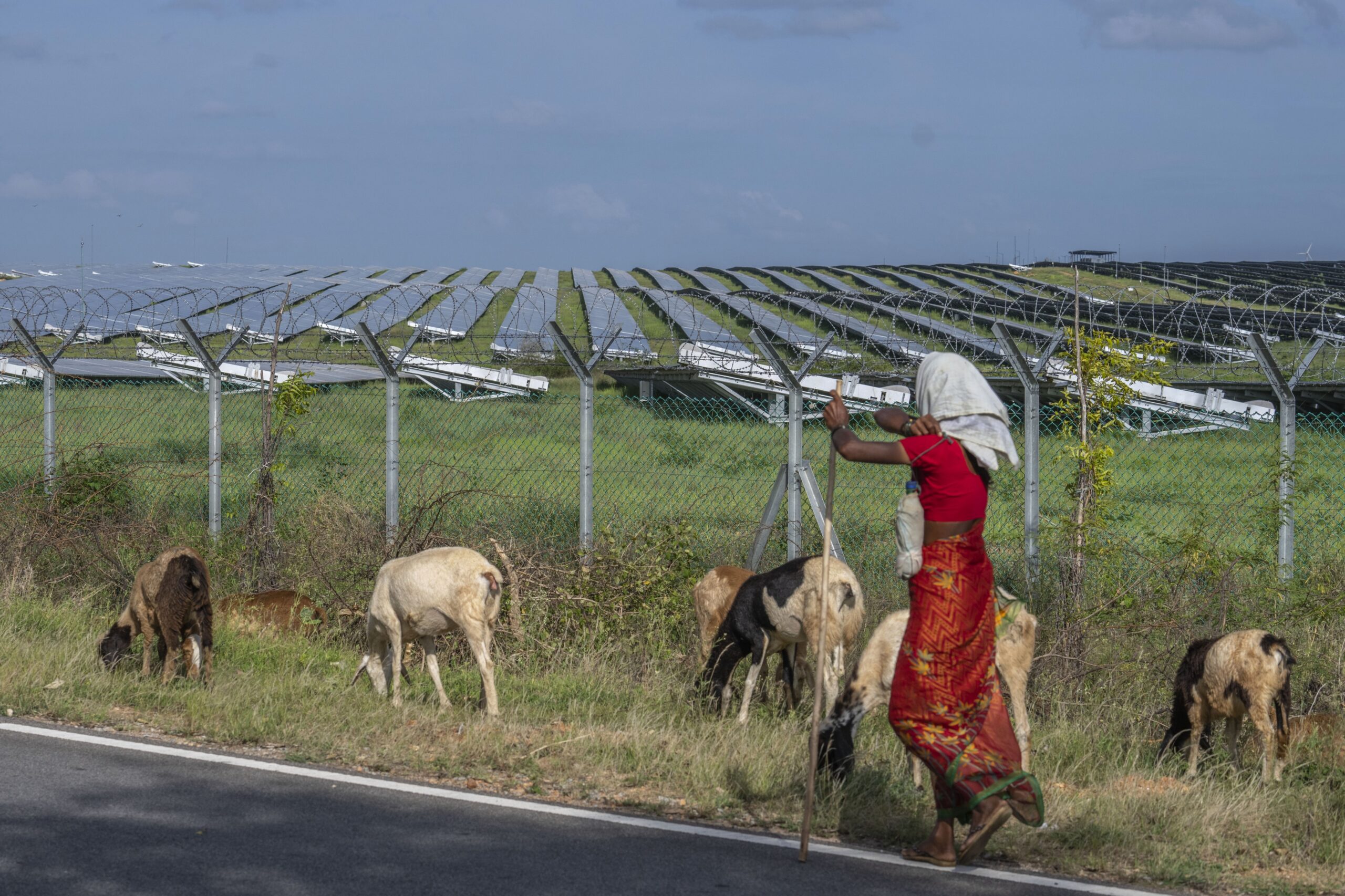
Banner image: A shepherd grazes her sheep near a solar power plant in Pavagada Tumkur district, Karnataka. (AP Photo/Rafiq Maqbool)